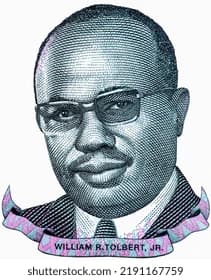
Leadership
1971–1980
Era
Late 20th Century / Pre-Coup Liberia
Born
March 1913
Died
1980
Birthplace
Bensonville, Montserrado County, Liberia
Country
Liberia
Role
20th President of Liberia; Vice President; Baptist Minister; Politician; Statesman
William Richard Tolbert Jr.
William Richard Tolbert Jr. was the twentieth President of Liberia, serving from 1971 until his death in 1980. He succeeded William V. S. Tubman after serving for nearly twenty years as vice president. Tolbert initially continued many of Tubman's economic and foreign policies but later introduced reforms aimed at reducing political inequality, strengthening African diplomatic relations, and promoting greater economic participation by Indigenous Liberians. His administration faced growing economic difficulties, political opposition, and social unrest. His presidency ended abruptly during the April 12, 1980, coup, when he was killed and the True Whig Party's long period of political dominance came to an end.
Early Life and Family Background
William Richard Tolbert Jr. was born on May 13, 1913, in Bensonville, Montserrado County, Liberia.
He came from a prominent Liberian family with roots in the Americo-Liberian community. His father, William Richard Tolbert Sr., was a respected Liberian politician and served in the national legislature.
Tolbert's family background gave him early exposure to Liberia's political institutions and public life.
Education
Tolbert received his early education in Liberia.
He later attended Liberia College, where he studied before entering public service.
His education and family background helped prepare him for a long political career.
Religious and Professional Life
Tolbert was a committed Baptist and became an important figure within the Liberia Baptist Convention.
He served as a Baptist minister and became involved in religious leadership alongside his political career.
His religious background influenced his public image and his emphasis on social responsibility and national development.
Entry Into Politics
Tolbert entered national politics through the True Whig Party.
He was elected to the Liberian House of Representatives in 1943.
His political career progressed rapidly, and in 1951 he became Vice President of Liberia under President William V. S. Tubman.
Vice Presidency
Tolbert served as vice president from 1951 to 1971, making him one of the longest-serving vice presidents in Liberian history.
For two decades, he worked closely with President Tubman and became deeply familiar with the country's political and administrative system.
During this period, he also became an important figure in African and international diplomacy.
Becoming President
President Tubman died on July 23, 1971.
As vice president, Tolbert succeeded him and became the twentieth President of Liberia.
He was inaugurated on July 23, 1971.
Tolbert inherited a political system that had been dominated by the True Whig Party for decades.
Early Presidency
At the beginning of his presidency, Tolbert continued many of Tubman's economic policies.
Liberia remained open to foreign investment, and the government continued to promote mining, rubber, agriculture, and international trade.
However, Tolbert also wanted to introduce reforms to the political system and give greater opportunities to Liberians who had historically been excluded from political and economic power.
Political Reform
Tolbert attempted to make the government more responsive to a wider portion of the Liberian population.
He encouraged greater participation by Indigenous Liberians in national political and economic life.
He also sought to reduce some of the privileges associated with the established political elite.
These reforms created both support and opposition.
Some people considered the changes necessary for national unity, while others believed they did not go far enough.
African Diplomacy
Tolbert placed strong emphasis on Liberia's relationships with other African countries.
He supported African unity and cooperation and played an important role in regional diplomacy.
Liberia continued its involvement in the Organization of African Unity, which had been established in 1963.
Tolbert also promoted stronger economic and diplomatic relationships between Liberia and other African states.
Economic Challenges
During the 1970s, Liberia faced increasing economic difficulties.
The international economy was changing, and Liberia's dependence on exports such as iron ore and rubber left the country vulnerable to changes in global prices.
Government revenues declined as some major commodities experienced unfavorable market conditions.
At the same time, the cost of living increased.
These economic pressures contributed to growing public dissatisfaction.
The Rice Price Crisis
One of the most important political crises of Tolbert's presidency involved the price of rice.
Rice was a major staple food in Liberia, and changes in its price directly affected ordinary Liberians.
In 1979, the government announced plans to increase the controlled price of rice.
The decision generated widespread opposition.
Critics argued that the increase would place a heavy burden on low-income Liberians.
The April 1979 Rice Riots
On April 14, 1979, demonstrations against the proposed rice price increase developed into major unrest in Monrovia.
The protests became known as the Rice Riots.
The government responded by deploying security forces.
The unrest resulted in deaths, injuries, arrests, and significant property damage.
The Rice Riots represented a major turning point in Tolbert's presidency.
They demonstrated the depth of public frustration over economic conditions and the political system.
Political Opposition
Following the Rice Riots, political opposition to Tolbert's government increased.
Opposition groups criticized the continued dominance of the True Whig Party and argued that political power remained concentrated among a small elite.
Tolbert responded with some political reforms and allowed greater space for opposition activity.
However, the government continued to face serious criticism.
The 1980 Coup
Political tensions continued into 1980.
On April 12, 1980, a group of enlisted soldiers led by Master Sergeant Samuel Kanyon Doe carried out a military coup against the Tolbert government.
President Tolbert was killed during the coup.
The military announced the creation of the People's Redemption Council (PRC).
The coup brought an abrupt end to the True Whig Party's more than century-long dominance of Liberian national politics.
It also marked the beginning of a new and highly unstable period in Liberia's political history.
End of the True Whig Era
Tolbert's death represented more than the removal of a president.
It ended a political order that had dominated Liberia since the nineteenth century.
The True Whig Party had controlled the presidency and national government for generations.
The 1980 coup therefore represented a fundamental transformation of Liberia's political system.
Historical Legacy
William R. Tolbert Jr. is remembered as a president who attempted to reform Liberia's political and economic system while facing increasingly difficult social and economic conditions.
His government promoted African diplomacy, economic development, and greater political participation for Indigenous Liberians.
However, the economic problems of the 1970s, the Rice Riots of 1979, and growing opposition to the True Whig political system severely weakened his administration.
His death during the April 12, 1980 coup ended the True Whig era and opened a new chapter in Liberian history under military rule.
Tolbert's presidency is therefore important for understanding the political tensions that developed in Liberia before the country's later civil wars.
Birth Date: May 13, 1913
Death Date: April 12, 1980
Birthplace: Bensonville, Montserrado County, Liberia
County: Montserrado County
Role: 20th President of Liberia; Vice President; Baptist Minister; Politician; Statesman
Era: Late 20th Century / Pre-Coup Liberia