Leadership
1896–1900
Era
Late 19th Century / Early 20th Century
Born
July 1842
Birthplace
Fayette County, Kentucky, United States
Country
United States
Role
13th President of Liberia; Vice President of Liberia; Senator; Speaker of the House of Representatives; Representative; Merchant; Farmer; Carpenter; Politician
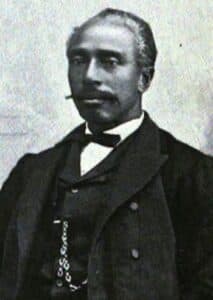
William David Coleman
William David Coleman was the thirteenth President of Liberia, serving from 1896 to 1900. Born in Fayette County, Kentucky, in 1842, he emigrated to Liberia with his family in 1853 and settled in Clay-Ashland, Montserrado County. Despite having to leave school during his youth because of poverty, Coleman continued his education independently while working as a carpenter, farmer, and merchant. He entered politics in 1877, serving in the House of Representatives, becoming Speaker, and later serving as a senator. He became Vice President under Joseph James Cheeseman in 1892 and succeeded to the presidency following Cheeseman's death in 1896. His administration emphasized education, government finances, and extending central government authority into the interior. He resigned the presidency in December 1900 after political disagreements over his policies.
William David Coleman was born on July 18, 1842, in Fayette County, Kentucky, United States. He emigrated to Liberia with his widowed mother and other family members in 1853, when he was eleven years old. The family settled in Clay-Ashland, Montserrado County, near Monrovia.
Early Life and Education
Coleman's childhood was marked by limited financial resources. After arriving in Liberia, he was unable to continue formal schooling for a period because of poverty.
Rather than abandoning education completely, Coleman studied during his evenings and nights while working to support himself.
He developed practical skills and worked in several occupations, including carpentry, farming, and trading. His ability to combine work with continued self-education became an important part of his rise from a modest background to national political leadership.
Entry Into Public Life
Coleman entered national politics in 1877, when he was elected to the House of Representatives representing Montserrado County.
He subsequently became Speaker of the House of Representatives, giving him an important position within Liberia's national legislature.
In 1879, he was elected to the Senate representing Montserrado County. He remained in the Senate until 1892, when he became vice president.
His movement through the House, speakership, and Senate established him as an experienced national political leader before he entered the executive branch.
Vice Presidency
In 1892, Coleman became Vice President of Liberia under President Joseph James Cheeseman.
He and Cheeseman were elected together on the True Whig Party ticket. Coleman was reelected with Cheeseman in subsequent elections and remained vice president until Cheeseman died in office on November 12, 1896.
Cheeseman's death created the first presidential succession caused by the death of a Liberian president while in office. Coleman, as vice president, succeeded him as president.
Presidency, 1896–1900
William David Coleman became the thirteenth President of Liberia on November 12, 1896.
He initially completed the remainder of Cheeseman's term and subsequently won presidential elections of his own.
His administration placed particular emphasis on three broad areas: education, government finances, and policy toward the interior.
Coleman believed that strengthening education and government administration was important to Liberia's development. He also sought to strengthen the authority of the national government outside the coastal areas where the Liberian state had historically exercised its strongest influence.
Education and Liberia College
Education was one of the important concerns of Coleman's administration.
He worked with Edward Wilmot Blyden, one of Liberia's leading intellectuals, in efforts to reopen Liberia College in Monrovia.
The effort reflected Coleman's belief that education was essential to the development of Liberia's institutions and future leadership.
His own experience of overcoming an interrupted formal education made education a particularly meaningful part of his public career.
Government Finances and Administration
Coleman also sought to strengthen Liberia's financial and administrative institutions.
His government worked to reorganize aspects of the customs service, which was an important source of government revenue.
Customs duties were especially important because Liberia had a limited domestic tax base and depended heavily on international commerce.
Improving government revenue was therefore connected to the administration's broader efforts to strengthen the Liberian state.
Policy Toward the Interior
A major feature of Coleman's presidency was his effort to extend the authority of the central government into the interior.
Liberia's government had historically exercised stronger control in the coastal settlements than in many inland areas.
Coleman's administration sought to increase government influence over interior communities and strengthen the country's territorial and administrative integration.
His government was able to extend greater control into areas north and west of the Saint Paul River. However, these policies also generated opposition because of disagreements over the government's treatment of Indigenous communities and its approach to extending state authority.
Relations With Indigenous Communities
Coleman's interior policies became one of the most controversial aspects of his presidency.
The Liberian government was attempting to expand its authority over areas where Indigenous communities already possessed their own political structures and systems of authority.
Coleman's administration viewed stronger central control as necessary for building an effective national government. However, the policies produced resistance and disagreement among both Indigenous communities and some Liberian political leaders.
These tensions contributed to growing opposition to his administration toward the end of his presidency.
Political Opposition
As Coleman's second presidential term progressed, opposition to his administration increased.
Some political leaders and members of his own government disagreed with his policies concerning the interior and Indigenous communities.
His relationship with political allies also deteriorated, and disagreements within his cabinet placed increasing pressure on the administration.
The political conflict eventually became severe enough that Coleman decided to resign from the presidency.
Resignation From the Presidency
Coleman resigned from office on December 11, 1900.
His resignation made him the second Liberian president to leave office by resignation, following Anthony William Gardiner.
At the time of his resignation, the vice presidency was vacant. Under the political circumstances of the period, Garretson W. Gibson, who was serving as Secretary of State, succeeded Coleman.
Gibson subsequently became president and served until 1904.
Later Political Career
After leaving the presidency, Coleman did not withdraw from politics.
He continued to participate in Liberian political life and later ran for president several more times.
He became associated with the People's Party and unsuccessfully contested the presidency in 1901, 1903, and 1905.
Although he did not return to the presidency, his continued political activity demonstrated his lasting influence in Liberian public life.
Later Life and Death
Coleman spent his later years in Liberia.
He died on July 12, 1908, in Clay-Ashland, Montserrado County, at the age of 65.
His death marked the end of the life of a political leader who had risen from a difficult childhood to become a member of the House of Representatives, Speaker, senator, vice president, and president of Liberia.
Historical Legacy
William David Coleman is remembered as a Liberian political leader whose career reflected the possibilities and challenges of nineteenth-century Liberia.
His rise from a young immigrant who had experienced poverty and interrupted schooling to the highest office in the republic was one of the notable political journeys of his generation.
His presidency is particularly important for its emphasis on education, government finances, and the expansion of central authority into the interior.
At the same time, his policies toward the interior and Indigenous communities generated significant opposition and contributed to the political circumstances that ultimately led to his resignation.
Coleman's career also occupies an important place in the development of the True Whig Party, which was becoming increasingly dominant in Liberian politics during this period.
Birth Date: July 18, 1842
Death Date: July 12, 1908
Birthplace: Fayette County, Kentucky, United States
County: Montserrado County
Role: 13th President of Liberia; Vice President of Liberia; Senator; Speaker of the House of Representatives; Representative; Merchant; Farmer; Carpenter; Politician
Era: Late 19th Century / Early 20th Century