Leadership
1856–1864
Era
Early Republic
Born
May 1816
Died
1865
Birthplace
Cambridge, Maryland, United States
Country
United States
Role
President
Stephen Allen Benson
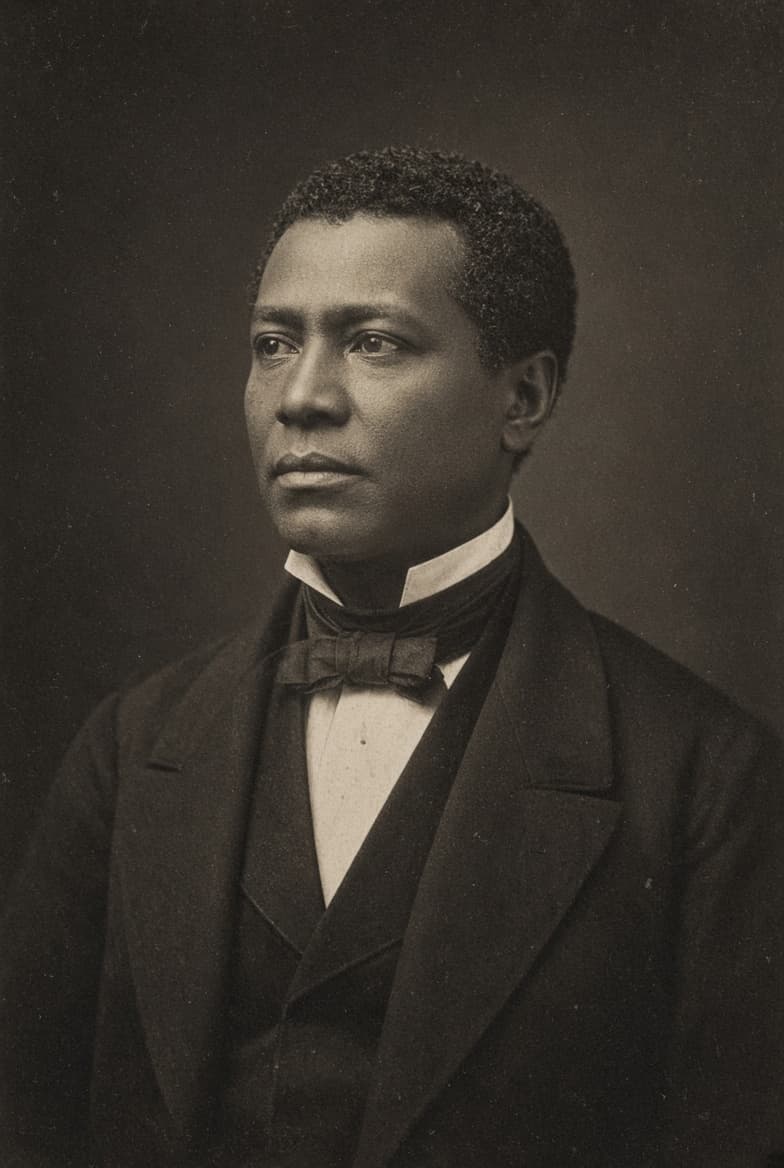
Stephen Allen Benson was Liberia's second president. He succeeded Joseph Jenkins Roberts and helped consolidate Liberia's young republican government during the country's early years of independence.
Stephen Allen Benson
Stephen Allen Benson was one of the most important political figures of Liberia's early republican period and became the country's second president. He succeeded Joseph Jenkins Roberts in 1856 and remained in office until 1864. His eight-year presidency came during a formative period when Liberia was still a young independent republic attempting to establish effective government, strengthen its international position, expand its authority beyond the coastal settlements, and create a functioning national political system.
Early Life
Stephen Allen Benson was born on May 21, 1816, in Cambridge, Maryland, in the United States. He was born into a family of African American heritage at a time when free Black communities in the United States faced significant legal, economic, and social restrictions.
In 1822, Benson emigrated with his family to Liberia. His arrival occurred during the early period of organized settlement on the West African coast by African Americans associated with the American Colonization Society.
The young Benson therefore grew up during the formative years of what would eventually become the Republic of Liberia. The experience exposed him to the challenges of establishing a new society in West Africa while also placing him within the emerging Americo-Liberian political community.
Growing Up in Early Liberia
Benson's generation experienced Liberia's transformation from an American-sponsored settlement into an increasingly independent political community.
The settlers established towns, farms, churches, schools, businesses, and political institutions along the coast. Monrovia became the principal political center, while other settlements developed in areas that later became part of Liberia's counties.
Life in early Liberia was not simple. The settlers had to establish a functioning government while interacting with numerous Indigenous African communities that had their own political institutions, economies, cultures, and systems of authority.
These relationships became one of the central challenges facing Liberia's early governments.
Benson grew into adulthood during this period of political development and became increasingly involved in public affairs.
Entry Into Public Life
Benson developed a reputation as a political leader and eventually became involved in Liberia's national government.
He served as vice president under Joseph Jenkins Roberts before succeeding him as president. This experience gave Benson direct exposure to the responsibilities of governing the young republic.
Roberts had played the leading role in Liberia's declaration of independence in 1847 and became the country's first president in 1848. By the time Benson succeeded him, Liberia had already achieved international recognition as an independent republic, but many of the practical challenges of nation-building remained unresolved.
Benson therefore inherited a country that had established the basic institutions of republican government but was still developing its political, economic, and territorial foundations.
Becoming President
Stephen Allen Benson became Liberia's second president in 1856.
His election represented an important moment in the early history of the republic. Liberia had successfully transferred presidential power from its first president to his successor, demonstrating a degree of political continuity in a country that was still relatively young.
Benson's presidency lasted eight years, from 1856 until 1864.
During these years, he faced the difficult task of strengthening the authority of the Liberian government while dealing with the country's limited resources and complex relationships with communities outside the settler-controlled coastal areas.
Strengthening the Liberian Republic
One of the major challenges confronting Benson's government was the question of how far the authority of the Liberian state extended.
Liberia's government had its strongest institutional presence around settlements such as Monrovia and other coastal communities. Beyond these areas, many Indigenous communities continued to govern themselves through their own traditional political systems.
The Liberian government sought to extend its authority over a larger territory.
This process was complicated because Liberia was not an empty territory waiting to be governed. The region was already inhabited by numerous African peoples with established political systems, trade networks, customs, and territorial relationships.
Benson's administration therefore operated within a complicated environment in which the expansion of the Liberian state involved negotiations, agreements, commercial relationships, political disputes, and at times conflict.
The question of how Indigenous peoples would be incorporated into the Liberian political system would remain one of the country's most important challenges for generations.
Relations With Indigenous Communities
Benson's presidency is particularly important for understanding the development of Liberia's relationship with Indigenous communities.
The early republic was dominated politically by Americo-Liberian settlers and their descendants, while the majority of the population consisted of Indigenous peoples belonging to numerous ethnic communities.
The government sought to bring more territory under its authority and expand the reach of the republic.
This process produced different outcomes in different parts of the country. In some places, government officials established agreements and commercial relationships with local leaders. In other areas, disputes emerged over territory, trade, political authority, and taxation.
The underlying issue was larger than any individual dispute: the Liberian government was attempting to transform a coastal republic into a state with authority over a much larger territory.
That process would continue throughout the nineteenth century.
Economic Development
Benson also governed at a time when Liberia's economy was still developing.
The country's economy depended heavily on agriculture, trade, shipping, and the export of commodities. Liberia's location on the West African coast gave it access to regional and international trade.
Palm products, agricultural goods, and other commodities were important to the developing economy.
However, Liberia lacked the financial resources and infrastructure of the established colonial powers operating elsewhere in West Africa.
The government therefore had to operate with limited revenue while attempting to maintain political institutions, public administration, diplomacy, and territorial authority.
The development of trade was consequently important to the survival and growth of the republic.
International Recognition and Diplomacy
Benson's presidency also occurred during a period when Liberia was attempting to strengthen its position within the international community.
Liberia's independence was unusual in nineteenth-century Africa. The country had declared itself an independent republic in 1847 while European powers were increasingly expanding their influence across Africa.
Liberia therefore needed to maintain diplomatic relationships and demonstrate that it was capable of functioning as a sovereign state.
Benson continued the diplomatic tradition established under Joseph Jenkins Roberts.
International recognition was not simply symbolic. It strengthened Liberia's ability to conduct trade, communicate with foreign governments, protect its sovereignty, and present itself as an independent republic.
The Expansion of Liberia
During the nineteenth century, Liberia gradually expanded the territory under its effective governmental control.
The government established settlements and administrative arrangements in different parts of the country.
This expansion was connected to both political and economic objectives. Controlling more territory could increase access to agricultural land, natural resources, trade routes, and coastal areas.
However, expansion also intensified interactions between the Liberian government and Indigenous political authorities.
The process would eventually contribute to the territorial shape of modern Liberia, although the boundaries and administrative structure continued to change for decades after Benson's presidency.
Political Life During Benson's Presidency
Benson's presidency took place within a political system dominated by Americo-Liberian settlers and their descendants.
Political participation was limited compared with the modern Liberian system.
The institutions of government were modeled heavily on American republican ideas, including an elected presidency, legislature, courts, and a written constitution.
Yet the social and political realities of nineteenth-century Liberia were different from those of the United States.
The government had to balance the interests of settlers with the realities of a much larger Indigenous population.
These political tensions became a recurring feature of Liberia's history.
Benson's Leadership Style
Benson was regarded as an experienced political leader who understood the importance of maintaining the institutions of the young republic.
His previous service as vice president gave him experience within the national government before he became president.
His administration continued the basic political structure established during Liberia's first presidential administration rather than attempting to completely redesign the republic.
This continuity was significant because Liberia was still establishing traditions of constitutional government and presidential succession.
End of His Presidency
Benson served as president until 1864.
After completing his second term, he left office and was succeeded by Daniel Bashiel Warner.
The peaceful transfer of presidential authority was another important development in Liberia's early political history.
By this stage, Liberia had already experienced several presidential administrations since declaring independence in 1847. The continuation of constitutional succession helped establish the principle that political leadership could change through the country's republican institutions.
Later Life
After leaving the presidency, Benson withdrew from the highest level of national political leadership.
He had spent much of his life involved in the development of the Liberian republic, from the early settlement period through independence and into the country's first decades as a sovereign state.
He died in January 1865, shortly after completing his presidential service.
Although his presidency is sometimes overshadowed by that of Joseph Jenkins Roberts, Benson played an important role in maintaining political continuity during Liberia's early republican period.
Historical Importance
Stephen Allen Benson occupies an important position in Liberian history because he helped guide the country during one of the most delicate stages of its development.
Liberia was still a young republic during his presidency. Its government was developing, its territory was expanding, its economy was limited, and its relationship with Indigenous communities remained unsettled.
Benson's administration helped maintain the continuity of the republic after its first president.
His presidency also illustrates the broader challenges facing Liberia during the nineteenth century: the creation of a centralized state, the development of international relations, the growth of commerce, the expansion of government authority, and the complicated relationship between Americo-Liberian political institutions and Indigenous African societies.
Understanding Benson's presidency therefore helps explain how Liberia developed between independence in 1847 and the more complicated political and territorial struggles that followed later in the nineteenth century.
Legacy
Stephen Allen Benson is remembered as Liberia's second president and as one of the early architects of the Liberian republic.
His administration helped establish the continuity of presidential government during Liberia's formative years.
His legacy is also connected to the larger story of Liberia's nineteenth-century state-building. The political institutions that Benson helped preserve would continue to evolve under later presidents as Liberia expanded its territorial administration and confronted new economic, political, and social challenges.
His presidency represents an important bridge between the founding administration of Joseph Jenkins Roberts and the later development of Liberia as a more territorially extensive republic.
Key Facts
Full Name: Stephen Allen Benson
Born: May 21, 1816
Birthplace: Cambridge, Maryland, United States
Emigrated to Liberia: 1822
Position: Second President of Liberia
Presidential Term: 1856–1864
Predecessor: Joseph Jenkins Roberts
Successor: Daniel Bashiel Warner
Died: January 1865
Historical Era: Early Liberian Republic