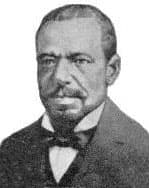
Leadership
1892–1896
Era
Late 19th Century / Scramble for Africa
Born
March 1843
Died
1896
Birthplace
Edina, Grand Bassa County, Liberia
Country
Liberia
Role
12th President of Liberia; Baptist Minister; Educator; Teacher; Merchant; Politician
Joseph James Cheeseman
Joseph James Cheeseman was the twelfth President of Liberia, serving from 1892 until his death in 1896. Born in Edina, Grand Bassa County, in 1843, he was a teacher, Baptist minister, merchant, educator, and politician before becoming president. Cheeseman was educated at Liberia College and became an important religious and community leader in Grand Bassa County. He was elected president three times on the True Whig ticket. His administration faced economic difficulties, territorial pressure from European colonial powers, and conflicts involving communities in southeastern Liberia. Cheeseman became the first Liberian president to die while still in office.
Joseph James Cheeseman was born on March 7, 1843, in Edina, Grand Bassa County, Liberia. His parents were among the early settlers who migrated to Liberia under the American Colonization Society. He was born during the period when Liberia was still developing its political institutions and expanding its settlements along the coast.
Early Life and Education
Cheeseman grew up in Edina, a settlement in Grand Bassa County that had become an important center of Liberian commerce, education, and Baptist missionary activity.
He received his education in Liberia and later attended Liberia College. His education helped prepare him for a career that combined religious service, teaching, business, and public leadership.
Cheeseman became particularly associated with education and religious work in Grand Bassa County. His early career helped establish his reputation beyond his local community.
Religious Career
Cheeseman came from a Baptist family and was trained for religious work by his father, John H. Cheeseman, who was a Baptist missionary.
After his father's death, Cheeseman took on greater responsibilities within his family and community.
In November 1868, he was ordained as pastor of the First Baptist Church in Edina. He became an influential Baptist minister and church leader.
His religious career brought him into contact with many Liberian communities and helped establish his reputation as an educated and respected public figure.
Education and Community Leadership
In addition to his religious work, Cheeseman was involved in education.
He became associated with Ricks Institute at Clay-Ashland, an educational institution that became known for preparing young Liberians for further education and public service.
His involvement in education reflected the important role that schools and churches played in the development of Liberia's nineteenth-century leadership.
Through his work as a teacher, minister, and community leader, Cheeseman developed the experience that later helped him enter national politics.
Business Career
Cheeseman also worked as a merchant.
His business activities connected him with the commercial communities along Liberia's coast. Commerce was particularly important to the development of Grand Bassa County, where coastal settlements such as Edina and Buchanan became centers of trade.
His experience in business gave him additional knowledge of the economic conditions facing Liberia before he entered the presidency.
Entry Into Public Life
Cheeseman eventually moved from religious and community leadership into national politics.
His education, religious career, business experience, and reputation in Grand Bassa County helped him become a prominent political figure.
He became associated with the True Whig Party, which was becoming increasingly dominant in Liberian politics during the late nineteenth century.
By the early 1890s, Cheeseman had emerged as a leading candidate for the presidency.
Election and Presidency
Cheeseman was elected president in 1891 and took office on January 4, 1892, succeeding Hilary Richard Wright Johnson.
He became the twelfth President of Liberia.
Cheeseman was elected to the presidency three times on the True Whig ticket. His administration lasted from 1892 until his death in November 1896.
His presidency occurred during a particularly difficult period for Liberia. European colonial powers were expanding throughout West Africa, while Liberia faced economic limitations and challenges to its territorial claims.
Territorial Pressure and European Colonial Expansion
Cheeseman inherited many of the territorial problems that had developed during earlier administrations.
In 1892, France used military pressure to force Liberia to relinquish its claims to territory between the Cavalla River and the San Pedro River.
The territorial loss was part of the larger European expansion that was reshaping West Africa during the Scramble for Africa.
Liberia remained independent, but its ability to defend its territorial claims against European powers was limited.
Domestic Conflicts
Cheeseman's administration also faced conflicts involving communities in southeastern Liberia.
The government attempted to strengthen its authority over areas where central government control remained limited.
These conflicts reflected a broader challenge faced by nineteenth-century Liberia: the effort to extend the authority of the central government beyond the coastal settlements and establish stronger political relationships with Indigenous communities.
The period therefore involved both territorial consolidation and continuing tensions between the central government and communities in the interior.
Economic Conditions
Economic difficulties remained a major challenge during Cheeseman's presidency.
Liberia's government had limited financial resources and depended heavily on customs revenue and international trade.
The country also faced difficulties developing agriculture, transportation, infrastructure, and industry on a large scale.
Cheeseman's administration attempted to address some of these economic challenges while maintaining the government's authority and independence.
His government also supported efforts to promote agricultural and industrial development, although the limited resources available to the republic restricted the scale of these efforts.
Political Leadership
Cheeseman's political career reflected the growing dominance of the True Whig Party in Liberia.
His three presidential victories demonstrated the party's increasing control over national politics during the late nineteenth century.
The political system, however, remained heavily dominated by the Americo-Liberian elite, while many Indigenous Liberians had limited participation in national political institutions.
This political structure was part of a much broader pattern that had developed since the founding of the republic.
Historical Context
Cheeseman's presidency took place during the final years of the nineteenth century, when European powers were rapidly dividing much of Africa into colonial territories.
Liberia was one of the few independent African states to maintain its sovereignty during this period.
However, independence did not prevent European governments from challenging Liberia's territorial claims.
The loss of territory to France in 1892 demonstrated the vulnerability of Liberia's borders and the difficulties faced by the republic in defending its territorial interests.
Death in Office
Joseph James Cheeseman died on November 12, 1896, in Monrovia while still serving as president.
His death made him the first President of Liberia to die while in office.
Following his death, Vice President William David Coleman succeeded him and completed the remainder of his presidential term.
Historical Legacy
Joseph James Cheeseman is remembered as the twelfth president of Liberia and as a leader whose career brought together religious service, education, business, and national politics.
His rise from a Baptist minister and community leader in Grand Bassa County to the presidency demonstrates the importance of religious and educational institutions in producing Liberia's nineteenth-century political leadership.
His presidency is also significant because it occurred during the height of European colonial expansion in West Africa. His administration faced territorial losses, economic difficulties, and the continuing challenge of extending central government authority across the country.
Cheeseman's death in office in 1896 marked another important transition in Liberia's political history, with William David Coleman assuming the presidency.
Birth Date: March 7, 1843
Death Date: November 12, 1896
Birthplace: Edina, Grand Bassa County, Liberia
County: Grand Bassa County
Role: 12th President of Liberia; Baptist Minister; Educator; Teacher; Merchant; Politician
Era: Late 19th Century / Scramble for Africa