Leadership
1870–1871
Era
Early Liberian Republic / 19th Century
Born
February 1815
Died
1872
Birthplace
Newark, Ohio, United States
Country
Liberia
Role
5th President of Liberia; Chief Justice of Liberia; Speaker of the House of Representatives; Merchant; Politician
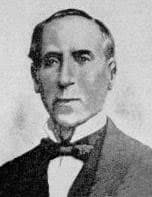
Edward James Roye
Edward James Roye was the fifth President of Liberia and the first president from the True Whig political tradition. Born in Newark, Ohio, in 1815, he emigrated to Liberia in 1846 and became a successful merchant before entering politics. He served as Speaker of the Liberian House of Representatives, Chief Justice of Liberia, and later president from 1870 until his removal from office in October 1871. His presidency was dominated by serious economic difficulties, political conflict, controversy surrounding a British loan, and a disputed struggle over the presidential term of office. His removal marked one of the most serious political crises in nineteenth-century Liberia. He died in mysterious circumstances in 1872.
Edward James Roye was born on February 3, 1815, in Newark, Ohio, United States. He was born into a prosperous African American family and received an education that was unusual for many African Americans of the period. He attended Ohio University in Athens, Ohio, before eventually moving to Liberia. The Library of Congress identifies Roye as having been born in 1815 and records his later service as Speaker of the Liberian House of Representatives, Chief Justice of the Supreme Court, and President of Liberia.
Early Life and Education
Roye grew up in Ohio in a family that had achieved considerable economic success. His education prepared him for a career in business and public leadership. After the death of his father, Roye inherited substantial property and financial resources, helping establish the economic independence that later allowed him to become a successful merchant in Liberia.
In 1846, Roye emigrated to Liberia. He arrived only one year before Liberia declared independence, placing him in the country during one of the most important transitional periods in its history. He established himself as a merchant and became involved in Liberia's growing commercial economy.
Business Career
Roye became one of Liberia's most successful nineteenth-century merchants. His commercial activities connected Liberia to overseas markets and helped make him one of the wealthier members of the country's emerging political and business class.
His success in commerce gave him financial independence and social influence. He was able to participate actively in national affairs at a time when Liberia's political leadership was dominated by a relatively small Americo-Liberian elite.
His experience as a businessman also influenced his political views. Roye supported greater commercial openness and was associated with the position that Liberia should encourage foreign trade and investment rather than restrict commercial activity to established local interests. His views brought him into political conflict with some of the country's older political leaders, including Joseph Jenkins Roberts.
Entry Into Public Life
Roye entered Liberian politics in 1849. He was elected to the House of Representatives and quickly became an important legislative figure. He served as Speaker of the House from 1849 to 1850.
His rise demonstrated the growing importance of merchants and business leaders in Liberian politics. Roye combined financial independence with political ambition and became increasingly influential in national affairs.
He later served as a senator representing Montserrado County. His political career continued to expand, and in 1865 he became Chief Justice of the Supreme Court of Liberia, a position he held until 1868. The Library of Congress records both his service as Speaker and his later role as Chief Justice.
Chief Justice of Liberia
As Chief Justice, Roye became one of the country's most senior constitutional and legal officials. His experience in the legislature and judiciary gave him a broad understanding of Liberia's political and legal institutions.
His appointment also placed him among the country's most prominent national leaders. By the late 1860s, he had established himself as a serious political contender for the presidency.
During this period, Liberia faced growing economic difficulties. International trade was important to government revenue, but the country's economy remained heavily dependent on agricultural exports and overseas commerce. Financial pressures would become one of the defining problems of Roye's presidency.
Political Rise and the True Whig Party
Roye eventually became associated with the political movement that developed into the True Whig Party. The party represented a political challenge to the older Republican establishment that had dominated Liberian politics for much of the nineteenth century.
The emergence of the True Whig movement reflected divisions within the Americo-Liberian political class over economic policy, political power, and the direction of the country.
Roye's election in 1869 was historically important because it brought a new political group to the presidency. He became the first president associated with the True Whig Party and succeeded James Spriggs Payne.
Presidency, 1870–1871
Edward James Roye was inaugurated as Liberia's fifth president on January 3, 1870. He entered office at a time when Liberia was experiencing serious financial and political challenges.
The government had limited revenue, while the country's economy depended heavily on international trade. Liberia also faced difficulties extending government authority beyond the coastal settlements and maintaining stable relationships with communities throughout the country.
Roye's administration attempted to address these problems through economic and commercial measures. However, the financial condition of the country remained extremely difficult.
Economic Problems
One of the greatest challenges facing Roye was Liberia's financial weakness.
Liberia depended heavily on exports such as palm products, agricultural commodities, and other natural resources. Changes in international trade affected government revenue, while the country needed money for administration, infrastructure, and other national responsibilities.
The government therefore looked increasingly toward foreign borrowing.
This financial pressure eventually led Roye's administration into one of the most controversial loan agreements in Liberia's nineteenth-century history. In 1871, his government negotiated a substantial loan from British financial interests. The terms became the subject of intense political controversy, with opponents arguing that the agreement was unfavorable to Liberia and had not been properly authorized.
The 1871 British Loan Controversy
The loan became a major turning point in Roye's presidency.
The agreement involved British financial interests and was intended to provide Liberia with funds at a time when the government was experiencing serious financial difficulties. However, controversy developed over the terms of the agreement and the amount of money Liberia would actually receive.
Critics of the administration accused Roye's government of exceeding its constitutional authority and of accepting unfavorable financial conditions. Supporters of Roye disputed the accusations and maintained that the government was attempting to solve a genuine national financial crisis.
The dispute became increasingly political. Roye's opponents used the loan controversy to challenge his government, while the administration viewed the opposition as part of a broader attempt to remove it from power.
A surviving Liberian legislative record from 1871 later described Roye's removal in strongly negative terms, accusing him of numerous unconstitutional acts. The record also shows that the legislature subsequently approved the actions of the provisional government that replaced him. Because these records came from the political forces that opposed Roye, they must be read alongside the wider historical evidence rather than treated as a completely neutral account.
Dispute Over the Presidential Term
Another major political conflict concerned the length of the presidential term.
At the time, Liberia's presidency operated under a two-year term. During Roye's administration, an effort was made to change the presidential term to four years.
The proposed change became highly controversial. Political opponents questioned the validity of the process and feared that Roye might use the proposed extension to remain in power.
The disagreement over the presidential term intensified the political conflict between Roye's supporters and his opponents. By 1871, the disagreement had become part of a broader struggle over constitutional authority and control of the government.
The 1871 Political Crisis
The combination of financial controversy, political rivalry, and disagreement over the presidential term created a severe crisis in Monrovia.
Roye's opponents organized against his administration, while his supporters defended his right to remain in office. Political tensions eventually developed into open confrontation.
On October 26, 1871, Roye was removed from the presidency. The Library of Congress identifies 1871 as the year in which a high-interest British loan contributed to the political crisis that resulted in Roye's removal.
A provisional government was established following his removal, and Vice President James Skivring Smith eventually served as president for the remainder of the constitutional period.
Roye's removal is commonly described as Liberia's first coup d'état, although the precise political and constitutional circumstances remain debated. The surviving records were produced by opposing political factions and reflect the intense conflict of the period.
Removal From Office
Roye's removal was a dramatic break from the political pattern that had characterized Liberia's early republic.
He had entered the presidency as a wealthy businessman and political reformer who represented a challenge to the established Republican leadership. Within less than two years, however, his government had collapsed amid political and financial conflict.
His downfall demonstrated how fragile Liberia's political institutions could become when economic problems, constitutional disagreements, and political rivalry combined.
The episode also revealed the growing competition between the emerging True Whig political movement and the older Republican establishment.
Later Life and Death
After his removal from office, Roye was imprisoned and remained involved in legal and political disputes surrounding the events of 1871.
The circumstances of his death remain uncertain.
The Library of Congress records Roye as having lived from 1815 to 1871 in its portrait collection, while other historical records give his death as occurring in February 1872. Modern historical collections, including Indiana University's Liberian Collections Project, describe his death in early 1872 as mysterious.
Different accounts have offered different explanations for what happened to him. Some accounts state that he died while attempting to escape and reach a British vessel in Monrovia harbor, while other traditions suggest that he was killed after his removal from office. Because the historical evidence is conflicting, the exact circumstances of his death should be treated as unresolved rather than presented as established fact.
Historical Controversies
Edward James Roye's career is closely connected to several major controversies in Liberia's nineteenth-century history.
The first concerns the 1871 British loan. The loan was presented as a response to Liberia's financial difficulties, but its terms became a major source of political opposition. The controversy contributed directly to the collapse of Roye's administration.
The second concerns the presidential term dispute. Roye's supporters and opponents disagreed over whether the presidential term could be extended from two years to four years. The disagreement contributed to the political crisis that preceded his removal.
The third concerns the circumstances of his death. Because the surviving accounts disagree, historians have continued to treat the final events of Roye's life as a matter requiring careful examination.
These controversies make Roye one of the most debated presidents of early Liberia.
Historical Legacy
Edward James Roye occupies a distinctive place in Liberian history as the fifth president and the first president associated with the True Whig political tradition. His rise demonstrated the growing political influence of Liberia's merchant class and the emergence of organized competition against the older Republican establishment.
His presidency is especially important for understanding Liberia's nineteenth-century financial problems. The British loan controversy exposed the country's dependence on foreign finance and demonstrated how economic weakness could quickly become a political crisis.
His removal from office in 1871 became a defining moment in the country's political history. It showed the instability that could emerge when constitutional disagreements, economic pressure, and partisan rivalry came together.
Roye's life also remains historically significant because he was a successful African American emigrant who built a major commercial career in Liberia before reaching the highest political office in the republic. His career connected commerce, law, politics, and the development of Liberia's early national institutions.
Birth Date: February 3, 1815
Death Date: February 1872 (exact date and circumstances disputed)
Birthplace: Newark, Ohio, United States
County: Montserrado County
Role: 5th President of Liberia; Chief Justice of Liberia; Speaker of the House of Representatives; Merchant; Politician
Era: Early Liberian Republic / 19th Century