Leadership
1850–1870
Era
19th Century
Born
March 1835
Died
1910
Birthplace
United States
Country
United States
Role
Civil Servant; Diplomat; Explorer; Government Official; Writer; Government Expedition Leader
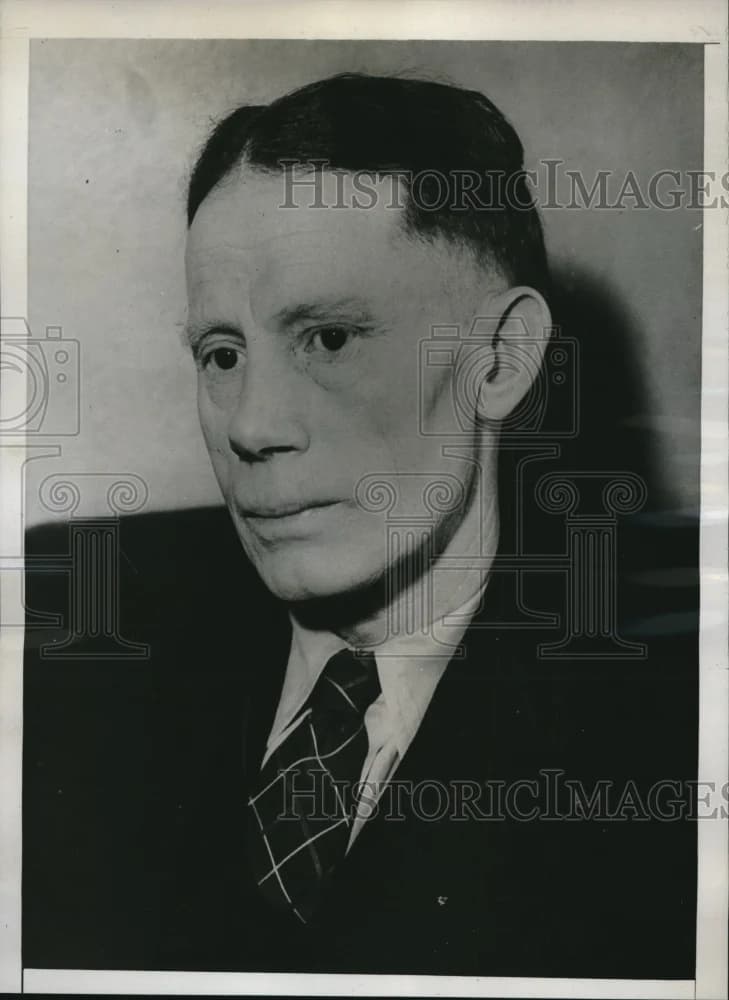
Benjamin J. K. Anderson
Benjamin J. K. Anderson was a nineteenth-century Liberian civil servant, diplomat, explorer, writer, and government official whose work contributed to Liberia's knowledge of and relations with the country's interior. Born in the United States in the nineteenth century, Anderson migrated to Liberia as a young man and entered public service. He became one of the most notable Liberian officials involved in government expeditions into the interior, particularly the regions around Musardu and the Western Manding territories. His journeys were important because Liberia's political authority in the nineteenth century was concentrated largely along the coast, while many inland communities maintained their own political systems and relationships. Anderson's expeditions gathered information about geography, peoples, settlements, trade, political authorities, and natural resources. His reports became important sources for the Liberian government and later historians studying the country's nineteenth-century interior.
Early Life
Benjamin J. K. Anderson was born in the United States in the nineteenth century. The surviving historical record does not provide enough reliable information to establish an exact birth date and birthplace with confidence, so those details should not be presented as certain in the Liberia History database.
Later bibliographical records identify him as Benjamin J. K. Anderson, born around 1834, while other historical references give 1835. Because the available sources conflict, it is more historically responsible to record his birth year as approximately 1834–1835 rather than inventing an exact date.
Anderson eventually migrated to Liberia and became part of the country's growing class of educated public servants.
Migration to Liberia
Anderson arrived in Liberia as a young man and entered government service.
Liberia at the time was still a relatively young independent republic. Independence had been declared on July 26, 1847, and the government was working to establish its authority beyond the settlements along the coast.
Anderson's education, administrative abilities, and knowledge of the region allowed him to rise within the Liberian civil service.
He eventually held important government responsibilities and became particularly associated with Liberia's efforts to gather information about the interior.
Entry into Public Service
Anderson's career developed during a period when Liberia was attempting to strengthen its institutions and expand its understanding of the territories it claimed.
The Liberian government depended on officials who could travel beyond Monrovia and other coastal settlements, communicate with inland authorities, document local conditions, and establish diplomatic relationships.
Anderson became one of these officials.
His work combined government administration with exploration and diplomacy. Unlike a European explorer working independently for a foreign power, Anderson's journeys were conducted in connection with the Liberian government and its interests in the country's interior.
The Importance of Liberia's Interior
During the nineteenth century, Liberia's government had limited practical control over many areas far from the coast.
Numerous African societies maintained their own political institutions, trade networks, customary laws, and systems of authority. The Liberian government nevertheless claimed a much larger territory than it could effectively administer.
This created an important challenge for the young republic.
The government needed information about the interior and sought relationships with inland rulers. It also wanted to strengthen Liberia's political and commercial position against neighboring states and European colonial powers.
Anderson's expeditions became part of this larger effort.
First Expedition to Musardu
Anderson's best-known achievement was his journey to Musardu, an important center of the Western Manding region.
In 1868, he traveled from Liberia's coastal region into the interior. His route took him through areas that were then poorly known to the Liberian government and to many outsiders.
The expedition was significant because Anderson carefully recorded geographical features, settlements, peoples, customs, political authorities, and natural resources encountered along the journey.
The Library of Congress preserves maps showing his route from Monrovia toward Musardu and identifies Anderson as the person associated with the journey.
Journey to Musardu
Anderson's expedition eventually reached Musardu, which was an important political and commercial center associated with the Western Manding peoples.
His account, later published as Narrative of a Journey to Musardu, the Capital of the Western Mandingoes, became one of the significant nineteenth-century written records concerning Liberia's interior.
The work documented the route, geography, communities, political conditions, and observations Anderson made during the journey.
Because much of the region was not well documented in contemporary European or Liberian publications, Anderson's report became an important historical source.
Diplomatic Mission
The journey was not simply an exploration for geographical knowledge.
Anderson traveled on behalf of the Liberian government and sought relationships with inland political authorities.
The Liberian government wanted to establish diplomatic and commercial connections with communities beyond the coastal settlements. Treaties and agreements could also strengthen Liberia's claims to influence in areas that were politically independent from Monrovia.
Anderson therefore functioned simultaneously as an explorer and government representative.
His mission illustrates how nineteenth-century Liberia attempted to extend its political influence through diplomacy rather than relying entirely on military force.
Information Gathered During the Expedition
Anderson's observations covered much more than geography.
He recorded information about the peoples he encountered, their customs, political organization, settlements, trade, agriculture, and natural environment.
He also took an interest in natural resources and commercial possibilities.
The information gathered during his journey became useful to the Liberian government as it considered how to establish stronger connections with the interior.
The Library of Congress notes that the Liberian government used information from Anderson's report to assert limited control over inland areas.
Historical Importance of the Musardu Journey
Anderson's journey became important in Liberian history for several reasons.
First, it demonstrated that Liberian officials could undertake long expeditions into the interior.
Second, it produced detailed written information about regions that were relatively unfamiliar to the coastal government.
Third, it strengthened Liberia's diplomatic relationships with some inland authorities.
Finally, the information collected by Anderson became part of the evidence used by the Liberian government when attempting to extend its influence inland.
His journey therefore belonged to a much larger process in which the Liberian state attempted to transform territorial claims into practical political relationships.
Second Expedition
Anderson later undertook another expedition into the Liberian interior.
In 1874, the Liberian government dispatched him again toward Musahdu. The expedition was intended to continue the work of his earlier journey and gather additional information about the region and its resources.
A surviving account of this second expedition was later published under the title Narrative of the Expedition Despatched to Musahdu by the Liberian Government under Benjamin J. K. Anderson, Sr., in 1874.
The report provides information about the difficulties encountered during the expedition, including travel conditions, political circumstances, and interactions among different communities.
Relations with Inland Communities
Anderson's expeditions occurred at a time when Liberia's relationship with inland African societies was complex.
The Liberian government wanted recognition of its authority, but many inland communities already possessed established political institutions and did not automatically recognize Monrovia's authority.
Anderson therefore had to operate within a diplomatic environment in which negotiation, treaties, trade, and relationships with local rulers were essential.
His work demonstrates that Liberia's territorial expansion was not simply a matter of drawing boundaries on a map. It required relationships with communities whose political authority predated the Liberian republic.
Liberia's Territorial Claims
Anderson's expeditions later became connected to Liberia's territorial claims in the interior.
The government in Monrovia used information from his journeys to strengthen its understanding of the areas it claimed.
However, Liberia's claims were contested by neighboring African authorities and, increasingly, by European colonial powers.
During the late nineteenth century, Britain and France expanded their influence throughout West Africa. Liberia's relatively limited military and economic resources made it difficult for the republic to defend all of the territory it claimed.
Anderson's work therefore took place during a period in which the geographical knowledge and diplomatic relationships developed by Liberian officials were becoming increasingly important to the survival of the republic as an independent state.
Writing and Historical Record
Anderson's greatest surviving contribution is his written record.
His Narrative of a Journey to Musardu preserved observations about nineteenth-century Liberia and neighboring inland societies that might otherwise have been lost.
The work is valuable not because every observation should automatically be treated as an objective description. Like other nineteenth-century travel accounts, it reflects the author's own perspective, education, political objectives, and assumptions.
For historians, however, the work remains an important primary source when read alongside oral traditions, African historical scholarship, maps, treaties, and other contemporary records.
Role in Liberia's Government
Anderson's expeditions were part of a broader career in the Liberian government.
Historical records describe him as a senior civil servant who held significant responsibilities and eventually reached cabinet-level positions.
His government career demonstrates the importance of educated African officials in the development of Liberia's early administrative system.
Rather than being remembered only as an explorer, Anderson should therefore be understood as a government official whose exploration and diplomacy were connected directly to Liberia's state-building efforts.
Relationship Between Exploration and State Building
One of the most important aspects of Anderson's career was the relationship between exploration and government.
In the nineteenth century, geographical knowledge could have direct political consequences.
Knowing the locations of towns, rivers, mountains, trade routes, political centers, and natural resources helped governments understand territories over which they claimed authority.
Anderson's reports provided the Liberian government with precisely this kind of information.
His work therefore helped connect geographical knowledge with Liberia's efforts to establish stronger political and economic relationships with the interior.
The Wider West African Context
Anderson's career unfolded during a period of major political change across West Africa.
European powers were increasingly expanding their territorial influence, while African states and communities continued to defend their own political authority.
Liberia occupied a distinctive position because it was an independent African republic rather than a European colony.
The government therefore faced the difficult task of defending its independence while also negotiating with neighboring African societies and European powers.
Anderson's expeditions formed part of Liberia's attempt to understand and navigate this changing regional environment.
Historical Limitations and Context
Anderson's writings should be treated as historical primary sources rather than unquestioned descriptions of nineteenth-century African societies.
Some of the terminology and classifications used by nineteenth-century writers reflected the intellectual assumptions of their period.
Modern historical research can use Anderson's observations while also comparing them with African oral histories, local traditions, archaeological evidence, contemporary African scholarship, and other documentary sources.
This approach allows his work to be appreciated for its historical value without treating every nineteenth-century interpretation as an established fact.
Later Life
Anderson remained connected with Liberia's public life after his expeditions.
The historical record concerning his later years is less extensive than the surviving documentation of his journeys. This is one reason it is important not to add unsupported details to his biography.
Later bibliographical records identify him as Benjamin J. K. Anderson Sr. and give his death as around 1910, although some details of his later career and exact dates remain less firmly documented than those of his expeditions.
Death
Benjamin J. K. Anderson died around 1910 according to later bibliographical records.
Because the surviving sources do not establish a precise day and month with sufficient confidence, the Liberia History database should record the death date as 1910 rather than inventing an exact date.
Historical Legacy
Benjamin J. K. Anderson is remembered primarily for his contribution to Liberia's nineteenth-century exploration, diplomacy, administration, and knowledge of the interior.
His expeditions to Musardu and Musahdu produced some of the most important surviving Liberian accounts of the country's inland regions during the nineteenth century.
His work also illustrates an important stage in Liberia's development: the effort to transform a coastal republic with limited practical reach into a state capable of establishing relationships with communities farther inland.
The maps and records associated with his journeys remain valuable historical sources. The Library of Congress continues to preserve material connected to his expedition, including maps showing his route toward Musardu.
For Liberian history, Anderson's importance lies not simply in where he traveled, but in how his journeys connected geographical knowledge, diplomacy, government administration, and Liberia's attempt to establish itself as an independent African state.
Birth Date: c. 1834–1835
Death Date: 1910
Birthplace: United States
Country: Liberia
County: Not applicable — born outside Liberia
Role: Civil Servant; Diplomat; Explorer; Government Official; Writer; Government Expedition Leader
Era: 19th Century