Leadership
1853–1872
Era
19th Century
Born
May 1819
Birthplace
New York City, New York, United States
Country
United States
Role
Episcopal Priest; Missionary; Educator; Professor; Writer; Intellectual; Abolitionist; Africanist; Early Pan-African
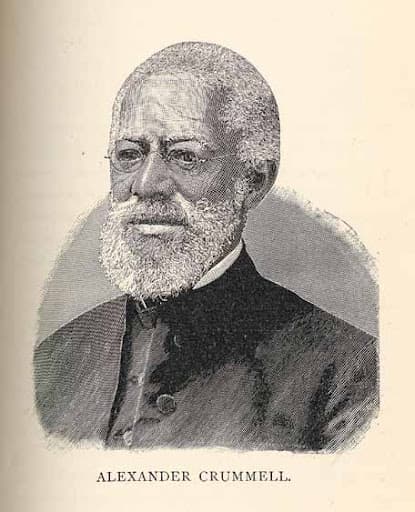
Alexander Crummell
Alexander Crummell was an American-born Episcopal priest, educator, writer, missionary, and intellectual whose career became closely connected with nineteenth-century Liberia. Born in New York City in 1819 to free Black parents, Crummell faced racial barriers in American education and religious institutions but continued his studies through abolitionist schools and eventually graduated from Queens' College, Cambridge, in England in 1853. That same year, he traveled to Liberia as an Episcopal missionary and became one of the country's important early educators and religious leaders. For approximately twenty years, Crummell worked in Liberia as a priest, teacher, missionary, professor, and public intellectual. He taught at Liberia College, served churches and schools in Monrovia, Maryland County, and the St. Paul's River area, and promoted education and Christian institutions. He also developed influential ideas about African self-development, Black intellectual advancement, African identity, and the historical role of Liberia. His writings later became important to the development of Black nationalism and Pan-African thought.
Early Life and Family Background
Alexander Crummell was born on March 3, 1819, in New York City. His parents, Boston Crummell and Charity Hicks, were free Black people. His father had been born in West Africa and had experienced enslavement before gaining his freedom and establishing a family in the United States. Crummell therefore grew up in a Black community shaped by both African heritage and the racial conditions of nineteenth-century America.
From an early age, Crummell demonstrated a strong interest in education and religion. His early schooling included institutions associated with the abolitionist movement. He studied at the Canal Street High School in New York, where he developed his knowledge of classical languages, including Greek and Latin. He later attended Noyes Academy in New Hampshire, an integrated school established by abolitionists. The school was destroyed by a racist mob, forcing Crummell to continue his education elsewhere.
He subsequently attended the Oneida Institute in New York, another institution associated with abolitionist education. These experiences strengthened his commitment to education, racial equality, and intellectual development.
Religious Calling and Barriers to Education
Crummell decided to become an Episcopal minister. His path into the ministry, however, was obstructed by racial discrimination.
In 1840–1841, he studied theology at Yale, although he was not permitted to participate as a formally enrolled student in the same way as white students. He was also denied admission to the General Theological Seminary in New York because of racial discrimination. Despite these obstacles, he continued studying independently and was ordained as an Episcopal deacon in 1842 and a priest in 1844.
His early religious career was closely connected with the abolitionist movement. He preached against slavery and racial oppression and argued that Black people should have access to education, religious leadership, and opportunities for intellectual development.
Years in England and Cambridge
In 1848, Crummell traveled to Britain. He spent several years in England, where he lectured and raised support for his religious work while continuing his education.
He was admitted to Queens' College, Cambridge, and graduated in 1853. His Cambridge education was an extraordinary achievement for a Black American in the nineteenth century. He became the first Black student known to have graduated from Cambridge University.
His education at Cambridge strengthened his knowledge of classical literature, philosophy, theology, and political thought. These intellectual influences later shaped his approach to education and African development.
Arrival in Liberia
After completing his studies, Crummell traveled to Liberia in 1853 as an Episcopal missionary. Liberia had declared independence in 1847 and was attempting to build an independent republic on the West African coast.
Crummell viewed Liberia as an important opportunity for people of African descent to establish institutions of political independence, education, religion, and economic development. He believed that Liberia could become a model Christian republic and an important center for the development of African societies.
He eventually became a Liberian citizen and spent approximately twenty years working in Liberia and the wider West African region.
Religious Work in Liberia
Crummell's primary profession was religious ministry.
He served several Episcopal missions and churches in Liberia and worked to establish religious and educational institutions. His ministry was not limited to preaching. He viewed schools, churches, literacy, and moral education as interconnected parts of national development.
He believed that education should prepare people to take responsibility for their communities and that Liberia's development required educated African leadership.
His work included missionary activity in Monrovia, Maryland County, and the St. Paul's River area. From 1867 to 1873, he was particularly active around Caldwell, where he established a church and school and developed educational outreach to Indigenous communities.
Work in Maryland County and Mount Vaughan
Crummell also worked in Maryland County, an important region of nineteenth-century Liberia.
In 1858, he became associated with Mount Vaughan High School at Cape Palmas. The school became one of the educational institutions through which he promoted his belief in the importance of education and Christian instruction.
His activities demonstrated that his vision for Liberia extended beyond Monrovia. He wanted educational and religious institutions to reach communities outside the capital and contribute to the development of the wider republic.
Professor at Liberia College
One of Crummell's most important positions in Liberia was his work at Liberia College, established in Monrovia in 1851.
He joined the institution's faculty in the early 1860s and served as a professor of philosophy, English, and related subjects. Sources differ slightly over the exact starting year of his appointment, with institutional records generally placing his Liberia College service in the early 1860s. He remained associated with the college until 1866.
At Liberia College, Crummell became part of an emerging intellectual community that sought to develop higher education in the new African republic.
His teaching reflected his broad interests in philosophy, religion, literature, morality, language, and African civilization.
Relationship with Edward Wilmot Blyden
Crummell's Liberian career overlapped with that of Edward Wilmot Blyden, another major nineteenth-century African intellectual.
The two men shared an interest in African education, African development, Christianity, Black intellectual advancement, and the future of Liberia. Both became important figures in the intellectual history of nineteenth-century West Africa.
Their ideas were not identical, however. Crummell placed particularly strong emphasis on Christianity, moral development, classical education, and the creation of institutions that would support African advancement. Blyden developed a broader and more complex engagement with African cultural identity, Islam, and the idea of an African personality.
Their relationship and intellectual differences are important because together they represent two influential approaches to the question of African development during the nineteenth century.
Education and African Development
Education was at the center of Crummell's understanding of African development.
He believed that political independence alone was not enough to create a successful African republic. Liberia also needed educated citizens, trained leaders, schools, churches, and institutions capable of sustaining national development.
He therefore promoted education as a means through which Africans and people of African descent could develop intellectual confidence and exercise greater control over their future.
His educational philosophy was strongly influenced by Christianity and classical Western education. At the same time, he argued that Black people needed to take responsibility for developing their own intellectual institutions because racial discrimination in Europe and America restricted their opportunities.
Views on Liberia and African American Migration
Crummell strongly supported the idea that people of African descent in the Americas could contribute to the development of Africa.
He regarded Liberia as an important place where African Americans could establish institutions and participate in African political and economic development.
This placed him within the nineteenth-century movement supporting Black emigration to Africa. His position was closely connected with the American Colonization movement, although his own arguments increasingly emphasized African self-development and the responsibilities of people of African descent toward Africa.
His ideas should be understood in their historical context. The colonization movement included different and sometimes conflicting motives, and Crummell's writings reflected the nineteenth-century belief that migration, education, Christianity, commerce, and African institution-building could contribute to the advancement of Africa.
Political and Social Difficulties in Liberia
Crummell's vision did not always fit comfortably within Liberia's political and social environment.
He encountered disagreements over education, missionary work, political questions, and the relationship between Americo-Liberian settlers and Indigenous African communities.
His efforts to promote his educational and religious program also faced resistance and limited institutional support.
His position at Liberia College ended in 1866 after longstanding disagreements with the college administration. Following his departure from the college, he continued educational and missionary work in Liberia.
These difficulties reveal an important part of Crummell's Liberian experience: although he believed strongly in Liberia's potential, the country was already experiencing political, social, and institutional conflicts that made his ambitious vision difficult to achieve.
Work Among Indigenous Communities
Crummell was also involved in educational and missionary efforts directed toward Indigenous African communities.
During his years at Caldwell and other mission stations, he established schools and churches and attempted to extend Christian education beyond the Americo-Liberian settlements.
His approach was shaped by the nineteenth-century missionary belief that Christianity and Western-style education should play central roles in African development. Modern historians therefore examine both the educational contributions of his work and the limitations of the missionary assumptions behind it.
His work nevertheless contributed to the growth of organized education and Christian institutions in parts of Liberia.
The Future of Africa
Crummell expressed his ideas about Africa most clearly in his writings and speeches.
His 1862 book, The Future of Africa: Being Addresses, Sermons, etc. Delivered in the Republic of Liberia, brought together his arguments about Christianity, education, African development, and the responsibilities of people of African descent. The book became one of his most important statements on the future of Africa.
Crummell believed that Africa had an important historical future and that Africans should not be treated as passive subjects of European history.
He argued that African advancement required education, moral development, political organization, economic activity, and leadership.
Departure from Liberia
By the early 1870s, Crummell had become increasingly frustrated with political and social conditions in Liberia.
In 1872, after approximately two decades in West Africa, he returned to the United States. Some historical accounts emphasize the political instability and conflicts surrounding his Liberian career as important reasons for his departure.
His departure marked the end of his main period of direct work in Liberia, but not the end of his influence on African affairs.
He continued to write and speak about Africa and maintained his interest in African political and intellectual development.
Life in Washington, D.C.
After returning to the United States, Crummell settled in Washington, D.C.
He became associated with St. Luke's Episcopal Church and eventually served as its rector for nearly two decades. The church became an important Black religious and community institution in Washington.
His work in Washington continued the pattern established during his Liberian career: combining religious leadership with education, community organization, intellectual work, and advocacy for Black advancement.
Opposition to Racial Discrimination in the Episcopal Church
Crummell remained active in the struggle against racial discrimination within American religious institutions.
In 1883, he helped organize the Conference of Church Workers Among Colored People after the Episcopal Church proposed arrangements that would have placed Black congregations into separate missionary structures.
Crummell viewed such arrangements as institutional discrimination and worked to strengthen Black leadership within the church.
Major Writings
Crummell was a prolific writer and speaker.
His major works included:
· The Future of Africa (1862)
· The Greatness of Christ and Other Sermons (1882)
· Africa and America: Addresses and Discourses (1891)
He also produced numerous sermons, essays, addresses, and letters dealing with Christianity, Africa, race, education, politics, and Black intellectual advancement.
His writings provide important evidence for understanding nineteenth-century debates about Africa and the African diaspora.
Influence on Pan-African Thought
Crummell became an important early thinker in the intellectual history that preceded modern Pan-Africanism.
His central ideas included African self-development, Black intellectual advancement, education, political independence, and the importance of people of African descent taking responsibility for the future of Africa.
Although the organized Pan-African movement developed more fully in the twentieth century, Crummell's nineteenth-century writings contributed to the intellectual environment from which later Black nationalist and Pan-African movements emerged.
His ideas influenced later Black intellectuals, including W. E. B. Du Bois, who studied Crummell's writings and regarded him as an important predecessor. Scholarly studies of Crummell also connect his thought to later Black nationalism and Pan-African intellectual traditions.
American Negro Academy
One of Crummell's final major achievements came in 1897, when he helped establish the American Negro Academy in Washington, D.C.
The organization brought together Black scholars and intellectuals at a time when African Americans faced discrimination in American academic and professional institutions.
Crummell became the academy's first president. The organization sought to promote scholarship, intellectual achievement, and the defense of Black intellectual capacity.
The academy represented a continuation of a principle that had guided Crummell throughout his life: Black people needed to build and defend their own intellectual institutions.
Later Years
Crummell continued writing, preaching, and teaching into old age.
After retiring from his long service at St. Luke's, he taught at Howard University from 1895 to 1897. He remained intellectually active even as his health declined.
His final years were devoted largely to scholarship, religious work, and the development of Black intellectual institutions.
Death
Alexander Crummell died on September 10, 1898, in Red Bank, New Jersey. He was 79 years old.
His death marked the end of the life of a man whose career had crossed several important worlds: the African American abolitionist movement, nineteenth-century Liberia, African Christian missions, higher education, and the emerging intellectual movement for African and Black self-development.
Historical Legacy
Alexander Crummell occupies an important place in both Liberian and African-American history.
His approximately twenty years in Liberia made him an important figure in the country's early educational and religious development. He taught at Liberia College, established and supported schools and churches, worked among different Liberian communities, and participated in debates about the country's future.
His broader intellectual legacy is even larger. Crummell argued that African people possessed the intellectual and moral capacity to shape their own future and that education was essential to that process.
His ideas helped establish an intellectual tradition that later influenced Black nationalism, African nationalism, and Pan-African thought.
Crummell's legacy must also be understood critically. His support for Christian missionary expansion, Western classical education, and Black emigration to Africa reflected the ideas of his nineteenth-century environment. Some of his assumptions about African society and civilization are viewed differently today.
Nevertheless, his insistence on Black intellectual achievement, African self-development, education, and African historical importance made him one of the significant nineteenth-century thinkers connected to Liberia.
Birth Date: March 3, 1819
Death Date: September 10, 1898
Birthplace: New York City, New York, United States
Country: Liberia
County: Not applicable — born outside Liberia
Role: Episcopal Priest; Missionary; Educator; Professor; Writer; Intellectual; Abolitionist; Africanist; Early Pan-African Thinker
Era: 19th Century