Introduction
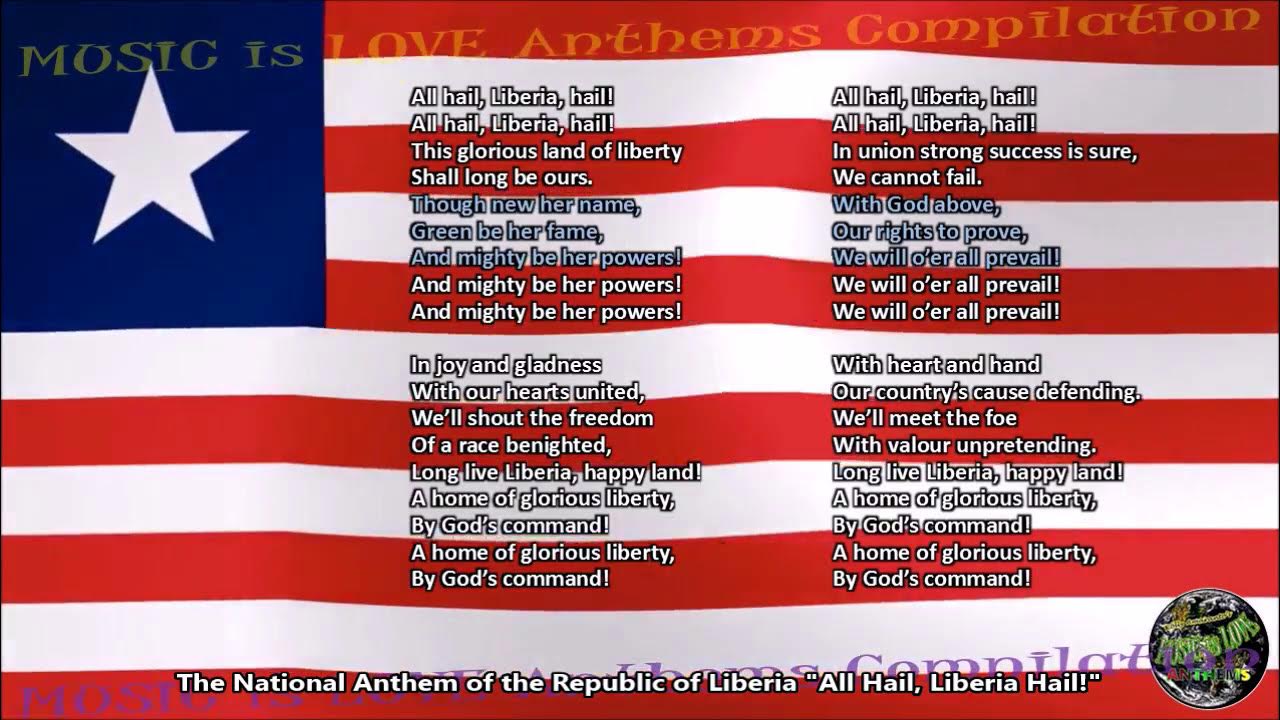
Liberia’s national anthem, “All Hail, Liberia, Hail!”, is one of the country's oldest continuing national symbols. The anthem expresses themes of liberty, national unity, patriotism, faith, and the defense of Liberia. It emerged during the formative years of the Liberian Republic, following the country's declaration of independence in 1847.
The Birth of a National Anthem
Liberia declared its independence on July 26, 1847, establishing a new sovereign republic on the West African coast. The creation of the republic required more than a declaration of political independence. Liberia also developed national institutions, laws, symbols, and traditions that could express the identity of the new nation.
The anthem belongs to this early period of nation-building. Its words are credited to Daniel Bashiel Warner, who later became Liberia's third president. The music is credited to Olmstead Luca, a Liberian musician and composer.
Historical references commonly date the adoption of the anthem's words to 1847, the year Liberia became independent, while the musical setting is generally dated to 1860. Because surviving online documentation about the precise circumstances surrounding its creation is limited, these dates should be understood as the commonly documented historical chronology rather than as evidence that every detail of the anthem's development is fully preserved.
The Library of Congress's collections provide important primary-source material for studying Liberia's early republic and its political leaders, including Daniel B. Warner and the institutions of the nineteenth-century Liberian state.
Daniel Bashiel Warner and the Anthem
Daniel Bashiel Warner was an important figure in early Liberian political history. He served as Liberia's third president, from 1864 to 1868, after previously holding other positions within the government.
Warner belonged to the generation of Liberian leaders who helped establish and develop the institutions of the new republic. His association with the national anthem therefore connects the song directly with Liberia's early political history.
The anthem's words reflect several ideas that were central to the national identity expressed by Liberia's nineteenth-century leadership: liberty, unity, national strength, religious faith, and the determination to defend the country.
Warner's later political career gives additional historical context to the anthem. He became president during a period when Liberia was still a relatively young republic and was developing its political institutions and relationships with other countries.
The Library of Congress's Liberia collections document Warner's role in the country's early political history.
Olmstead Luca and the Music
The music of Liberia's national anthem is traditionally credited to Olmstead Luca.
The musical setting helped transform the anthem from a written patriotic composition into a piece that could be performed publicly and associated with national ceremonies.
The development of national music was important in the nineteenth century because an anthem could be performed during official occasions, celebrations, and other events where the government and people gathered to express national identity.
The commonly cited chronology places the musical composition around 1860, several years after Liberia's independence.
What the Anthem Represents
The anthem's central message is patriotic. It celebrates Liberia as a land of liberty and expresses confidence in the country's future.
Several major themes can be identified in the anthem.
Liberty
Liberty is at the center of Liberia's national identity. The country's very name was associated with freedom, and the anthem repeatedly presents Liberia as a place connected with liberty.
This theme is also reflected in Liberia's national motto:
“The Love of Liberty Brought Us Here.”
The anthem therefore forms part of a wider collection of national symbols built around the concept of freedom.
National Unity
The anthem also emphasizes unity. Its message presents national strength as something that comes from people joining together rather than acting separately.
This is particularly significant in the historical context of the nineteenth-century republic, when Liberia was developing its political institutions and attempting to establish itself as a sovereign state.
National Defense
Another important theme is the defense of Liberia. The anthem expresses the determination to protect the country and its independence.
This reflects the circumstances of Liberia's early history. After independence, the young republic had to establish its authority and maintain its sovereignty while operating in a region where European colonial expansion was rapidly increasing.
Liberia's declaration of independence itself appealed to the international community for recognition of the country's sovereignty. The Library of Congress records the declaration of July 26, 1847, as a major turning point in Liberia's history.
Faith
Religious language is also present in the anthem and reflects the strong influence of Christianity in the political and social culture of the early republic.
References to God appear throughout Liberia's historical national ceremonies and official proclamations. Modern presidential proclamations commemorating Liberia's independence continue to include religious language when discussing the nation's history and national observances.
The Anthem and Liberia's Independence
The anthem cannot be separated from the history of Liberia's independence.
On July 26, 1847, Liberia's Declaration of Independence was adopted and signed. The declaration presented Liberia as a free and sovereign state and appealed to other nations to recognize its independence. Britain became one of the first countries to recognize the new republic, while the United States did not formally recognize Liberia until 1862.
The national anthem developed within this broader process of creating a national identity.
The flag, coat of arms, seal, motto, anthem, and other national symbols all served different purposes, but together they communicated the identity of the new republic.
The anthem provided something that a visual symbol could not: a national voice expressed through music and words.
Use in National Life
Over the decades, “All Hail, Liberia, Hail!” became established as Liberia's national anthem.
It has been associated with important national occasions, including government ceremonies, independence celebrations, educational activities, diplomatic events, and other official functions.
For generations of Liberians, the anthem has therefore been part of civic life from childhood through adulthood.
Its performance at public occasions creates a connection between present-day Liberia and the republic established in the nineteenth century.
The Anthem Through Liberia's History
Liberia has experienced enormous political and social changes since the anthem emerged.
The country passed through the First Republic, political changes in the twentieth century, the 1980 coup, years of political instability, two civil wars, the transition back to constitutional government, and the establishment of the Third Republic in 1997.
Despite these major changes, the national anthem remained part of Liberia's national symbolism.
This continuity is historically significant. National symbols often survive changes in governments because they represent the state and nation rather than a particular administration.
The Library of Congress's historical timeline records the major political changes Liberia experienced from independence through the twentieth century, including the end of the First Republic in 1980, the restoration of civilian government, the civil wars, and the 1997 election that began the Third Republic.
The Anthem Today
Today, “All Hail, Liberia, Hail!” remains Liberia's national anthem and is performed at important official and civic occasions.
It continues to connect Liberians with the country's history of independence and nation-building.
For students, the anthem provides an opportunity to study more than music. Its history opens a window into Liberia's political development, ideas about liberty, religion, citizenship, national unity, and the creation of national identity after independence.
The anthem is therefore not simply a ceremonial song. It is a historical document expressed through music—a product of the period when Liberia was establishing itself as an independent republic.
Historical Significance
The importance of Liberia's national anthem comes from its connection to the country's earliest period as an independent state.
Its history connects:
Daniel Bashiel Warner, an early Liberian political leader and later president;
Olmstead Luca, who is credited with the musical composition;
Liberia's declaration of independence in 1847;
the development of Liberia's national identity;
the ideals of liberty and national unity;
and the continuing traditions of the Liberian Republic.
The anthem has consequently remained one of the country's most recognizable national symbols.
Quick Facts
Official title: “All Hail, Liberia, Hail!”
Country: Republic of Liberia
Associated with: Liberia's independence and national identity
Lyrics attributed to: Daniel Bashiel Warner
Music attributed to: Olmstead Luca
Lyrics commonly dated to 1847
Music commonly dated to 1860
Status: National anthem
Major themes: Liberty, unity, patriotism, faith, national defense
Conclusion
Liberia's national anthem was born during the formative era of the Liberian Republic and became an enduring expression of the country's national identity.
Its words celebrate Liberia as a land of liberty, while its music gave those ideals a form that could be shared publicly by generations of Liberians.
From the establishment of the republic in 1847 through Liberia's many political changes, the anthem has remained connected to the country's identity.
When “All Hail, Liberia, Hail!” is performed today, it represents a historical connection between the Liberia established in the nineteenth century and the modern Republic of Liberia.