Introduction
The pepper plant, generally identified as black pepper (Piper nigrum), is widely listed as the national flower of Liberia.
The designation is somewhat unusual because black pepper is primarily known as a spice-producing plant rather than simply as an ornamental flower. International national-symbol references identify Liberia's national flower as pepper, while botanical references identify Piper nigrum as the species associated with black pepper.
Unlike Liberia's flag, anthem, and Coat of Arms, however, I have not found a sufficiently authoritative Liberian government source documenting the exact law, proclamation, or date by which the pepper plant was formally designated the national flower. For an educational history resource, that distinction is important.
What Is the Pepper Plant?
Black pepper is scientifically known as Piper nigrum.
It belongs to the Piperaceae family, the plant family that includes the genus Piper.
The plant is a perennial climbing vine that produces clusters of small flowers. Its fruits develop into the familiar peppercorns used as a spice.
When harvested and processed differently, the same pepper fruit can produce black, white, or other forms of pepper.
The plant is therefore both a flowering plant and an important agricultural crop.
The Flower of the Pepper Plant
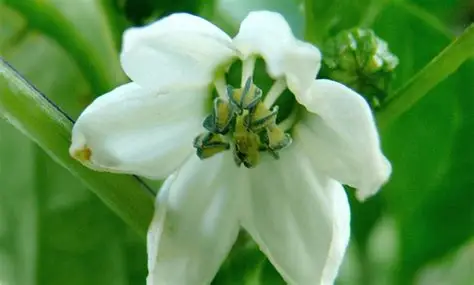
The flowers of black pepper are quite different from the large, colorful flowers commonly associated with national flowers around the world.
The plant produces small flowers arranged along slender spikes called spikes or inflorescences.
These flowers are relatively inconspicuous compared with showy ornamental flowers.
After flowering, the plant produces small fruits along the spike. These fruits eventually become the peppercorns used in cooking.
This makes the pepper plant an interesting national symbol because its importance is connected not only to its flowers but also to its agricultural and economic value.
Pepper and the Tropical Environment
Black pepper grows best in warm, humid tropical environments.
That makes the plant compatible with the environmental conditions found in Liberia, where much of the country experiences a humid tropical climate.
Liberia's high rainfall, warm temperatures, and fertile areas can support a wide range of tropical crops.
The country's agricultural history has included crops such as rice, cassava, oil palm, coffee, cocoa, rubber, and other products.
Pepper belongs to the broader story of tropical agriculture that has connected Liberia to regional and international markets.
Pepper in West African Agriculture
Pepper has a long history as a valuable commodity in West Africa.
It is important to distinguish black pepper (Piper nigrum) from the various indigenous West African peppers and chili peppers that belong to other plant groups.
The black pepper plant originated in South and Southeast Asia rather than West Africa. Its cultivation therefore represents the movement of an important tropical crop across regions and into African agricultural systems.
This distinction matters when discussing Liberia's national flower because the word “pepper” can refer to several different plants in everyday language.
For the national-flower designation, international reference sources identify Liberia's flower simply as pepper, while botanical references identify black pepper as Piper nigrum.
Why the Pepper Plant Is Significant
The pepper plant represents an important connection between nature, agriculture, and human commerce.
Flowers are often selected as national symbols because of their beauty. Pepper is different.
Its importance can also be understood through its relationship with cultivation, food, trade, and tropical agriculture.
Peppercorns have historically been valuable commodities in international trade. Spices were exchanged across long-distance commercial networks for centuries, connecting producers and consumers across continents.
The pepper plant therefore represents more than a flower. It can also be viewed as a symbol of the agricultural resources and tropical environment associated with Liberia.
Liberia’s Agricultural Heritage
Agriculture has always been important to Liberian society.
Long before the creation of the modern republic, communities in the region practiced farming, fishing, hunting, gathering, and trade.
Indigenous Liberian societies developed agricultural systems suited to the country's tropical environment. Rice, cassava, plantains, yams, and numerous other crops became important parts of food production.
Over time, crops associated with international trade were introduced and expanded.
Pepper belongs to this wider history of agricultural exchange.
The country's natural environment allows many tropical plants to grow, making agriculture an important part of Liberia's economy and everyday life.
The Pepper Plant and Liberia’s Natural Environment
Liberia contains some of the most important remaining areas of Upper Guinean forest in West Africa.
Its high rainfall and tropical conditions support extraordinary plant diversity.
The Liberia National Forest Inventory documents hundreds of tree and plant species occurring within the country's forests.
The pepper plant is not itself one of the dominant native forest trees described in Liberia's forest inventory. Instead, its significance as a national flower is better understood in relation to Liberia's agricultural and tropical environment.
This distinction prevents the national symbol from being incorrectly presented as a native forest species.
The Difference Between Black Pepper and Local “Pepper”
One of the most important facts for students studying Liberia's national flower is that “pepper” is a broad everyday word.
Liberians may use the word pepper for different plants and varieties used in food.
Black pepper, however, is Piper nigrum.
Chili peppers belong primarily to the genus Capsicum, which is a completely different botanical group. Kew's Plants of the World Online records Capsicum as a genus whose species are native to tropical America.
Therefore, an image chosen for the national-flower page should not automatically show a red chili pepper.
For historical and botanical accuracy, the page should identify the national flower as pepper/black pepper (Piper nigrum) unless stronger official Liberian documentation establishes a different species.
The Historical Record of the Designation
There is an important limitation in the available historical evidence.
International references consistently list Pepper as Liberia's national flower.
However, I did not find a sufficiently authoritative Liberian government publication that identifies:
· the exact year of designation;
· the legal instrument used;
· the government official responsible for the designation; or
· a detailed explanation of why pepper was selected.
Because of this, it would be inaccurate to create a specific adoption story without documentary evidence.
The safest historical presentation is therefore to state that pepper is widely recognized or listed as Liberia's national flower, while noting that the precise formal history of the designation is not clearly documented in the sources currently available.
Why This Matters for Liberia’s National Symbols
National symbols often acquire histories that are repeated many times without the original documentary evidence being easy to locate.
For a history website intended for students, educators, and researchers, it is important to distinguish between:
Documented fact:
Pepper is widely listed as Liberia's national flower.
Botanical identification:
The pepper generally associated with the designation is black pepper, Piper nigrum.
Historical uncertainty:
A reliable primary source establishing the exact date and legal process of designation has not been located.
Making this distinction strengthens the historical reliability of the website rather than weakening it.
Pepper as a Symbol of Liberia
The national flower can be interpreted as representing several aspects of Liberia:
Agriculture
Pepper connects the national symbol to cultivation and food production.
Tropical Environment
The plant is associated with warm, humid conditions similar to those found in Liberia.
Trade
Pepper has historically been an internationally traded commodity, linking agriculture with commerce.
Natural Resources
As a plant-based symbol, it adds Liberia's agricultural and natural environment to the country's collection of national symbols.
Liberia’s National Flower in the Modern Era
Today, pepper remains listed internationally as Liberia's national flower.
The symbol receives less public attention than Liberia's flag, anthem, and Coat of Arms, which are much more visible in government ceremonies and public life.
Nevertheless, it provides an opportunity to explore a different side of Liberian history.
The story of Liberia is not only about political independence and government institutions. It is also about land, agriculture, plants, food, trade, and the natural environment.
The pepper plant provides a connection between those themes.
Conclusion
The pepper plant, generally identified as black pepper (Piper nigrum), is widely listed as Liberia's national flower.
Its importance is unusual because the plant is valued not only for its flowers but also for the peppercorns produced from its fruit.
The symbol connects Liberia's national identity with tropical agriculture, natural resources, food, and the long history of commercial exchange.
At the same time, the exact historical process through which pepper became Liberia's national flower is not sufficiently documented in the reliable sources currently available. Rather than inventing a date or official decree, the historical record should be presented honestly.
For Liberia's history, that honesty is important.
The pepper plant may be a small and relatively understated national symbol, but it opens a much larger window into Liberia's agricultural heritage and its relationship with the tropical environment.
National Flower of Liberia:
Pepper / Black Pepper (Piper nigrum)
Sources
· Flower Glossary — National Flowers by Country, listing Pepper as Liberia's national flower.
· Robert Shaw Illustration — National Flowers Around the World, identifying Liberia's flower as Black Pepper (Piper nigrum).
· Kew Science, Plants of the World Online — botanical information and taxonomy.
· Liberia National Forest Inventory 2018/2019 — Liberia Forestry Development Authority, documenting the country's plant diversity.