Introduction
The national colors of Liberia are red, white, and blue.
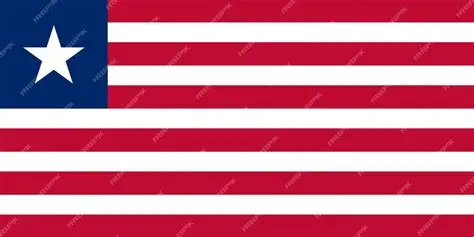
These three colors are most prominently displayed on Liberia’s National Flag, or National Ensign. Together with the eleven alternating stripes and the single white star, they form one of the most recognizable visual representations of the Liberian nation.
The colors are connected to Liberia’s history of independence, the creation of the republic in 1847, and the ideals that became associated with the country's national identity.
According to official Liberian government explanations of the National Flag, red represents the blood of those who died in the struggle for independence, white represents the purity of mind and clarity of the country's forebears toward one another, and blue represented Africa as it was then depicted as the “Dark Continent.”
The Origins of Liberia’s National Colors
Liberia became an independent republic on July 26, 1847.
The new republic required national symbols that could represent its sovereignty and distinguish it as an independent state.
Among those symbols was the national flag.
The flag adopted by Liberia incorporated red, white, and blue, colors that were also familiar from the political and cultural environment from which many of Liberia's settlers came.
A Library of Congress historical resource notes that Liberia gained independence in 1847 and that its flag, constitution, and other national symbols showed significant similarities to those of the United States.
However, Liberia's colors developed their own meanings within the Liberian national context.
Red: Sacrifice and the Struggle for Independence
Red is one of the most prominent colors in Liberia's flag.
The official Liberian explanation associates red with the blood of those who died in the struggle for independence.
The color therefore represents sacrifice.
Liberia's independence was the result of a long process of settlement, political organization, constitutional development, and eventual declaration of independence.
The red stripes on the flag became a visual reminder that the creation and defense of an independent state involved sacrifice.
Red is therefore not simply a decorative color on Liberia's flag. Within the country's official symbolism, it carries a historical meaning connected with the struggle surrounding independence.
White: Purity and Clarity
White is the second major color of Liberia's National Ensign.
Official Liberian explanations associate white with the purity of mind and clarity of the country's forebears toward one another.
The wording comes from official explanations of the flag and reflects the ideals attached to the country's founders.
White appears in five of the flag's eleven horizontal stripes, alternating with six red stripes.
The white stripes therefore have both a visual and symbolic role.
They provide the contrast that makes the red stripes visible while simultaneously representing the qualities associated with the color in Liberia's official flag symbolism.
Blue: Africa and Liberia’s Place on the Continent
Blue appears in the upper-left portion of the Liberian flag, where it forms the field surrounding the single white star.
Official Liberian explanations state that blue represented Africa as it was then depicted as the “Dark Continent.”
The historical phrase “Dark Continent” was commonly used by Europeans during the nineteenth century to describe Africa. Today, the expression is generally regarded as an outdated colonial-era description because it reflected European attitudes and limited knowledge rather than Africa's actual history or civilization.
For the historical interpretation of Liberia's flag, however, it is important to record the wording used in official explanations while also understanding its historical context.
The blue field therefore connects Liberia's flag directly to the African continent.
The Three Colors Together
Red, white, and blue should not be understood separately from the rest of Liberia's flag.
The three colors work together with:
· Six red stripes
· Five white stripes
· One blue canton
· One white star
· Eleven total stripes
The eleven stripes represent the eleven signers of Liberia's Declaration of Independence, according to official Liberian government explanations.
The single white star is positioned within the blue field.
The colors therefore form part of a larger historical composition rather than functioning as isolated national symbols.
The Eleven Stripes and the National Colors
Liberia's flag contains eleven horizontal stripes.
There are six red stripes and five white stripes.
The official explanation connects the eleven stripes to the eleven signers of the Declaration of Independence.
This gives the colors an additional historical dimension.
Red and white are repeated across the flag in a pattern that represents the founders who formally declared Liberia an independent republic.
The stripes consequently connect the physical design of the flag to the political birth of the nation.
The Blue Field and the Lone Star
The blue field occupies the upper-left corner of the flag.
At its center is a single white star.
The official Liberian explanation associates the star and blue field with Liberia's position as the then only independent republic on the African continent.
This historical context is particularly important.
When Liberia declared independence in 1847, most of Africa was still under European colonial rule or consisted of independent African states that were not internationally recognized in the same way as Liberia's new republic.
Liberia's flag therefore presented the country as an independent African republic.
The blue and white combination became an important part of that representation.
The National Colors and Liberia’s Independence
The colors became inseparable from the identity of the independent Liberian state.
The flag represented Liberia's sovereignty and independence and became an important public symbol of the republic.
The Liberian Ministry of Foreign Affairs describes the National Ensign as visible evidence of Liberia's sovereignty and independence and as a symbol of national pride and dignity.
This explains why red, white, and blue remain visible throughout Liberian public life.
They appear on official flags, government ceremonies, national celebrations, diplomatic occasions, educational materials, and other representations of the state.
The Women Who Created Liberia’s Flag
The history of Liberia's national colors is also connected to the women who designed and produced the country's flag.
Official Liberian government proclamations identify a committee of women led by Mrs. Susannah Lewis as responsible for designing and producing the National Flag.
This is an important part of Liberia's national-symbol history because the creation of the flag was not presented simply as the work of a single political leader.
A group of Liberian women contributed to the physical creation of one of the country's most enduring national symbols.
Their role is remembered during Liberia's annual National Flag Day observances.
National Flag Day
Liberia formally commemorates its National Flag each year through National Flag Day.
The Liberian National Legislature approved an Act on October 25, 1915, declaring August 24 of each year as National Flag Day and making it a national holiday.
The holiday is intended to encourage allegiance to the National Ensign and strengthen national pride and patriotism.
Because the colors are inseparable from the flag, National Flag Day also provides an annual occasion for Liberians to reflect on the meanings represented by red, white, and blue.
The National Colors in Public Life
Red, white, and blue have become deeply familiar throughout Liberia.
The colors appear during:
· Independence Day celebrations
· National Flag Day
· Government ceremonies
· Diplomatic events
· Schools and educational programs
· Sporting events
· Public buildings
· National commemorations
· International representations of Liberia
The colors therefore function as a visual shorthand for Liberia itself.
When the three colors appear together in the correct Liberian arrangement, they immediately evoke the country's national identity.
The Colors and National Identity
National colors often provide a simple way for citizens to visually identify their country.
For Liberia, red, white, and blue are especially important because they appear together on the National Ensign.
The colors connect several elements of Liberia's historical identity:
Red — sacrifice associated with the struggle for independence.
White — purity of mind and clarity associated with the country's forebears.
Blue — Africa as understood in the historical symbolism of the flag.
These meanings come from official Liberian explanations of the National Ensign.
Liberia’s Colors and the United States
The Liberian flag's red, white, and blue colors are sometimes immediately associated with the United States because of the visual similarities between the two flags.
There is a historical reason for that connection.
Liberia's nineteenth-century settler population included African Americans, and the institutions created by the new republic were influenced by American political traditions.
The Library of Congress notes that Liberia's flag and other national symbols resembled those of the United States following independence.
However, Liberia's national colors should not simply be treated as American colors transferred to Africa.
Liberia gave the colors their own national meanings within its own history and political identity.
The Liberian flag became the symbol of an independent African republic.
The Colors Through Liberia’s Modern History
Liberia has experienced major political and social changes since 1847.
The country experienced political transitions, the 1980 coup, periods of authoritarian rule, two civil wars, and later democratic reconstruction.
Throughout these changes, the national flag remained an important symbol of the Liberian state.
The meaning attached to red, white, and blue continued to be taught through schools, government ceremonies, national holidays, and public institutions.
The colors consequently survived changes in governments and political systems.
Why the National Colors Matter
The importance of Liberia's national colors lies partly in their simplicity.
Three colors communicate ideas about Liberia's history without requiring a long written explanation.
When displayed together, they can represent:
· Liberia's independence
· National sovereignty
· Historical sacrifice
· National identity
· African independence
· Patriotism
· The continuity of the Liberian state
Their meaning becomes especially powerful when combined with the eleven stripes and Lone Star.
A Note About Their Formal Status
It is important to distinguish between Liberia's national colors and the National Flag.
The colors red, white, and blue are most clearly documented through the design and symbolism of the National Ensign.
The available official sources do not establish a separate historical law declaring “red, white, and blue” as an independent national symbol on a particular date.
For that reason, the most historically precise description is:
Red, white, and blue are Liberia's national colors as embodied in the National Ensign.
This avoids inventing a separate designation history that is not supported by the available documentation.
Conclusion
Liberia's national colors—red, white, and blue—are inseparable from the country's National Flag and its history as an independent African republic.
Official Liberian explanations associate red with the blood of those who died in the struggle for independence, white with purity of mind and clarity among the country's forebears, and blue with Africa as it was historically depicted.
Together with the eleven stripes and the Lone Star, these colors form one of Liberia's most recognizable national symbols.
Their history reaches back to the creation of the Liberian republic in the nineteenth century, while their continued use demonstrates how national symbols can survive political and social changes across generations.
Today, whenever the red, white, and blue of Liberia's National Ensign are raised, they represent not merely colors but a visual connection to Liberia's independence, sovereignty, history, and national identity.
Sources
· Liberia Ministry of Foreign Affairs — National Flag Day proclamations and official explanation of the flag's colors and
design.
· Liberia Ministry of Foreign Affairs — National Ensign and symbolism.
· Liberia Ministry of Foreign Affairs — 2015 National Flag Day information.
· Library of Congress — historical background on Liberia's independence and national symbols.
· Liberia Law Library — Liberian Executive Law, including provisions concerning the President's Color.