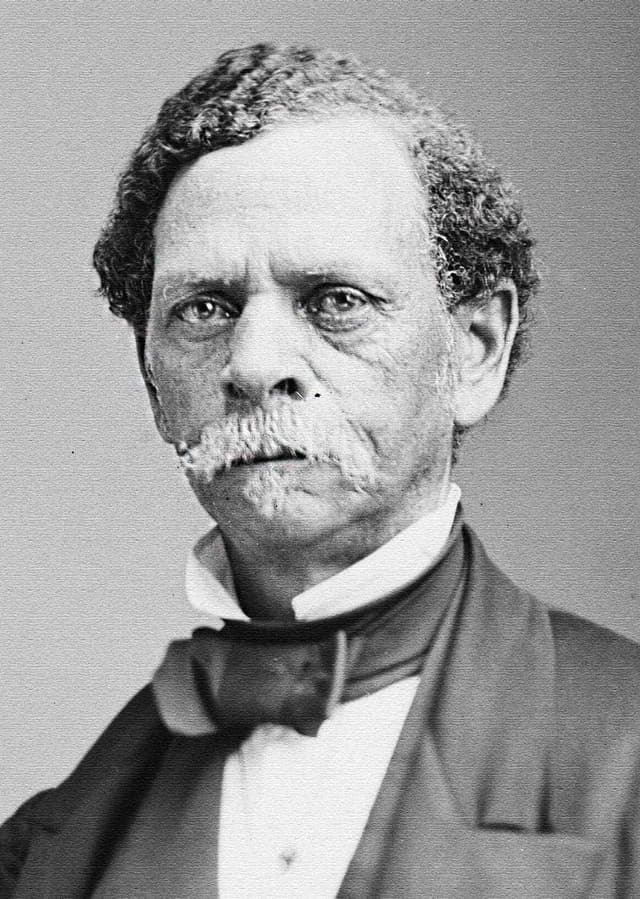
Joseph Jenkins Roberts was one of the most important figures in Liberia's early history. Born free in Norfolk, Virginia, in 1809, he emigrated to Liberia in 1829 and became a merchant, political leader, governor, diplomat, educator, and statesman. He played a central role in Liberia's transition from an American Colonization Society settlement into an independent republic.
Early Life and Background
Joseph Jenkins Roberts was born on March 15, 1809, in Norfolk, Virginia, in the United States. He was born free and grew up in a period when slavery shaped much of American society.
Roberts became interested in business and developed commercial experience before emigrating to Liberia. In 1829, he moved to the West African colony with members of his family under the American Colonization Society's colonization program.
After arriving in Liberia, Roberts established himself in Monrovia's commercial and political life. His intelligence, business ability, communication skills, and political leadership helped him rise rapidly within the young colony.
Rise to Political Leadership
Roberts became increasingly involved in the administration of the Liberian colony. In 1841, he became the first Black governor of the Commonwealth of Liberia. His position gave him major responsibility for governing the growing settlement and representing its interests.
As governor, Roberts worked to strengthen Liberia's political and economic position. He also developed relationships with neighboring African communities and worked to expand the authority of the Liberian administration.
His leadership during this period helped prepare Liberia for the major political transformation that followed in 1847.
The Road to Independence
During the 1840s, political and economic pressures encouraged Liberia's settlers to seek greater control over their own affairs. Roberts became one of the leading figures in the movement toward independence.
On July 26, 1847, Liberia declared its independence and adopted a constitution establishing a republican government. Roberts was elected as the country's first president.
His inauguration on January 3, 1848, formally began Liberia's presidential system and made Roberts the first president of the independent Republic of Liberia.
First Presidency: 1848–1856
Roberts became president at a difficult moment. Liberia was a young republic with limited financial resources, weak infrastructure, economic challenges, and complicated relationships with European powers and neighboring African communities.
One of Roberts's most important goals was to secure international recognition for Liberia. He traveled abroad and worked to convince foreign governments that Liberia was a sovereign independent state.
Great Britain recognized Liberia in 1848, while France followed in 1852. These diplomatic achievements strengthened Liberia's position internationally.
The United States did not immediately recognize Liberia's independence, making Roberts's diplomatic efforts particularly important during the republic's early years.
Fighting the Slave Trade
Roberts's administration also opposed the continued slave trade along the West African coast. Liberia's leaders considered the suppression of slave trading an important part of the republic's international identity.
In 1849, Liberian forces shut down a Spanish slave-trading depot at Grand Cess in what is now Grand Kru County. The action demonstrated Liberia's willingness to challenge illegal slave trading activity along its coast.
Education and Liberia College
Roberts believed education was essential to Liberia's future. During his first period in national leadership, Liberia College was established in Monrovia in 1851.
After his first presidency, Roberts became closely associated with Liberia College. He served as its first president and remained an important figure in Liberian education.
The institution later became the University of Liberia, making Roberts's contribution to education an important part of his historical legacy.
Life After His First Presidency
Roberts left the presidency in 1856 after completing his first period in office. However, he remained active in public life.
He served as a diplomat and represented Liberia abroad, including diplomatic work involving European countries. He also remained involved in Liberia's military and educational affairs.
His long involvement in government and education kept him influential in Liberia even after he was no longer president.
Return to the Presidency: 1872–1876
Roberts returned to the presidency after the political crisis that resulted in the removal of President Edward James Roye in 1871.
Roberts won the election that followed and returned to the Executive Mansion in 1872, becoming Liberia's seventh president.
His second presidency took place during a period of serious economic difficulty. Liberia faced declining revenues, expensive imports, limited exports, and increasing financial pressure.
Roberts remained president until January 1876. During part of his final period in office, illness prevented him from fully carrying out his duties, and Vice President Anthony W. Gardiner acted as president.
Economic and Political Challenges
Liberia's early governments struggled with limited sources of government revenue. The country depended heavily on exports such as coffee, rice, palm products, sugar, camwood, and timber.
At the same time, imported goods were expensive. These economic pressures made it difficult for the government to maintain strong finances.
Roberts's second administration therefore faced problems that could not easily be solved by diplomacy alone. The young republic was still developing its institutions and economic foundations.
Death
Joseph Jenkins Roberts died on February 24, 1876, in Monrovia, Liberia, at the age of 66.
He was buried in Palm Grove Cemetery in Monrovia. His death came shortly after the end of his second presidency.
Legacy
Joseph Jenkins Roberts remains one of the central figures in Liberia's founding history. He helped lead the country during its transition to independence and became the first president of the republic.
His diplomatic work helped Liberia gain recognition from foreign governments, while his involvement in education contributed to the development of Liberia College.
Roberts's name has been preserved in several places and institutions in Liberia. Roberts International Airport, Robertsport, and Roberts Street in Monrovia are among the places associated with his name.
His birthday, March 15, is also observed as a public holiday in Liberia.
Key Facts
- Full name: Joseph Jenkins Roberts
- Born: March 15, 1809
- Birthplace: Norfolk, Virginia, United States
- Emigrated to Liberia: 1829
- Governor of Liberia: 1841–1848
- First presidency: 1848–1856
- Second presidency: 1872–1876
- Position in history: First president of Liberia
- Died: February 24, 1876
- Place of death: Monrovia, Liberia