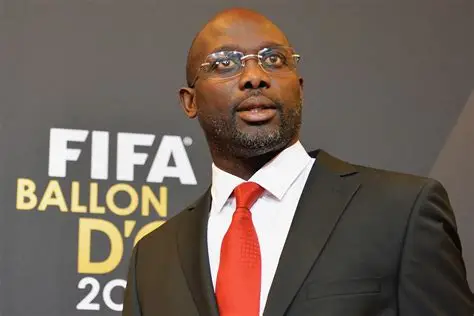
George Manneh Weah is one of the most internationally recognized Liberians of the modern era. Before entering national politics, he became one of the greatest African footballers of his generation. He later transformed his popularity and public reputation into a political career and eventually became Liberia's 25th president.
Weah served as president from January 2018 until January 2024. His administration focused on infrastructure, education, healthcare, youth development, road construction, and efforts to improve Liberia's economy. His presidency also faced major challenges involving unemployment, inflation, corruption allegations, poverty, and public dissatisfaction.
His political career is particularly significant because he successfully moved from international sports fame into democratic politics and ultimately won Liberia's presidency after previously losing presidential elections in 2005 and 2011.
Early Life
George Manneh Weah was born on October 1, 1966, in Monrovia, Liberia.
He grew up in a working-class environment in Monrovia and spent part of his childhood in Clara Town and later in the community of West Point.
Weah came from the Kru ethnic group and was raised in a large family. His early life was shaped by modest economic circumstances and the social realities of Monrovia.
His childhood experiences later influenced the political message he presented to Liberians, particularly his emphasis on helping poor and disadvantaged communities.
Discovering Football
Football became Weah's greatest talent and eventually changed the direction of his life.
He began playing football in Liberia before moving through several Liberian clubs and eventually attracting international attention.
His combination of speed, strength, technical ability, and goal-scoring ability made him one of the country's most promising young footballers.
Rise to International Football
Weah's breakthrough came when he moved to Cameroon and played for Tonnerre Yaoundé.
His performances attracted the attention of major European clubs. He subsequently moved to AS Monaco in France, where he played under manager Arsène Wenger.
His performances in France established him as one of Africa's leading footballers and opened the door to an extraordinary European career.
Paris Saint-Germain
Weah later joined Paris Saint-Germain in France.
He became one of the club's most important attacking players and performed strongly in European competition.
His success at Paris Saint-Germain helped establish him as an international football star and increased his visibility far beyond Liberia.
AC Milan and the Peak of His Career
In 1995, Weah moved to Italian giants AC Milan.
During his time at Milan, he became one of the world's most celebrated footballers.
He also became a symbol of African excellence in European football at a time when relatively few African players had reached the highest level of the sport.
His famous solo goal against Hellas Verona became one of the memorable moments of his European career and demonstrated the extraordinary combination of speed and skill that characterized his playing style.
Historic Individual Awards
In 1995, George Weah won the Ballon d'Or.
He remains the only African player to have won the men's Ballon d'Or.
He also won the FIFA World Player of the Year award and was named African Footballer of the Year.
These achievements placed Weah among the most accomplished footballers in African history and made him an international symbol of Liberian talent.
Other European Clubs
After AC Milan, Weah played for several other major European clubs, including Chelsea and Manchester City in England and Olympique de Marseille in France.
His career demonstrated remarkable longevity and allowed him to compete at the highest level of European football for many years.
Liberia's National Team
Weah also devoted much of his football career to the Liberian national team, the Lone Star.
He became the country's most famous footballer and one of its strongest international ambassadors.
Despite his enormous individual success, Weah never played in a FIFA World Cup finals tournament with Liberia.
Liberia came close to qualifying for the 2002 World Cup, but the team ultimately missed qualification. The failure became one of the most memorable disappointments of Weah's football career.
Humanitarian Work
Weah's public activities extended beyond football.
During Liberia's civil wars, he used his international reputation to draw attention to the humanitarian crisis affecting his country.
He supported humanitarian initiatives involving children, education, healthcare, and communities affected by conflict.
His international fame gave him a platform that few other Liberian politicians possessed.
Entering Politics
After retiring from professional football, Weah increasingly turned his attention toward Liberian politics.
He founded the Congress for Democratic Change, which later became the Coalition for Democratic Change.
His political message appealed particularly to young people, working-class Liberians, and citizens who believed the country's political system needed a new generation of leadership.
The 2005 Presidential Election
Weah contested the 2005 presidential election.
He won the first round of voting, finishing ahead of Ellen Johnson Sirleaf.
However, because neither candidate won an outright majority, a runoff election was required.
Sirleaf defeated Weah in the runoff and became president in January 2006.
The election nevertheless established Weah as one of Liberia's most important political figures.
Senator for Montserrado County
Weah continued his political career after the 2005 election.
In 2014, he won election to the Liberian Senate representing Montserrado County.
His Senate victory strengthened his political position and prepared the way for another presidential campaign.
The 2011 Presidential Election
Weah participated in the 2011 presidential election as the running mate of Winston Tubman.
Ellen Johnson Sirleaf won the election.
Weah continued building his political organization and remained one of the country's most popular opposition figures.
The 2017 Presidential Election
In 2017, Weah ran for president again as the candidate of the Coalition for Democratic Change.
He finished ahead of Vice President Joseph Boakai in the first round but did not receive enough votes to win immediately.
A runoff was held in December 2017.
Weah won the runoff and was elected president of Liberia.
His victory was historic because it represented the culmination of more than a decade of political campaigning and two previous unsuccessful presidential bids.
Inauguration
George Weah was inaugurated on January 22, 2018.
The inauguration was attended by Liberians and international dignitaries and represented another peaceful transfer of presidential power.
Weah entered office promising to improve the lives of ordinary Liberians, especially young people and economically disadvantaged communities.
Education and Tuition Policy
Education was one of the major priorities of the Weah administration.
His government introduced a policy providing tuition-free undergraduate education at public universities and colleges.
The policy was intended to expand access to higher education, particularly for young Liberians who could not easily afford university tuition.
Infrastructure Development
Road construction became one of the most visible priorities of the Weah administration.
The government continued major road projects in Monrovia and other parts of Liberia.
Rural roads were also emphasized as a way to connect communities, markets, farms, and urban centers.
Infrastructure remained a major national challenge because decades of war had left Liberia with a limited road network and weak public infrastructure.
Youth Development
Having experienced poverty and hardship during his own youth, Weah placed strong emphasis on young Liberians.
His administration promoted programs involving sports, education, skills development, and youth empowerment.
His popularity among young people remained one of his strongest political assets throughout his presidency.
Economic Challenges
Weah inherited an economy already facing serious structural problems.
Liberia remained heavily dependent on exports of raw materials and vulnerable to international commodity prices.
His administration faced unemployment, inflation, limited government revenue, and widespread poverty.
The economic consequences of the Ebola epidemic and the COVID-19 pandemic also created additional pressure during his presidency.
Corruption and Criticism
Corruption remained one of the most controversial issues during Weah's presidency.
The United States government sanctioned several senior Liberian officials in 2022 over alleged corruption, including officials who served in Weah's administration. The individuals denied wrongdoing.
Critics also argued that the government did not move quickly enough to improve living conditions and reduce unemployment.
Supporters, however, pointed to infrastructure projects, tuition-free public university education, and other development programs as evidence of progress.
COVID-19 Pandemic
The COVID-19 pandemic reached Liberia during Weah's presidency.
The government introduced public-health measures designed to reduce transmission and protect the country's healthcare system.
The pandemic also disrupted economic activity and made the government's development goals more difficult to achieve.
The 2023 Presidential Election
Weah sought a second term in the 2023 presidential election.
He finished slightly behind Joseph Nyuma Boakai in the first round, requiring a runoff.
The runoff was held in November 2023.
Boakai narrowly defeated Weah.
Weah accepted the result and publicly conceded the election, helping maintain Liberia's peaceful democratic transition.
Peaceful Transfer of Power
On January 22, 2024, George Weah handed the presidency to Joseph Nyuma Boakai.
The peaceful transfer was historically significant.
By accepting the election result and transferring power peacefully, Weah contributed to Liberia's continuing democratic tradition and demonstrated the importance of constitutional succession after a competitive election.
Life After the Presidency
After leaving office, Weah remained an influential figure in Liberian politics and society.
His international football reputation also continued to make him one of Liberia's best-known personalities around the world.
His post-presidential influence remains connected to both his political career and his extraordinary football achievements.
Historical Legacy
George Weah's place in Liberian history is unusual because he successfully moved from international sports to the highest political office in the country.
His football career made him an international celebrity, while his political career transformed him into a major national political leader.
His presidency produced visible infrastructure and education initiatives but also faced serious criticism over economic conditions, corruption, and the pace of national development.
His decision to accept defeat in the 2023 election and peacefully transfer power to Joseph Boakai became one of the important moments of his political legacy.
Key Facts
- Full name: George Manneh Weah
- Born: October 1, 1966
- Birthplace: Monrovia, Liberia
- Profession: Footballer and politician
- Position: 25th President of Liberia
- Presidency: 2018–2024
- Political party: Coalition for Democratic Change
- Senate: Senator for Montserrado County, 2014–2018
- Ballon d'Or: 1995
- FIFA World Player of the Year: 1995
- African Footballer of the Year: 1989, 1994, 1995
- Elected president: 2017
- Inaugurated: January 22, 2018
- Major initiatives: Education, roads, infrastructure, youth development, and healthcare
- 2023 election: Lost the presidential runoff to Joseph Nyuma Boakai
- Left office: January 22, 2024
- Historical significance: First Liberian president to have previously won the Ballon d'Or and FIFA World Player of the Year.