Introduction
The Gola are one of Liberia's historic indigenous peoples, with communities concentrated particularly in western and northwestern Liberia and extending across the border into eastern Sierra Leone. In Liberia, Gola communities have longstanding connections with areas of Bomi, Grand Cape Mount, Lofa, and neighboring regions. The 2022 Liberia Population and Housing Census identifies the Gola as one of Liberia's indigenous ethnic groups and records a particularly significant Gola presence in Bomi County.
Gola culture developed over centuries through agriculture, trade, family relationships, political organization, religion, oral traditions, music, artistic expression, and interaction with neighboring peoples. Gola communities did not historically form one centralized kingdom. Instead, political authority was distributed among towns, territories, chiefs, elders, lineages, and traditional institutions.
Among the most important institutions in traditional Gola society were Poro and Sande, which played major roles in education, initiation, social organization, moral instruction, and community life.
Gola cultural heritage remains an important part of Liberia's national history.
Historical Background
The history of the Gola people reaches far beyond the creation of Liberia in the nineteenth century.
Gola communities were established in the forest and river regions of western Liberia and eastern Sierra Leone long before the modern borders of the two countries were created. Historical research indicates that Gola communities participated in regional trade and maintained relationships with neighboring peoples through commerce, migration, alliances, conflict, and intermarriage.
During the nineteenth century, Gola political territories extended across parts of what later became incorporated into the Liberian state. Historical research on the Gola also documents their efforts to preserve political influence and territorial autonomy as Liberia expanded its authority into the interior.
The relationship between Gola communities and the emerging Liberian state therefore involved negotiation, accommodation, political competition, and gradual incorporation.
Gola Homeland
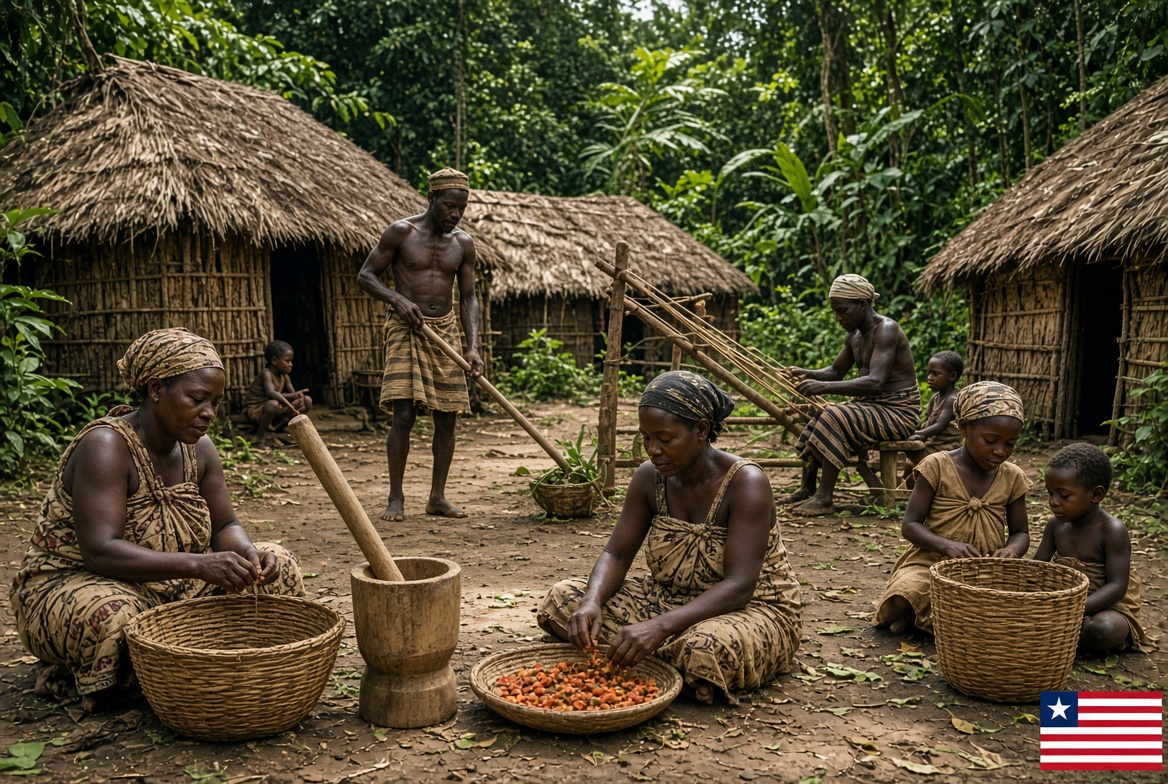
The traditional Gola homeland lies within the forested region of western Liberia and eastern Sierra Leone.
In Liberia, Gola communities have historically been associated with the St. Paul and Mano River areas and territories extending through parts of present-day Bomi, Grand Cape Mount, and Lofa counties.
The environment had a major influence on Gola society.
Forests provided timber, wild foods, medicinal plants, and other resources, while rivers supported transportation, fishing, and communication. Agricultural land provided the foundation for settled communities.
The close relationship between people and environment influenced Gola agriculture, settlement patterns, traditional knowledge, and cultural practices.
Gola Society and Community Organization
Traditional Gola society was organized around communities, families, clans, and territorial relationships.
Rather than being ruled by one permanent central monarch, authority was distributed among local leaders and traditional institutions. Chiefs and elders played important roles in community affairs, while other authorities could exercise influence through customary institutions.
Community relationships were especially important because agricultural production and other major activities often required cooperation.
Family members and neighbors worked together during demanding periods of the agricultural year, strengthening relationships between households.
Traditional Political Organization
Gola political organization was decentralized.
Individual towns and territories could have their own leaders, while broader institutions provided connections between communities.
Chiefs and elders could be responsible for representing communities, maintaining order, resolving disputes, protecting local interests, and negotiating relationships with neighboring communities.
Traditional political authority was also connected to institutions such as Poro.
Historical studies of Gola society show that political organization cannot be understood simply through the modern concept of a centralized government. Authority operated through overlapping relationships involving communities, leaders, elders, customary law, and traditional institutions.
Poro and Sande
Poro and Sande have historically been among the most significant institutions associated with Gola society.
Poro traditionally served as an important men's institution involving initiation, education, social discipline, community organization, and customary authority.
Sande served as an important women's institution and was associated with women's initiation, education, social relationships, and community life.
Historical records collected by Liberia's Bureau of Folkways contain separate sections on Gola Poro, Sande, customary laws, marriage, and other aspects of traditional life.
These institutions also changed over time. During the expansion of the Liberian state, government authorities attempted to regulate traditional institutions and their functions. By the twentieth century, Poro and Sande increasingly operated within a changing legal and political environment.
Because some aspects of these institutions are traditionally restricted to initiated members, a responsible historical account should focus on their documented social and cultural functions rather than revealing protected ritual knowledge.
Agriculture and Food Production
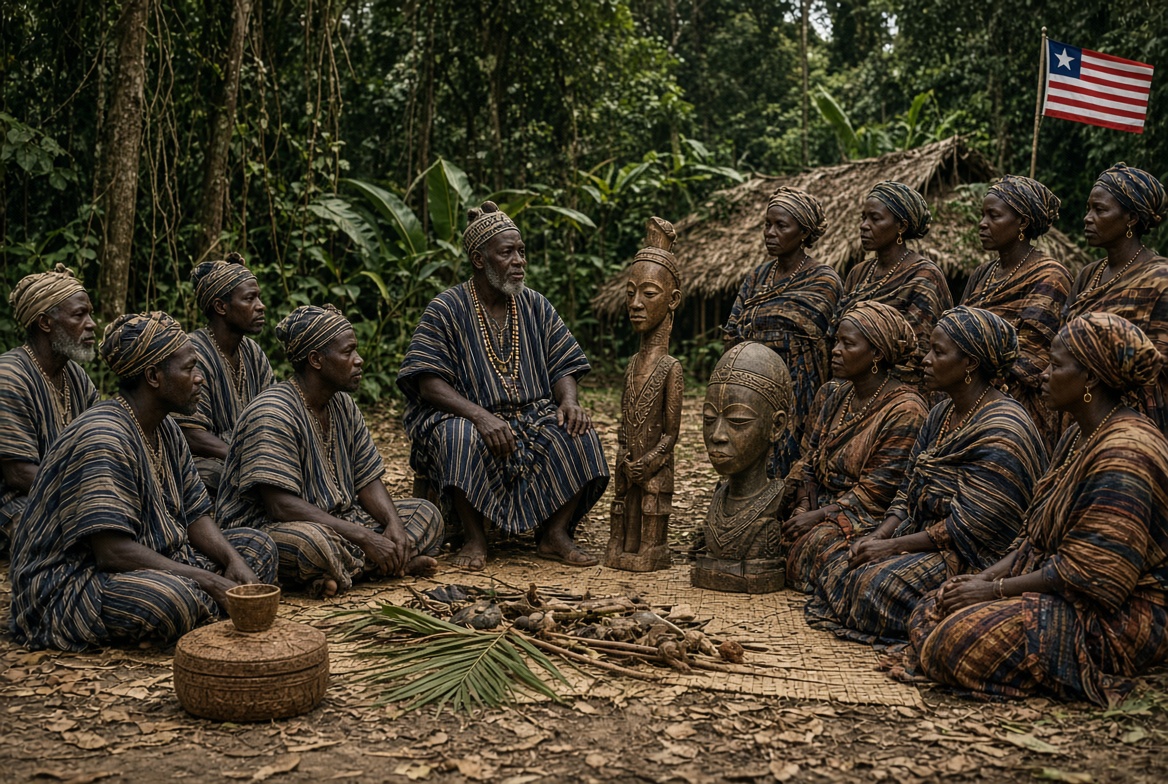
Agriculture has traditionally been central to Gola economic life.
Rice has been particularly important, alongside crops such as cassava, yams, taro, peanuts, and other food crops. Traditional agricultural work involved different responsibilities within households and communities.
Land preparation, planting, harvesting, processing, and food preparation required substantial labor.
Agricultural production also influenced the seasonal rhythm of community life. Harvests could be associated with celebrations and traditional practices connected to gratitude, prosperity, and community well-being.
Agriculture therefore connected food production with family life, community cooperation, and cultural identity.
Trade and Economic Life
The Gola have historically participated in regional trade networks.
Their location between inland communities and areas closer to the coast provided opportunities for exchange with neighboring peoples. Agricultural products, forest resources, craft products, and other commodities could move between communities through established trading relationships.
Trade also encouraged interaction between the Gola and neighboring Vai, Mende, Kissi, Mandingo, and other peoples.
These connections demonstrate that Gola communities were not isolated societies. They were part of a wider West African network of commerce and cultural exchange.
Family and Marriage
Family relationships form an important foundation of Gola social life.
Marriage historically connected households and wider family networks. It could create relationships between different communities and strengthen social alliances.
Traditional marriage practices involved negotiations between families and could include the transfer of gifts or other recognized forms of marriage exchange.
Marriage customs have changed over time as Christianity, Islam, national law, formal education, urbanization, and modern economic conditions have influenced family life.
Contemporary Gola families therefore combine traditional cultural values with modern Liberian social practices.
Religion and Traditional Beliefs
Traditional Gola religious life included beliefs concerning a supreme spiritual power, supernatural forces, ancestors, and relationships between the visible and spiritual worlds.
Traditional religious practices were closely connected with agriculture, community welfare, morality, and important stages of life.
Ancestors could be regarded as continuing to have a relationship with the living community, and traditional religious practices could seek protection, prosperity, health, and harmony.
Over time, Islam and Christianity became important among Gola communities. Historical sources describe Islamic influence in the region as developing through contact with Muslim traders and neighboring peoples.
Today, Gola religious life is diverse, and traditional cultural heritage should not be treated as identical to the religious identity of every Gola person.
Language
The Gola language is a central part of Gola identity.
It is spoken primarily in western Liberia and eastern Sierra Leone. Modern linguistic research has debated its precise classification, but Gola is generally treated as a distinct branch within the broader Niger-Congo language family rather than simply being identical to the languages of neighboring peoples.
The language has traditionally carried oral histories, stories, songs, proverbs, names, and cultural knowledge.
Like many indigenous languages, its continued transmission between generations is important to preserving cultural identity.
Oral Tradition and Storytelling
Before widespread formal literacy, oral tradition played a major role in preserving Gola knowledge.
Elders and other knowledgeable members of communities transmitted information through stories, proverbs, songs, genealogical knowledge, historical narratives, and traditional instruction.
Stories could communicate lessons about morality, relationships, courage, responsibility, leadership, and community life.
Oral tradition was therefore both educational and historical.
It allowed knowledge to move from one generation to the next even without written records.
Traditional Education
Traditional Gola education was closely connected to everyday life.
Children learned by observing parents, relatives, elders, farmers, craftspeople, and other members of the community.
Young people could learn agricultural skills, social responsibilities, community values, language, traditional history, practical environmental knowledge, and appropriate behavior.
Poro and Sande institutions also historically provided important forms of social education and preparation for adult responsibilities.
Formal Western-style education later expanded through missionary activity, government schools, and modern educational institutions.
Music, Dance, and Performance
Music and dance have long been important forms of Gola cultural expression.
Songs and performances can accompany celebrations, community gatherings, ceremonies, work, and other important occasions.
Traditional musical expression can involve drums, voices, hand percussion, and other instruments.
Dance can also communicate community identity and mark important cultural events.
Music is therefore not simply entertainment. It can serve social, educational, ceremonial, and historical purposes.
Gola Art and Masking Traditions
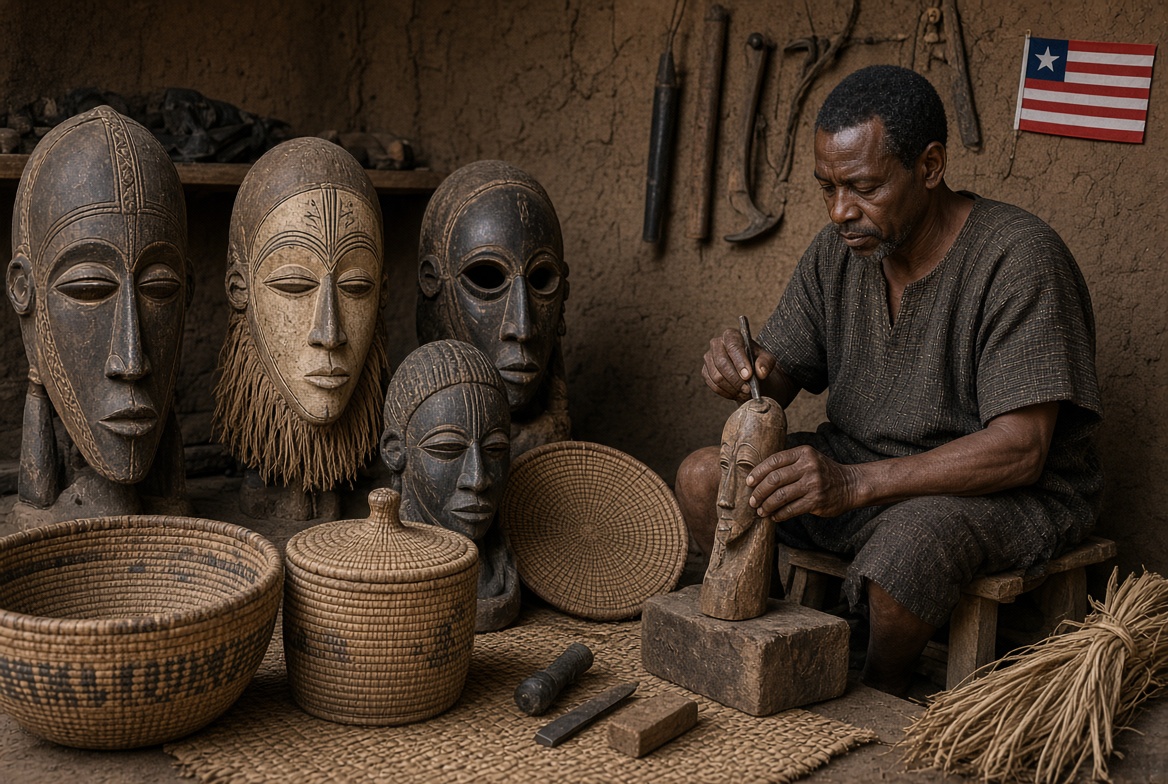
Gola cultural heritage is particularly associated with artistic traditions connected to masks and ceremonial performance.
Masking traditions have historically been connected with institutions such as Poro and Sande and with broader ideas concerning social identity, authority, initiation, morality, and the relationship between the visible and spiritual worlds.
Gola artistic traditions belong to a wider regional tradition of mask-making and performance shared, in different forms, among several peoples of Liberia and neighboring Sierra Leone.
Because individual masks can have specific meanings and ceremonial contexts, their interpretation should be based on documented Gola traditions rather than generic descriptions of "African masks."
Traditional Clothing and Appearance
Traditional Gola clothing historically reflected the textile traditions of the wider Upper Guinea region.
Clothing varied according to age, gender, social position, occupation, and occasion.
Ceremonial events could involve special garments, ornaments, and forms of presentation that differed from everyday clothing.
Today, most Gola people wear contemporary Liberian clothing in everyday life, while traditional clothing and cultural styles may be displayed during cultural celebrations, ceremonies, performances, and heritage events.
Traditional Housing
Traditional Gola settlements historically included houses adapted to the forest environment and available building materials.
Homes could be constructed using locally available materials, including wood, mud, thatch, and other plant materials.
The organization of settlements reflected family relationships, community structure, environmental conditions, and agricultural activities.
Modern housing has changed significantly with the availability of concrete, metal roofing, imported materials, and urban construction methods.
Craftsmanship
Traditional Gola communities developed practical skills in woodworking, weaving, basketry, agricultural tool production, carving, and other forms of craftsmanship.
Craft knowledge was commonly learned through observation and practical experience.
Some crafts had everyday uses, while others were connected to ceremonial or cultural institutions.
Artistic craftsmanship therefore formed part of both the economic and cultural life of Gola communities.
Gola Cultural Identity and Neighboring Peoples
Gola communities have historically maintained close relationships with several neighboring peoples.
The western Liberian region has long been culturally interconnected, with Gola communities interacting with Vai, Mende, Kissi, Dei, Kpelle, Mandingo, and other groups.
These relationships involved trade, marriage, migration, political alliances, conflict, and cultural exchange.
As a result, Gola culture should be understood as a distinct cultural tradition that also developed within a wider regional environment.
Gola and the Creation of Modern Liberia
The establishment and expansion of the Liberian state profoundly affected Gola communities.
During the nineteenth century, Liberia expanded its political and administrative authority into territories that had previously been governed through indigenous political systems.
Gola communities responded in different ways to these changes, including negotiations, political resistance, alliances, and adaptation.
The incorporation of Gola territories into Liberia gradually connected local communities to national systems of administration, taxation, education, commerce, and law.
The process was neither immediate nor uniform.
Gola Culture in the Twentieth Century
The twentieth century brought major changes to Gola communities.
Road construction and improved transportation increased connections between rural communities and markets.
Schools expanded access to formal education.
Christian missions and Islam influenced religious life.
Government administration increasingly affected traditional political structures.
Urban migration also created new opportunities for Gola people to live and work outside traditional rural communities.
Despite these changes, cultural identity continued through family relationships, language, community traditions, music, oral history, and traditional institutions.
Gola Culture Today
Contemporary Gola culture combines inherited traditions with modern Liberian life.
Many Gola people live in both rural and urban environments. Some continue to farm, while others work in government, education, business, transportation, health care, religious institutions, and other sectors.
Traditional practices have changed, but cultural identity remains visible through language, names, family networks, music, dance, food, community celebrations, and historical memory.
Gola culture should therefore be understood as a living culture rather than something belonging only to the past.
Preserving Gola Cultural Heritage
The preservation of Gola heritage involves protecting both tangible and intangible traditions.
Important areas include:
the Gola language;
oral histories;
traditional songs and stories;
historical knowledge;
traditional crafts;
music and dance;
agricultural knowledge;
community histories;
traditional institutions;
and cultural objects preserved in museums and collections.
Historical documentation is particularly important because many aspects of indigenous knowledge were traditionally transmitted orally.
The 1961 publication by Liberia's Bureau of Folkways, The Traditional History and Folklore of the Gola Tribe in Liberia, remains an important historical record, although it should be read alongside later scholarship and community knowledge.
What Happened to Traditional Gola Culture?
Gola culture did not disappear with the creation of Liberia.
Instead, it changed.
Some traditional institutions lost political authority as the Liberian government expanded its administrative system. Religious practices changed as Islam and Christianity became more influential. Formal education altered traditional systems of learning, while roads, markets, migration, and urbanization transformed economic life.
At the same time, many elements of Gola identity survived.
Language, family relationships, oral history, cultural ceremonies, music, traditional arts, and community identity continue to connect Gola people with their heritage.
The history of the Gola therefore demonstrates both cultural continuity and adaptation.
Why Gola Culture Matters
Gola culture is an important part of Liberia's national heritage.
It demonstrates that western Liberia contained organized societies with their own political institutions, economic systems, religious traditions, customary laws, educational practices, and artistic traditions long before the modern Liberian state was established.
The Gola experience also illustrates the wider history of West Africa, where communities maintained extensive networks of trade, migration, cultural exchange, and political interaction across what later became international borders.
Understanding Gola culture therefore helps explain not only the history of one ethnic group but also the deeper cultural history of Liberia.
Key Facts
The Gola are an indigenous West African people with communities in Liberia and Sierra Leone.
In Liberia, Gola communities are particularly associated with western and northwestern parts of the country.
Bomi County has a significant Gola population.
Gola society historically developed decentralized systems of political and customary authority.
Poro and Sande were important traditional social institutions.
Agriculture, particularly rice cultivation, played a major role in traditional economic life.
Gola communities participated in regional trade networks.
The Gola language is an important part of Gola cultural identity.
Oral tradition preserved historical knowledge, stories, values, and community memory.
Gola artistic traditions include important masking and ceremonial arts.
Islam and Christianity have influenced contemporary Gola religious life.
The creation and expansion of Liberia brought major political and social changes to Gola communities.
Gola culture has adapted to modern Liberia while retaining important elements of its historical identity.
Preserving the Gola language, oral traditions, arts, history, and cultural knowledge remains important to Liberia's national heritage.