Introduction
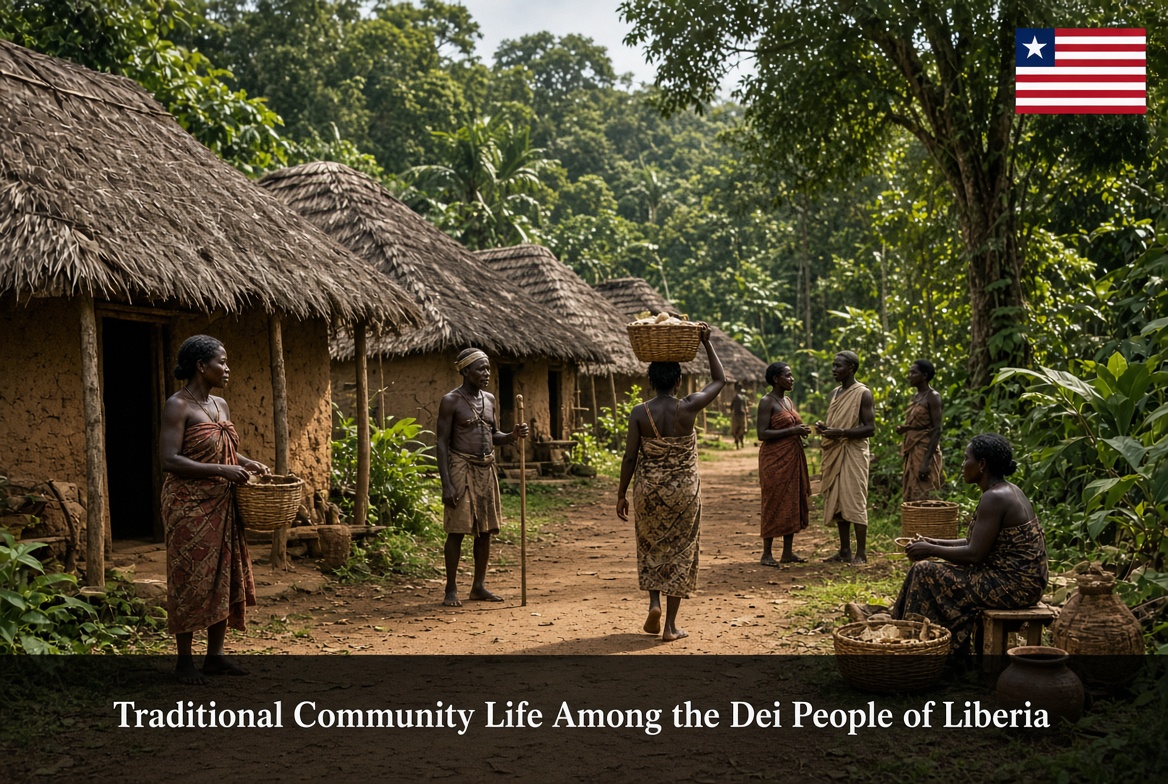
The Dei people, also known as Dey or Dewoin, are one of Liberia’s indigenous communities. Their historical homeland lies primarily in the coastal and near-coastal areas of northwestern Liberia, particularly parts of present-day Montserrado and Bomi counties.
The Dei have a significant place in Liberian history because their communities existed around the area where Monrovia later developed. Their encounters with settlers arriving from the United States during the nineteenth century became part of the broader history of land, political authority, trade, resistance, and cultural change in Liberia.
Despite their relatively small population, the Dei have maintained a distinct cultural identity through their language, family relationships, oral traditions, customary institutions, and connections to their ancestral homeland.
Understanding Dei culture is important to understanding Liberia’s history before the founding of Monrovia, the experiences of indigenous communities during the expansion of the Liberian state, and the continuing efforts to preserve the country’s smaller ethnic languages and cultural traditions.
Historical Homeland of the Dei People
The traditional homeland of the Dei people is associated with the coastal region of northwestern Liberia, particularly the territory between the Lofa and Saint Paul rivers. Their communities have historically been connected to the area surrounding present-day Monrovia and parts of Bomi County.
The coast and nearby waterways supported fishing, farming, local travel, and exchange between communities. Rivers and coastal routes also connected settlements to inland trading networks.
The region was not occupied by a single community alone. Dei settlements existed alongside communities belonging to other Liberian ethnic groups, including the Gola, Vai, Bassa, and Kru peoples. These relationships created opportunities for trade, cooperation, intermarriage, and cultural exchange, although competition over resources and political authority also occurred.
The growth of Monrovia transformed the region significantly. What had previously been home to indigenous communities and their established social and economic systems became an important center of settlement, commerce, administration, and national politics.
For the Dei, this transformation brought lasting changes to their access to land, political independence, and cultural environment.
Origins and Early History
The early history of the Dei people is reconstructed from oral traditions, linguistic research, historical documents, and studies of neighboring communities.
Like many Liberian ethnic groups, the Dei preserved important historical knowledge through oral accounts passed from older generations to younger ones. These traditions can contain information about settlement histories, family lineages, relationships with neighboring communities, and the origins of particular places.
However, oral accounts should be considered alongside other historical evidence. Different communities may preserve different explanations of their origins, and some early migration stories are difficult to establish conclusively.
Historical research identifies the Dei as an established population in the region around Cape Mesurado and the surrounding coastal territory before the development of Monrovia as a settler town.
Their history therefore forms part of the broader history of the indigenous societies that inhabited the region before Liberia became an independent republic in 1847.
The Dei should not be understood merely as a community that emerged during the founding of Monrovia. Their history extends into the earlier history of the West African coast, where local communities developed their own social institutions, trading relationships, political arrangements, and cultural traditions.
The Dei and the Founding of Monrovia
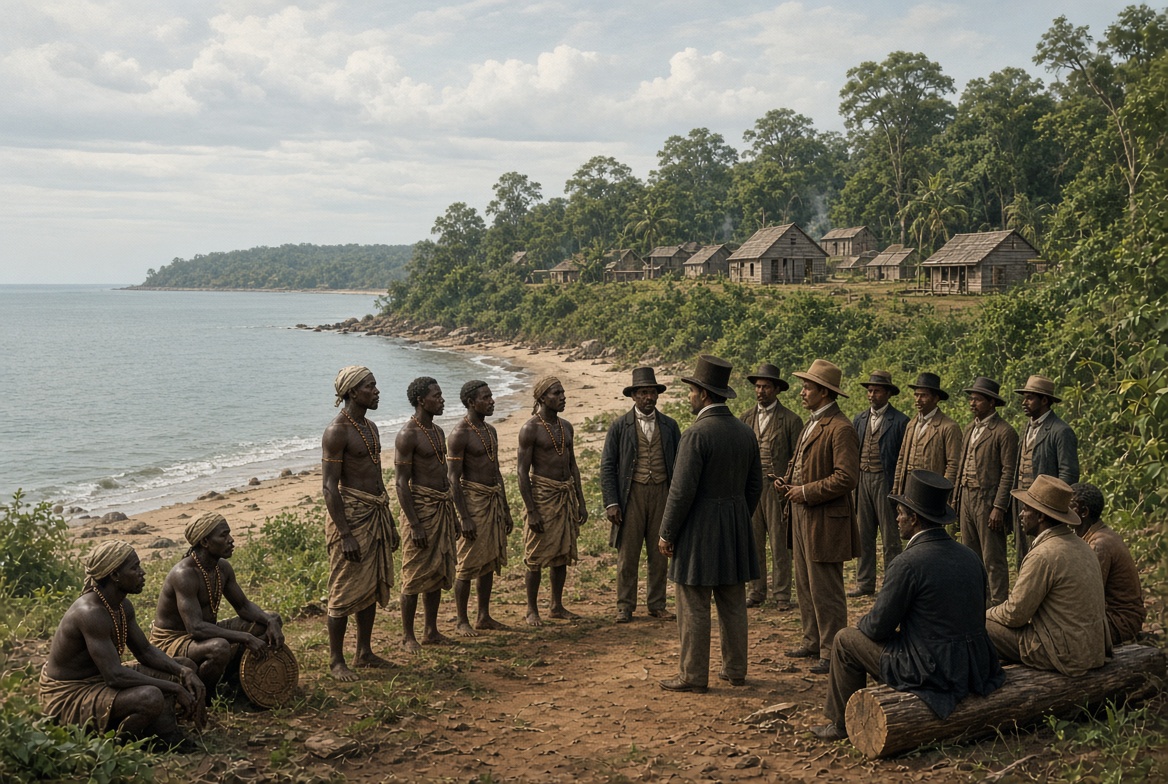
One of the most important periods in Dei history began during the early nineteenth century, when settlers sponsored by the American Colonization Society arrived in the region.
In 1822, the settlement that developed into Monrovia was established at Cape Mesurado. The area was already inhabited and used by indigenous communities, including the Dei and neighboring peoples.
The arrival and expansion of the settlers created new political and economic conditions. The settlers sought land for their settlement, while indigenous communities had their own systems of landholding, community authority, and territorial relationships.
Negotiations, exchanges, disputes, and armed confrontations became part of the complicated relationship between the expanding settlement and the indigenous populations.
Historical scholarship on the Dei emphasizes that the development of Monrovia involved more than the establishment of a new town. It also involved the gradual loss of indigenous territory and the transformation of existing communities.
The expansion of Monrovia and the growth of the Liberian state placed considerable pressure on the Dei. Over time, many became incorporated into the developing urban and suburban environment, while other families maintained connections to smaller communities outside the city.
This history remains important because it highlights the experiences of indigenous Liberians whose lands and political independence were affected by the formation and expansion of the Liberian state.
Dei Relations with Neighboring Communities
The Dei have historically maintained relationships with several neighboring ethnic communities, including the Gola, Vai, Bassa, and other peoples of western Liberia.
These relationships developed through trade, marriage, migration, shared economic activities, and interactions between local leaders.
Language contact was particularly important. The Dei language, Dewoin, belongs to the Kru branch of the Niger-Congo language family. It has linguistic connections with neighboring languages, including Bassa, although each language has its own characteristics.
Long periods of interaction also influenced family relationships and everyday communication. In some areas, intermarriage and the use of widely spoken languages contributed to changes in how younger generations communicated.
These relationships should not be interpreted as evidence that the Dei have no distinct identity. Communities can share customs, vocabulary, and family connections while maintaining their own historical identity.
The Dewoin Language
Language is one of the most important elements of Dei cultural heritage.
Dewoin, also written as Dewoi or referred to as Dei or Dey, is the traditional language associated with the community. It is classified within the Kru branch of the Niger-Congo language family.
The language carries cultural knowledge that may not be fully expressed through English or Liberian English. Personal names, expressions of respect, oral accounts, place names, and traditional ways of describing relationships can all preserve information about a community’s history and worldview.
However, Dewoin faces challenges associated with language shift. Urbanization, intermarriage, migration, and the increasing use of English and other widely spoken Liberian languages can reduce the number of situations in which children learn and regularly use their ancestral language.
Language documentation and community-led education are therefore important for preserving Dewoin.
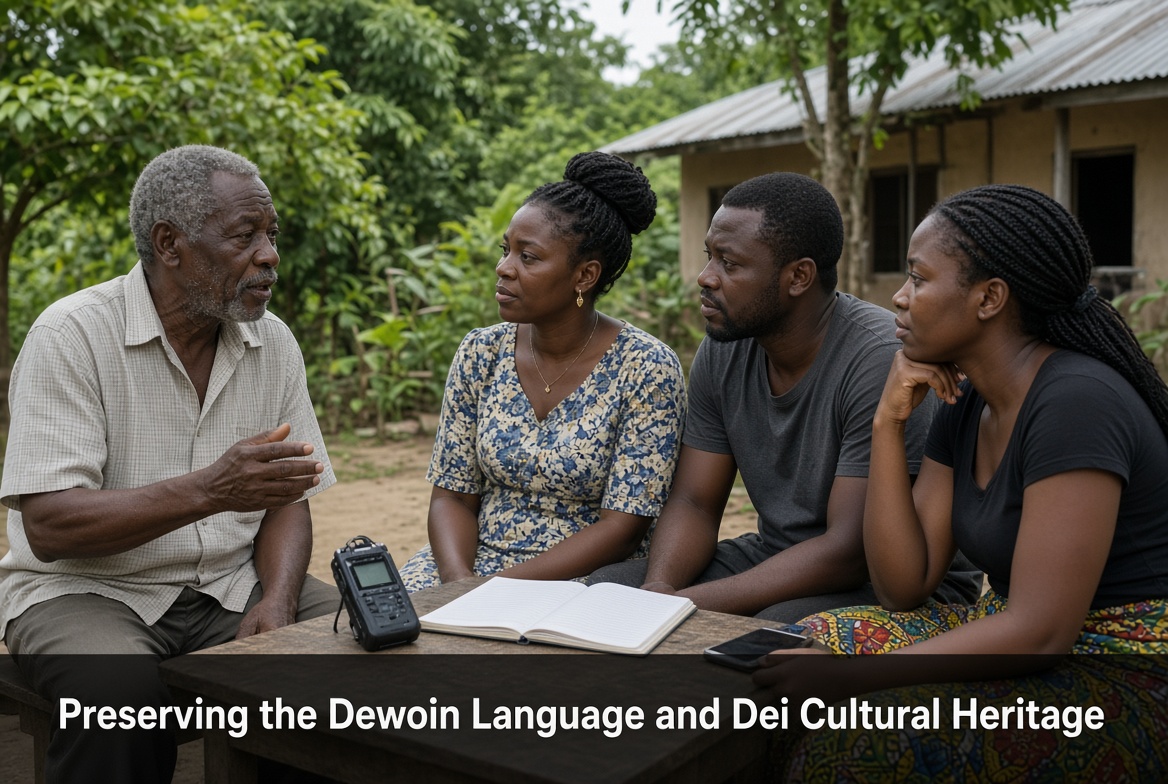
Efforts such as developing written materials, recording oral histories, teaching vocabulary, and encouraging intergenerational communication can help younger Dei people learn about their linguistic heritage.
Preserving Dewoin does not require rejecting other languages. A person can learn English and other languages while continuing to speak and value their ancestral language.
Family and Community Life
Family relationships have traditionally played an important role in Dei society.
Extended family networks connect parents, children, grandparents, aunts, uncles, cousins, and other relatives. These relationships can provide social support, transmit family history, and establish responsibilities between generations.
Older family members may help younger people understand community expectations, marriage relationships, customary practices, and the history of their families.
Community life has also depended on cooperation. Families and neighbors may assist one another with farming, household responsibilities, ceremonies, and other shared activities.
As in other Liberian communities, the specific form of these relationships varies between families and locations. Contemporary Dei households may combine customary practices with Christian, Muslim, or other religious influences and modern urban lifestyles.
Migration has also changed family arrangements. Some Dei families live in ancestral communities, while others reside in Monrovia or elsewhere in Liberia. These movements can change daily cultural practices without necessarily ending connections to Dei identity.
Traditional Leadership and Customary Authority
Traditional leadership has historically been important to community organization among the Dei.
Local authority was associated with community leaders, elders, family heads, and customary arrangements. Their responsibilities could include helping resolve disagreements, maintaining relationships between families, and representing community interests.
Historical descriptions of indigenous communities in western Liberia also identify customary practices connected to land, marriage, family obligations, and community disputes.
It is important, however, not to assume that every Dei community used exactly the same political arrangements. Leadership practices could differ between settlements and change over time.
The arrival of settler governments and the expansion of the Liberian state gradually altered the political environment in which indigenous leaders operated.
Today, customary leadership and family authority may continue to influence community affairs, although their roles exist alongside modern institutions such as elected government, local administration, courts, and national law.
Agriculture, Fishing, and Traditional Livelihoods
The natural environment of the Dei homeland has historically influenced local economic activities.
Agriculture, fishing, and trade have been important to communities in the coastal and near-coastal region. The precise combination of activities varied according to access to farmland, rivers, coastal resources, markets, and employment opportunities.
Rice and cassava are important foods in Liberia more broadly, while other crops grown in the region include plantains, vegetables, and other locally suitable produce. These foods form part of the wider agricultural setting in which many Dei families have lived.
Fishing has also been relevant to communities with access to rivers and the Atlantic coast. Fish can provide food for households and products for local exchange.
Trade connected local producers and fishing communities with nearby settlements and markets. The expansion of Monrovia later created additional opportunities for employment and commercial activity, but it also changed the economic and social relationships of indigenous communities.
Today, Dei people participate in a wide range of occupations, including farming, fishing, trade, education, public service, transportation, and other urban and rural livelihoods.
It would be inaccurate to describe the entire Dei community as having one occupation or one way of life. Economic conditions differ among households, and modern Dei life reflects both longstanding practices and contemporary opportunities.
Food and Eating Traditions
Food is an important part of family life and cultural continuity in Liberia.
Rice is widely consumed throughout the country, and cassava, plantains, vegetables, fish, palm oil, and other locally available ingredients are common in the broader regional diet.
Among Dei families, food traditions are shaped by household preferences, local availability, neighboring communities, and changes in lifestyle over time.
Meals can bring relatives together and help maintain family relationships. Food is also important during gatherings, celebrations, and occasions when relatives and visitors meet.
Because many food traditions are shared across ethnic boundaries in Liberia, it is important to avoid claiming that a widely consumed dish belongs exclusively to the Dei without specific historical evidence.
The cultural significance of food is therefore best understood through its role in family relationships, hospitality, community gatherings, and the continuity of everyday life.
Marriage and Family Relationships
Marriage has traditionally connected individuals and extended families, creating relationships that can influence social support, family obligations, and community ties.
In customary settings, marriage may involve discussions between families, recognition of family responsibilities, and ceremonies that bring relatives and community members together.
However, the details of marriage practices have changed over time and may differ among Dei families. Religious beliefs, education, migration, urban life, and national law can all influence how couples approach marriage.
Marriage between Dei people and members of neighboring communities has also contributed to cultural exchange and changing family identities.
These connections have helped create relationships across ethnic boundaries, particularly in areas where communities have lived alongside one another for generations.
A modern account of Dei marriage should recognize both the importance of family traditions and the diversity of choices made by contemporary couples.
Oral History and Storytelling
Oral history is an important source for studying the past of communities whose historical experiences were not always recorded in written documents.
Among the Dei, historical knowledge can be preserved through family accounts, memories of earlier settlements, genealogies, place names, and stories passed between generations.
Elders and other knowledgeable community members can help younger people understand how families became connected to particular places and how the community experienced major historical changes.
Oral traditions are especially important for examining the Dei experience of the growth of Monrovia and the expansion of settler political authority. Such accounts can provide perspectives that may be overlooked in official government records.
Oral history should be documented carefully. Researchers need to distinguish between personal memories, inherited traditions, interpretations, and events that can be independently confirmed through historical records.
When different accounts disagree, the differences should be recorded and investigated rather than automatically treating one version as the only possible truth.
Preserving these accounts can help future generations understand the Dei past from the perspectives of the people who inherited it.
Traditional Religion and Religious Change
The religious history of the Dei should be understood within the broader religious diversity of Liberia.
Indigenous religious traditions in the region historically included beliefs and practices concerning spiritual power, community well-being, ancestors, and the relationship between people and the natural world. The specific beliefs and ceremonies of individual Dei communities require careful documentation rather than assumptions based on neighboring groups.
Islam and Christianity have also influenced religious life in Liberia, including among communities in western and northwestern parts of the country.
Religious identities may differ between Dei families and villages. Some people identify with Islam, others with Christianity, and some maintain or value elements of indigenous cultural traditions.
Religion can influence ceremonies, marriage, naming practices, education, holidays, and community relationships.
A careful account of Dei religious life must recognize this diversity instead of suggesting that every member of the community follows the same religion or practices the same ceremonies.
Poro, Sande, and Indigenous Cultural Institutions
Poro and Sande are important initiation and social institutions historically associated with several peoples of Liberia and neighboring West African societies.
These institutions have served different roles in community life, including social education, the transmission of customary knowledge, and the marking of transitions into adult responsibilities.
Historical research on the Dei specifically identifies the continued importance of Poro institutions and initiation traditions in the preservation of Dei identity.
However, the practices of Poro and Sande are not identical across all Liberian ethnic groups. Details can vary between communities, and some aspects of these institutions are restricted or private.
For that reason, a public history article should not invent ceremonies, reproduce confidential knowledge, or claim that a practice is uniquely Dei when evidence does not establish that conclusion.
The most historically responsible approach is to explain the broader social significance of indigenous institutions while respecting the privacy and cultural authority of the communities concerned.
Music, Dance, and Community Celebrations
Music and dance have long been important forms of cultural expression across Liberia.
They can accompany social gatherings, family celebrations, ceremonies, and occasions when communities come together. Singing, rhythm, movement, and storytelling can help communicate shared experiences and strengthen relationships between generations.
Among the Dei, specific musical forms and ceremonial practices should be documented through reliable community testimony and ethnographic research.
Because neighboring Liberian communities have influenced one another over many generations, it is not always possible to identify a musical instrument, rhythm, or dance as exclusively Dei without evidence.
Contemporary Dei celebrations may include traditional expressions alongside modern Liberian music, church or mosque gatherings, and popular entertainment.
These changing forms of cultural expression demonstrate that cultural heritage is not frozen in the past. Communities can preserve meaningful traditions while adapting to new social environments.
Clothing, Crafts, and Material Culture
Clothing and material objects can provide information about everyday life, economic activities, social relationships, and cultural exchange.
Historically, people in the Dei region used locally available materials and participated in regional networks through which goods, clothing styles, and practical knowledge circulated.
Modern clothing practices reflect the same broad patterns found throughout Liberia, where traditional styles, imported fabrics, and contemporary fashions are used according to personal preference and occasion.
Crafts and household objects may also preserve knowledge about local materials and practical skills. However, individual objects should not automatically be labeled as uniquely Dei unless their cultural association is supported by evidence.
For visual documentation, historical photographs, museum collections, oral testimony, and community-approved images are preferable to invented costumes or objects presented as authentic.
When historical evidence is incomplete, an illustration should be clearly identified as an artistic reconstruction.
The Dei Experience of Urbanization
The growth of Monrovia was one of the most important forces shaping modern Dei identity.
As the city expanded, indigenous settlements and ancestral territories were increasingly affected by new roads, housing, markets, administrative boundaries, and economic activities.
Some Dei families became more closely integrated into the urban economy, while others maintained connections to smaller settlements and family lands.
Urbanization also encouraged interaction with other ethnic groups. Such contact created new opportunities but could weaken the everyday use of Dewoin, particularly when families increasingly used English or other widely spoken languages.
The history of urbanization should not be understood simply as a story of cultural disappearance. Dei families have continued to maintain their identity in different ways, including through family relationships, community connections, language efforts, and historical memory.
Their experience demonstrates how indigenous communities can remain culturally significant even when their ancestral territory is transformed by the expansion of a major city.
The Liberian Civil Wars and Their Effects
Liberia's civil wars, which began in 1989 and continued through periods of conflict into the early 2000s, affected communities throughout the country.
The consequences included displacement, insecurity, damage to infrastructure, interrupted education, and disruption of economic activities.
The impact on individual Dei families varied according to where they lived and the circumstances they experienced. It would therefore be inaccurate to claim that every Dei community experienced the conflict in exactly the same way.
Like other Liberians, Dei people have participated in the country's continuing recovery through family rebuilding, education, work, community support, and efforts to improve local conditions.
The conflicts also demonstrate the importance of preserving historical and cultural records. When families are displaced and community institutions are disrupted, oral histories, documents, photographs, and language knowledge can be lost.
Supporting cultural preservation is one way of helping future generations understand both the difficulties communities have faced and the ways they have continued to rebuild their lives.
The Dewoin Language and Cultural Preservation Today
Preserving Dewoin is an important part of protecting Dei cultural heritage.
A language can lose speakers when children no longer learn it at home or when people have fewer opportunities to use it in public life. Once knowledge of a language declines, it can become harder to recover traditional expressions, family histories, and oral literature.
Language documentation can help address this challenge. Recording vocabulary, collecting stories with permission, preparing reading materials, and supporting community-led teaching can create resources for future generations.
The work should involve Dewoin speakers themselves. Community members are essential in checking pronunciation, meanings, cultural context, and the appropriate way to present their traditions.
Digital technology can also support preservation. Websites, audio recordings, educational videos, and online archives can make cultural resources accessible to young people living in Liberia and abroad.
For the Liberia History project, the Dei story should be presented as part of the country's wider historical record, not as a minor footnote to the history of Monrovia.
The Importance of Dei Heritage to Liberia
Dei history contributes to a fuller understanding of Liberia in several ways.
First, it demonstrates that the region surrounding Monrovia had established indigenous communities before the arrival of American settlers.
Second, it helps explain the complex history of land, authority, negotiation, resistance, and cultural change associated with the growth of the Liberian state.
Third, it highlights the importance of language preservation. Dewoin represents a distinct body of knowledge and a historical connection between generations.
Finally, Dei history reminds Liberians that national history includes the experiences of small communities as well as the stories of presidents, political movements, and major cities.
A complete history of Liberia must include the indigenous people whose communities existed before the country's founding and whose descendants continue to contribute to national life.
Key Facts About the Dei People
Ethnic group: Dei, also known as Dey or Dewoin.
Traditional homeland: Coastal and near-coastal northwestern Liberia, particularly parts of present-day Montserrado and Bomi counties.
Language: Dewoin, a language in the Kru branch of the Niger-Congo language family.
Historical significance: The Dei were among the indigenous communities living in the region where Monrovia developed.
Traditional livelihoods: Activities have included agriculture, fishing, trade, and other work shaped by the coastal and near-coastal environment.
Community organization: Family networks, elders, local leaders, and customary practices have played roles in community life.
Cultural heritage: Language, oral history, family traditions, social institutions, and connections to ancestral territory.
Contemporary challenges: Language shift, urbanization, historical displacement, and the need to document and preserve cultural knowledge.
Conclusion
The Dei people are an important part of Liberia's indigenous history and cultural diversity. Their ancestral connections to the region around Monrovia place them at the center of one of the most consequential historical transformations in the country's development.
Their experiences reveal the complicated relationship between indigenous communities and the expanding settler state, including changes in landholding, political authority, economic life, and cultural identity.
At the same time, Dei history is not defined only by the loss of territory or the growth of Monrovia. It is also a history of family continuity, language, community relationships, and efforts to preserve cultural knowledge.
Protecting the Dewoin language and recording community histories can help ensure that future generations understand the Dei contribution to Liberia.
The story of Liberia is incomplete without the story of the Dei people.
Sources
Use these sources to verify the article and support its historical claims:
Andreas Massing, “The Decline of the Dey,” Liberian Studies Journal, Volume 46, Issues 1–2. This scholarly study examines Dei history, their encounters with American settlers, territorial changes, and efforts to maintain cultural identity. Read the research record and article details
Monday B. Akpan, “‘Protectorate Government’ and African Resistance in North-Western Liberia: Case Studies of the Dei and Vai, 1822–1882.” This historical study examines indigenous resistance and relationships with the expanding Liberian state. View the AfricaBib academic record
Glottolog — Dewoin. A linguistic reference for the Dewoin language, its alternative names, classification, and language status. View the Glottolog Dewoin entry
Minority Rights Group International — Liberia. Provides a broader overview of Liberia’s ethnic communities and the geographical distribution of the Dei. Read the Liberia country profile