Introduction
Liberia is home to a rich and diverse cultural heritage shaped by many indigenous communities, historical migrations, religious traditions, local environments, and the country's long history of interaction with other parts of West Africa and the wider Atlantic world. Liberian culture is not a single tradition. Instead, it is a collection of many cultural traditions that have developed among different peoples and communities while also influencing one another over generations.
The country's cultural heritage can be seen in its languages, music, dance, storytelling, clothing, food, crafts, ceremonies, social institutions, religious practices, and relationships between generations. Many traditions continue to be practiced today, although some have changed as communities have experienced urbanization, migration, Christianity, Islam, formal education, modernization, and other social changes.
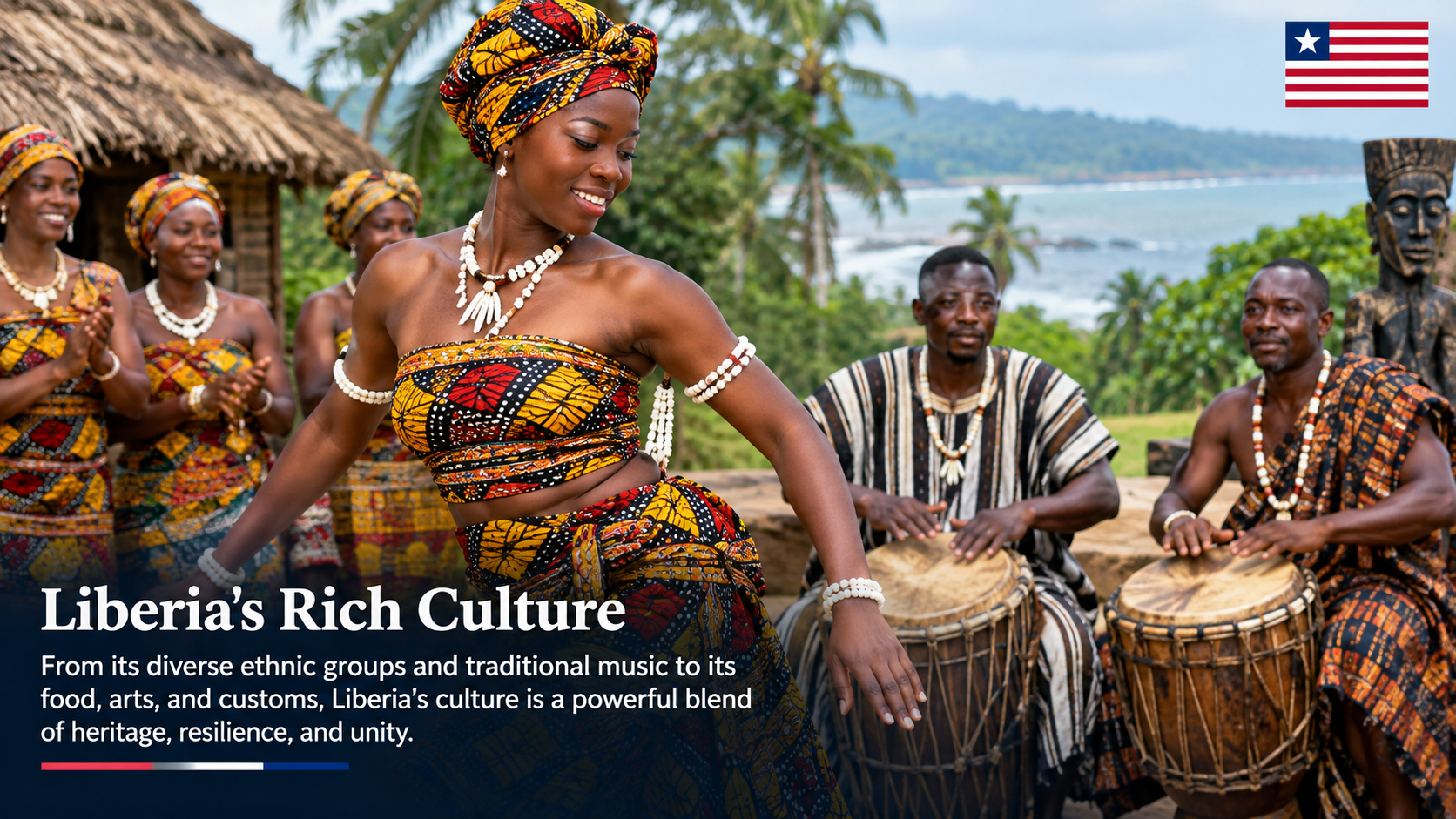
Liberia's cultural heritage reflects the traditions of many communities across the country.
Liberia's Cultural Diversity
Liberia recognizes 16 indigenous ethnic groups. These include the Bassa, Belle, Dey, Gbandi, Gio, Gola, Grebo, Kissi, Kpelle, Krahn, Kru, Lorma, Mano, Mende, Mandingo, and Vai peoples.
Each community has its own historical experiences, languages, customs, artistic traditions, social structures, and forms of cultural expression. At the same time, neighboring communities have interacted for centuries through trade, migration, marriage, political relationships, farming, hunting, fishing, and other forms of contact.
The Kpelle, for example, have traditionally occupied areas of central Liberia, while the Bassa have strong historical connections to parts of central and coastal Liberia. The Vai are particularly associated with western Liberia and are notable for their indigenous writing system. The Grebo, Kru, Krahn, Gio, Mano, Lorma, Gola, Kissi, Gbandi, Mende, Dey, Belle, and other communities have likewise developed distinctive cultural traditions across different parts of the country.
Liberia's cultural diversity therefore reflects both the individual identities of its communities and the long history of interaction among them.
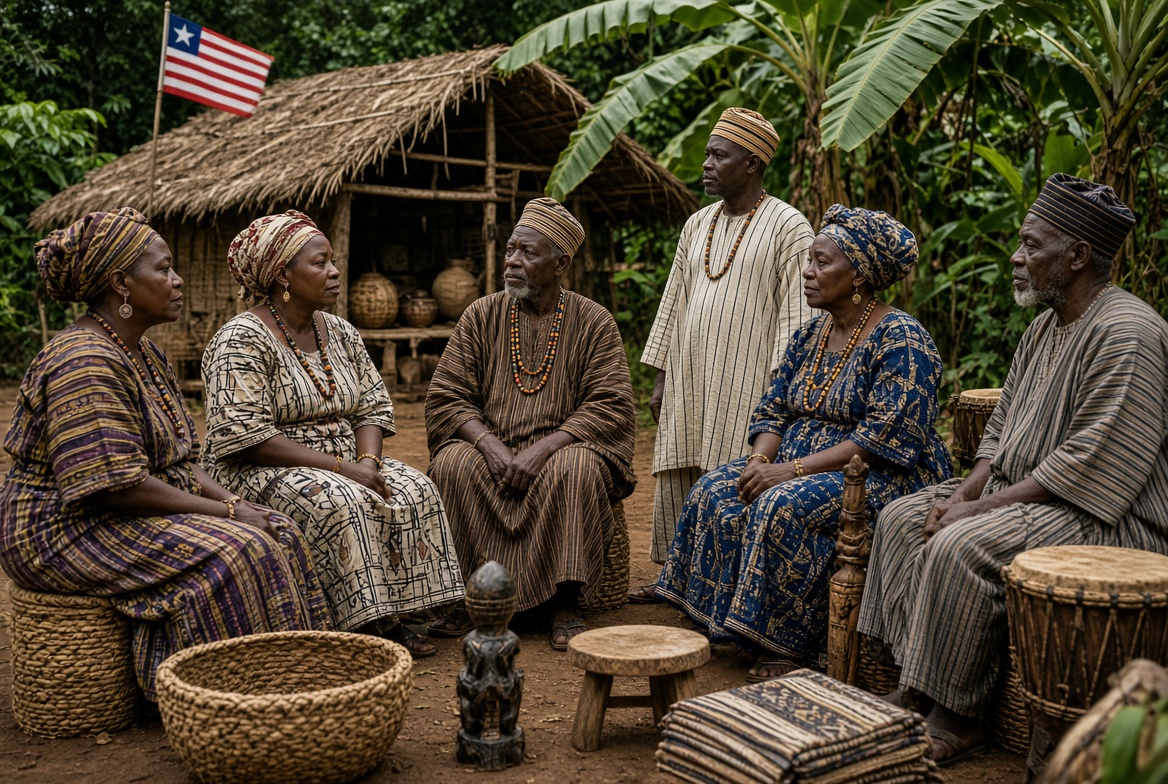
Liberia's many indigenous communities maintain distinctive cultural traditions while sharing a broader national heritage
Languages and Oral Traditions
Language is one of the most important parts of Liberian cultural identity.
Liberia's indigenous communities speak numerous languages belonging mainly to the Niger-Congo language family. English is the official language of Liberia, while Liberian English and Liberian Kreyol are widely used forms of everyday communication. Many Liberians also speak one or more indigenous languages connected to their family and community backgrounds.
Before the widespread use of written records, much historical knowledge was preserved through oral traditions. Elders, storytellers, musicians, community leaders, and other knowledge holders transmitted information from one generation to another.
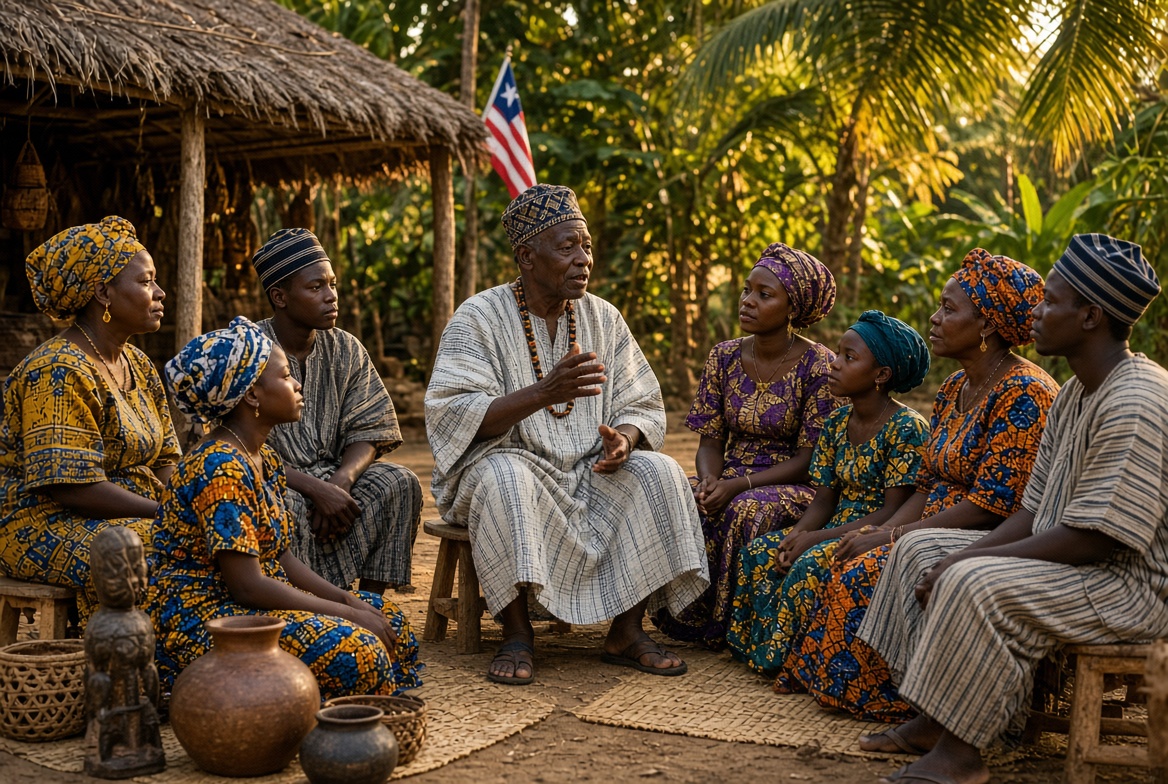
Elders have historically played an important role in passing knowledge, stories, values, and community memory to younger generations.
Stories could explain the origins of communities, teach acceptable behavior, preserve memories of important people and events, explain relationships between humans and the natural world, and entertain listeners.
Proverbs are another important form of oral expression. Short sayings can communicate lessons about wisdom, respect, responsibility, cooperation, leadership, family relationships, and community life.
Traditional storytelling also demonstrates how education historically took place outside formal classrooms. Children learned about community expectations, history, work, relationships, and values by listening to older generations and participating in everyday community life.
Music and Drumming
Music is an important part of Liberian cultural life.
Traditional music has historically been connected to community gatherings, celebrations, ceremonies, work, storytelling, religious practices, and dance. Drums and other instruments can provide rhythm while songs communicate stories, emotions, social messages, praise, warnings, or historical memories.
Drumming is particularly important because rhythm can be closely connected with dance and communal participation. In some Liberian traditions, the drummer does more than simply provide background music. Rhythms can communicate signals and interact directly with dancers.
Liberian musicians have also developed modern musical styles by combining local traditions with influences from neighboring West African countries, African American music, reggae, gospel, highlife, hip-hop, and other international genres.
Consequently, contemporary Liberian music exists alongside older forms of musical expression rather than simply replacing them.
Dance and Cultural Performance
Dance is another major expression of Liberian culture.
Traditional dances can be performed during celebrations, community gatherings, ceremonies, festivals, and other important occasions. Movements may be coordinated with drums, singing, clapping, horns, or other instruments.
Different communities have developed their own dances and performance traditions. Some dances communicate ideas about community identity, history, social relationships, celebration, or ceremonial life.
Liberian cultural dance can therefore serve both an artistic and social purpose. Performances can bring communities together while providing opportunities for younger generations to learn traditions from older performers.
The Liberia National Dance Company has also helped present Liberian traditional dance and music to audiences within Liberia and internationally.
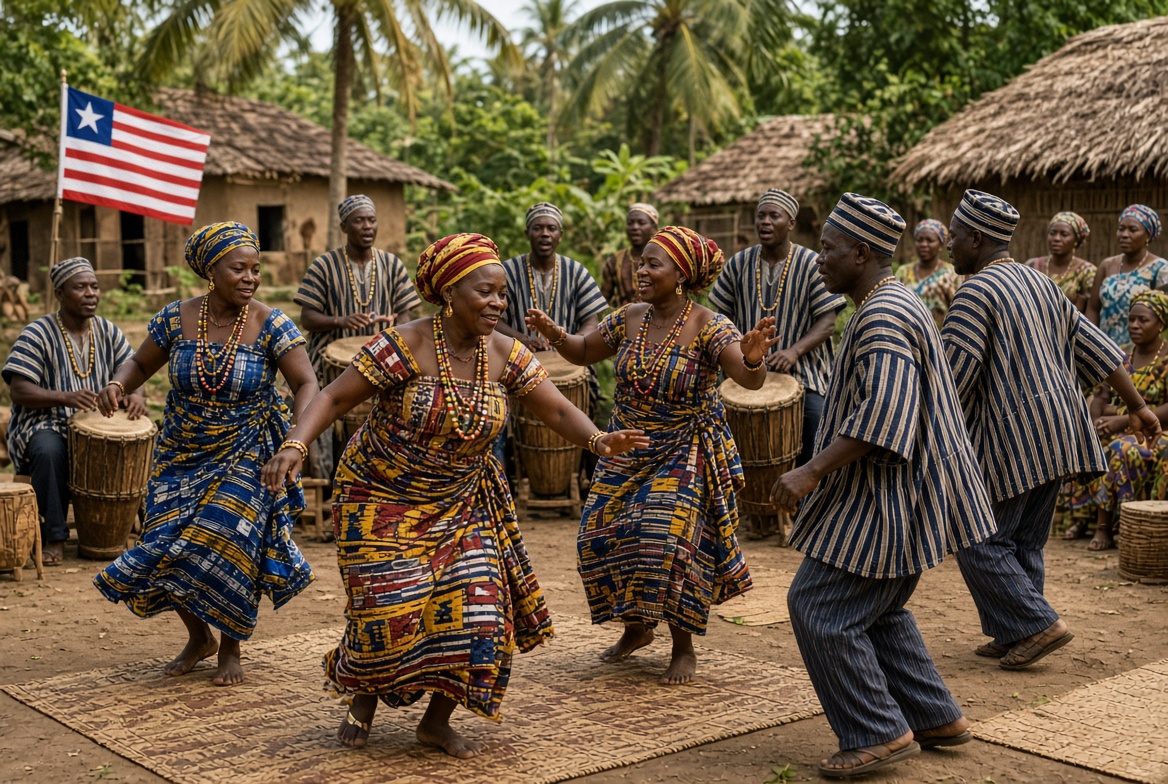
Traditional dance brings together music, movement, celebration, and community identity.
Masks and Traditional Performing Arts
Masks and masquerade traditions have an important place in the cultural history of several Liberian communities, particularly in parts of northern, central, and southeastern Liberia.
Among Dan and related communities, masks have historically been associated with performance, social institutions, spiritual beliefs, authority, and community life. Museum collections demonstrate the complexity of these traditions and show that individual mask forms could have different roles, including entertainment, education, social regulation, judicial functions, or ceremonial significance.
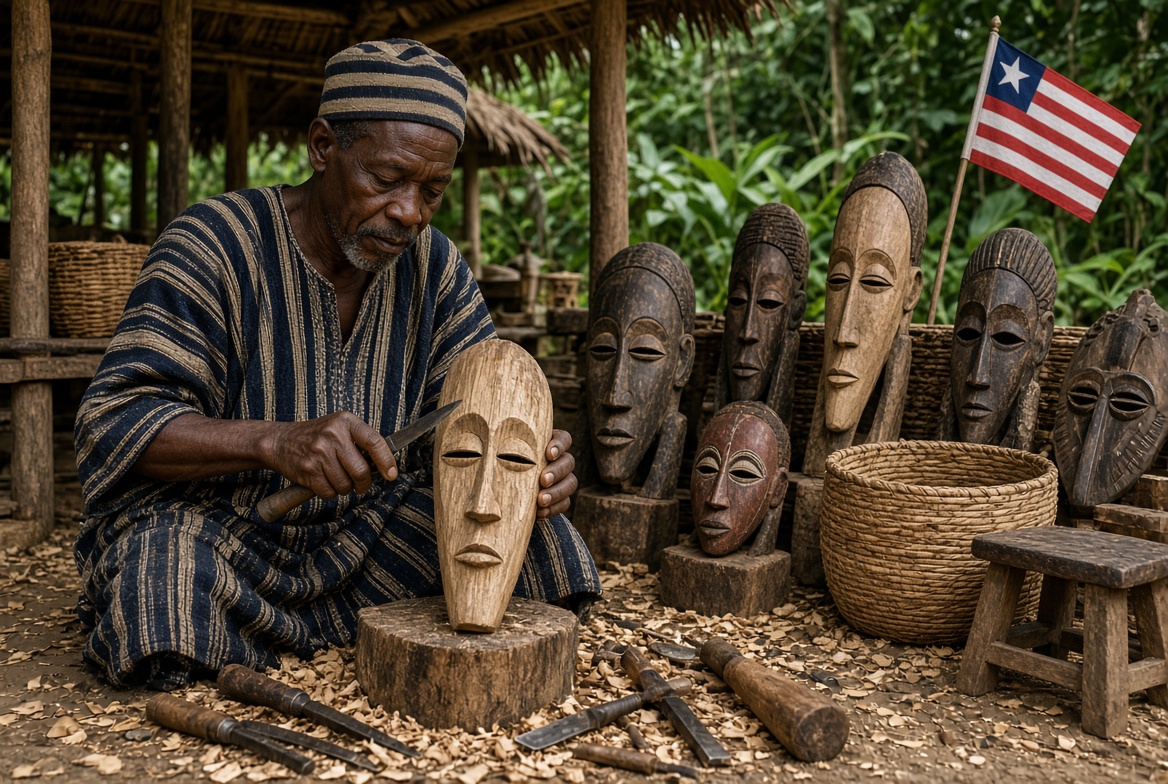
Traditional wood carving has produced masks and other objects with artistic, social, ceremonial, and cultural significance in Liberia.
Masks should therefore not be treated simply as decorative objects. In their original cultural settings, many were connected to particular performances, institutions, beliefs, and responsibilities.
Some traditions involving masks are connected with societies whose practices are not intended for unrestricted public viewing. For this reason, representations of Liberian cultural traditions should avoid presenting sacred or restricted practices as ordinary entertainment.
Poro and Sande Institutions
Poro and Sande are important traditional institutions found among several Liberian communities.
They have historically served cultural, social, educational, and religious functions. Poro is traditionally associated with men, while Sande is traditionally associated with women.
These institutions have played roles in transmitting knowledge, social values, responsibilities, and community traditions. Their presence has historically been particularly significant in northern, western, and central parts of Liberia.
Because some aspects of these institutions are private or restricted, descriptions of them should remain respectful and should not invent or reveal supposed secret practices.
Clothing and Traditional Dress
Traditional clothing is another visible expression of Liberian cultural identity.
Clothing styles vary between communities and occasions. Traditional garments may incorporate locally produced fabrics, woven materials, beads, shells, jewelry, head coverings, and other forms of decoration.
Clothing can communicate identity, age, social position, ceremonial importance, community affiliation, or participation in a particular event.
Today, Liberians commonly combine traditional African clothing with Western-style clothing. Traditional fabrics and designs are especially visible during weddings, cultural celebrations, national events, religious gatherings, school programs, and other important occasions.
Liberian cultural dress therefore continues to change while remaining connected to older traditions.
Traditional Crafts and Art
Liberian communities have developed numerous forms of traditional craftsmanship.
Wood carving is particularly important in the artistic history of several Liberian communities. Carved objects have included masks, figures, household objects, tools, and ceremonial items.
Basketry, weaving, pottery, beadwork, jewelry, textile production, and other crafts have also formed part of local material culture.
Traditional crafts were not always produced simply for artistic display. Many objects had practical, social, ceremonial, or religious purposes.
The artistic traditions of communities such as the Dan, Grebo, Vai, Kru, Bassa, and others have attracted international scholarly and museum attention. Collections in major museums contain examples of Liberian and Liberia-related West African art, including masks and carved objects.
Food and Culinary Traditions
Food is one of the most recognizable parts of Liberian everyday culture.
Rice has a central place in Liberian meals and is commonly eaten with a wide range of sauces, soups, vegetables, meat, and fish.
Cassava, plantains, sweet potatoes, greens, peppers, palm oil, fish, and other locally available foods are also important components of Liberian cooking.
Liberian cuisine reflects both the country's natural environment and its history. Coastal communities have long had access to marine resources, while farming communities have cultivated crops suited to Liberia's tropical environment.
Popular dishes and food traditions vary between households and communities. Cooking is also an important social activity, with meals often connected to family gatherings, celebrations, religious occasions, and community events.
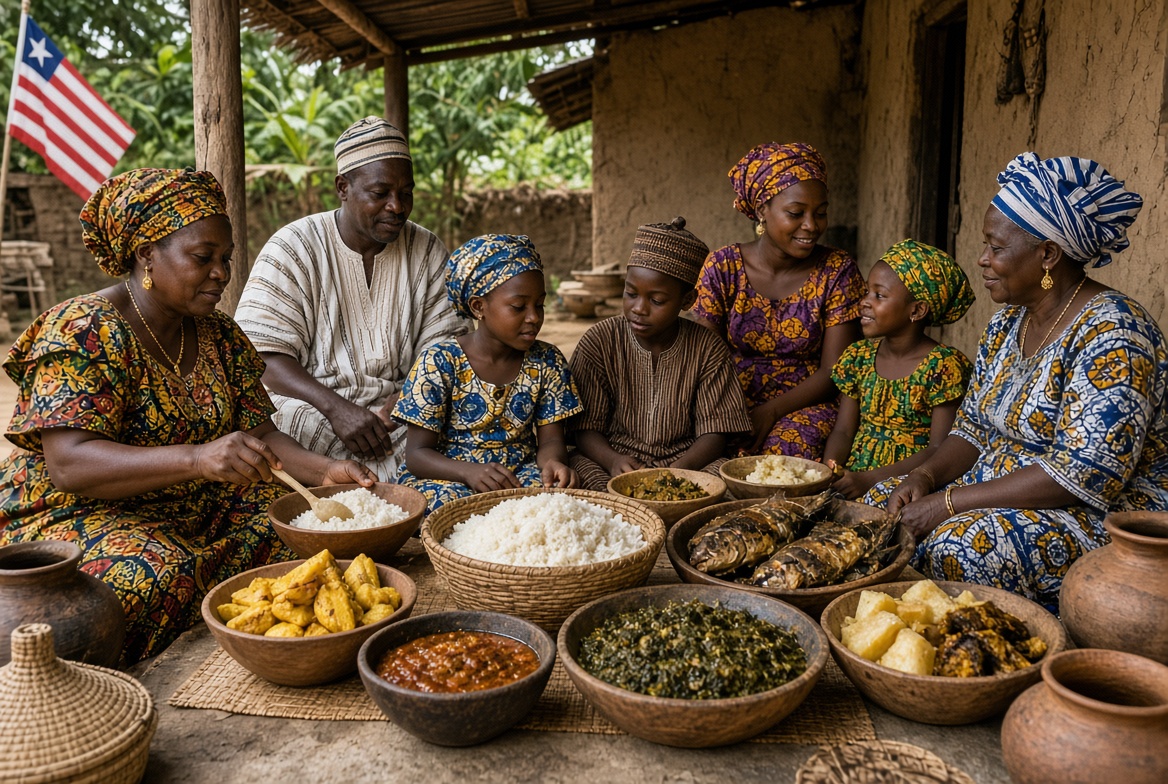
Food is an important part of Liberian family life, hospitality, celebrations, and cultural identity.
Agriculture and Culture
Agriculture has historically been closely connected with Liberian cultural life.
Farming communities have developed knowledge concerning planting seasons, crops, forests, rivers, weather, soil, and the management of natural resources. Rice cultivation has been particularly important in many parts of Liberia.
Agricultural knowledge has traditionally been passed between generations. This knowledge includes not only farming techniques but also social practices surrounding land, labor, food production, cooperation, and community responsibilities.
Fishing, hunting, gathering, and other activities connected with the natural environment have likewise contributed to the cultural traditions of different communities.
Family and Community Life
Family and community relationships remain important aspects of Liberian society.
Respect for elders is widely emphasized, although the way this is expressed varies among families and communities. Older people may serve as sources of historical knowledge, advice, family guidance, and cultural instruction.
Community cooperation has also traditionally been important in many Liberian societies. People may come together for farming activities, construction, celebrations, funerals, weddings, religious events, and other community responsibilities.
Extended family relationships can remain important even when members of a family live in different towns, counties, or countries.
Weddings, Funerals, and Other Ceremonies
Ceremonies provide important opportunities for Liberians to express cultural identity.
Weddings can combine traditional customs with Christian, Muslim, or civil practices. Depending on the community and family, ceremonies may involve particular clothing, food, music, dancing, family negotiations, prayers, and celebrations.
Funerals are also culturally significant. They can bring together relatives, friends, neighbors, religious communities, and members of the wider community to mourn, remember, and honor the deceased.
Practices differ between communities and religious traditions, so there is no single Liberian funeral ceremony.
Birth, naming ceremonies, coming-of-age practices, and other important stages of life can likewise involve cultural and religious traditions.
Religion and Traditional Beliefs
Religion has had a profound influence on Liberian cultural life.
Christianity and Islam are major religions in Liberia, while indigenous religious traditions continue to influence cultural practices and community life.
Traditional religious beliefs historically included ideas concerning ancestors, spirits, sacred places, community authorities, and relationships between people and the natural world.
Some Liberians who identify with Christianity or Islam may also maintain cultural practices inherited from indigenous traditions. The interaction between religious belief and cultural customs has therefore produced a complex religious landscape.
Traditional societies such as Poro and Sande have historically combined cultural and religious functions in several parts of Liberia.
The Vai Writing System
One of Liberia's most distinctive cultural achievements is the Vai writing system.
The Vai script was developed for the Vai language and is one of Africa's indigenous writing systems. Its development demonstrates that written communication in Africa was not limited to systems introduced through European colonial education.
The Vai script remains an important part of Liberia's cultural and intellectual heritage and is an important example of the creativity and historical development of one of Liberia's indigenous communities.
Cultural Heritage and Modern Liberia
Liberian culture continues to evolve.
Urbanization has brought people from different ethnic and cultural backgrounds into closer contact, especially in Monrovia and other growing towns and cities. Migration has also connected Liberian communities with neighboring West African countries, the United States, Europe, and other parts of the world.
Modern technology has created new ways for Liberians to preserve and share cultural knowledge. Social media, music recordings, documentaries, schools, museums, cultural organizations, and community programs can all contribute to cultural preservation.
At the same time, modernization can create challenges for the transmission of some traditional knowledge. Languages, crafts, oral traditions, ceremonial practices, and other forms of cultural heritage can become less familiar to younger generations when traditional methods of transmission weaken.
Preserving Liberian culture therefore does not necessarily mean keeping culture unchanged. It can also mean documenting traditions accurately, supporting cultural practitioners, teaching younger generations, protecting important heritage, and allowing communities to determine how their traditions should be represented.
Liberia's Culture Today
Modern Liberian culture is a combination of continuity and change.
Traditional music exists alongside contemporary Liberian music. Indigenous languages exist alongside English and Liberian English. Traditional clothing is worn alongside modern fashion. Traditional foods remain popular while Liberians also enjoy foods introduced through international influences.
Cultural identity can therefore be expressed in many ways.
A Liberian may identify with a particular ethnic heritage, speak an indigenous language, participate in traditional celebrations, practice Christianity or Islam, enjoy contemporary music, live in an urban environment, and maintain family traditions at the same time.
This combination of traditions and modern influences is one of the defining characteristics of Liberia's cultural life.
Why Liberian Culture Matters
Liberian culture is important because it preserves the knowledge, creativity, experiences, and identities of generations of Liberians.
It provides a connection between the past and the present. Oral traditions preserve memories. Languages preserve ways of expressing ideas. Music and dance preserve artistic traditions. Food preserves knowledge of local resources and cooking practices. Crafts preserve technical skills. Ceremonies preserve social relationships and values.
Liberia's cultural heritage also demonstrates the diversity of West African societies and the many ways communities have developed institutions, artistic traditions, languages, and systems of knowledge.
Protecting this heritage is therefore not only about preserving objects or performances. It is about preserving living knowledge and giving future generations the opportunity to understand where their communities came from and how Liberian society developed.
Key Facts
Liberia has 16 officially recognized indigenous ethnic groups.
Liberia contains numerous indigenous languages alongside English and Liberian English.
Oral traditions, storytelling, and proverbs have historically been important ways of transmitting knowledge.
Traditional music and dance remain important forms of cultural expression.
Masks and masquerade traditions have significant historical and cultural roles in several Liberian communities.
Poro and Sande are traditional institutions found among several Liberian communities.
Rice is a major part of Liberian food culture.
Wood carving, weaving, basketry, beadwork, and other crafts form part of Liberia's artistic heritage.
The Vai writing system is an important indigenous writing tradition.
Christianity and Islam are major religions in Liberia, while indigenous beliefs and customs continue to influence cultural life.
Liberian culture continues to evolve through migration, urbanization, education, technology, and interaction with global culture.
Source
Liberia National Tourism Authority — Discover Liberia
Confirms the 16 indigenous ethnic groups and discusses their languages, crafts, music, storytelling, drumming, dance, masks, and food.
Liberia National Tourism Authority — Discover LiberiaLiberia National Tourism Authority — Cultural Heritage
Covers Liberian arts and crafts, including wood carving, basket weaving, pottery, mask making, fabric dyeing, music, dance, festivals, and cuisine.
Liberia National Tourism Authority — Cultural HeritageU.S. Department of State — Liberia: Indigenous Peoples
Confirms that Liberian law recognizes 16 Indigenous ethnic groups, each with a distinct primary language and regional concentration.