Montserrado County
Explore the history, people, culture, economy, natural resources, and important places of Montserrado County, Liberia.
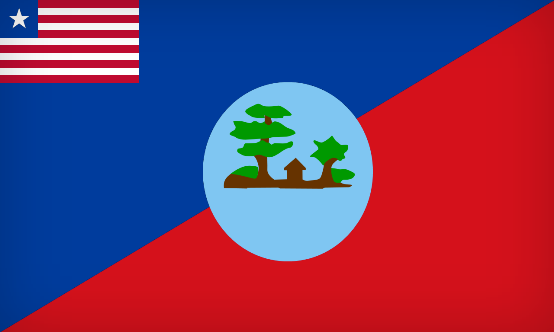
Quick Facts
- County Capital: Bensonville
- National Capital: Monrovia
- Region: Central/Northwestern Liberia
- 2022 Population: 2,114,922
- County established: 1847
- Coastline: Atlantic Ocean
- National importance: Political, commercial, educational, and administrative center
- Major historical site: Providence Island
- Major maritime gateway: Port of Monrovia
- Major city: Monrovia
Geography and Location
Montserrado lies along Liberia's Atlantic coast. It borders Bomi County to the northwest, Margibi County to the east, and the Atlantic Ocean to the south.
The county includes densely populated urban areas as well as rural communities. The Mesurado River and St. Paul River are among the important waterways associated with the region.
Montserrado's coastal location and its position around Monrovia helped make it the political and commercial gateway of Liberia.
History
Long before the creation of Liberia, the territory that is now Montserrado was inhabited by established African communities, including Dey, Gola, Vai, and other peoples who participated in regional trade and political networks.
European traders and navigators had also interacted with the West African coast for centuries before the arrival of American settlers in the nineteenth century.
Montserrado is closely connected to the beginnings of the Republic of Liberia. In 1822, the American Colonization Society established a settlement for free and formerly enslaved African Americans on Providence Island at the mouth of the Mesurado River.
The settlement later expanded to the mainland and became Monrovia. The city was named in honor of James Monroe, the fifth president of the United States, who supported the American Colonization Society.
The settlement became the center from which the Liberian state developed. Montserrado therefore occupies a special place in the history of modern Liberia.
Monrovia became the capital of the independent Republic of Liberia after the country declared independence on July 26, 1847.
Many of the institutions created during the early years of the republic were established in or around Monrovia. Government offices, courts, schools, churches, businesses, newspapers, and diplomatic institutions gradually developed around the capital.
Montserrado was among the territories that formed the early administrative structure of the Republic of Liberia and became the center of national political life.
Mining and Mineral Economy
The Port of Monrovia is one of Liberia's principal maritime gateways. Its location on the Atlantic Ocean makes it important for the importation and exportation of goods.
The port has played an important role in Liberia's commercial history, connecting the country to regional and international markets.
The concentration of commercial activity around Monrovia, the port, markets, transportation networks, and major businesses makes Montserrado central to Liberia's national economy.
About Montserrado County
Montserrado County is one of Liberia's most historically important counties. It contains Monrovia, the national capital, and Bensonville, the official county capital.
The county is the country's principal political, commercial, educational, and administrative center. Most national government institutions, diplomatic missions, major businesses, universities, hospitals, media organizations, and cultural institutions are concentrated in and around Monrovia.
People, Ethnic Groups, and Languages
Montserrado is Liberia's most ethnically and culturally diverse county because people from virtually every part of the country have moved to Monrovia and surrounding communities.
Kpelle, Bassa, Vai, Gola, Kru, Grebo, Lorma, Gio, Mano, Mandingo, Kissi, and many other Liberian communities are represented in the county.
This diversity is particularly visible in Monrovia, where people from different counties and ethnic backgrounds live, work, study, trade, and participate in national life.
Agriculture and Economy
Montserrado is the commercial center of Liberia. The county contains major markets, banks, supermarkets, restaurants, hotels, telecommunications companies, transportation businesses, construction companies, and other enterprises.
The concentration of businesses in Monrovia means that economic activity in Montserrado has a major influence on the national economy.
Although Montserrado is highly urbanized, agriculture remains important in its rural areas. Farmers produce cassava, rice, vegetables, plantains, and other food crops.
Fishing and small-scale food production also contribute to livelihoods, especially in communities near the coast and waterways.
Natural Resources
Montserrado includes beaches, wetlands, rivers, mangrove areas, forests, and agricultural land. Its coastal and freshwater environments provide habitats for many species and support fishing and other livelihoods.
Rapid urbanization has created environmental challenges, including waste management, flooding, drainage problems, coastal erosion, and pressure on wetlands and other natural areas.
Protecting coastal ecosystems, wetlands, rivers, forests, and other natural areas is important for the county's long-term development.
Education
Montserrado is the most important educational center in Liberia. The county contains many primary and secondary schools, vocational institutions, colleges, and universities.
The University of Liberia is one of the country's most important institutions of higher education. It was founded in 1862 as Liberia College and became a full university in 1951.
Liberia College opened its doors to students in the nineteenth century and helped train generations of Liberians for public service, education, law, medicine, politics, and other professions.
Culture and Traditions
Montserrado's culture combines traditions from across Liberia. Traditional music, dance, storytelling, food, religious celebrations, community gatherings, and national festivals contribute to the county's cultural identity.
Monrovia is also a major center for Liberian popular music, journalism, literature, fashion, arts, film, and other forms of modern cultural expression.
Important Places
- Providence Island
- Historic Monrovia
- Capitol Hill and national government institutions
- University of Liberia
- Port of Monrovia
- Historic churches and religious institutions
- Bensonville
- Mesurado River area
- Monrovia
Montserrado County During Liberia's Civil Wars
Montserrado experienced some of the most serious effects of Liberia's civil wars between 1989 and 2003. Because Monrovia was the national capital and the center of government, control of the city became a major objective during the conflicts.
Large numbers of people fled to and from Monrovia during different stages of the wars. Infrastructure, schools, businesses, hospitals, and public institutions were heavily disrupted.
The Second Liberian Civil War reached a major turning point in 2003 when fighting around Monrovia created a severe humanitarian crisis. The eventual peace agreement helped open the way for Liberia's post-war reconstruction.
Population
Liberia's 2022 National Population and Housing Census recorded a population of 2,114,922 (2022 Census) in Montserrado County.
Population information is important for understanding the county's needs in areas such as education, healthcare, roads, housing, employment, and other public services.
Development and Present-Day Importance
After the end of the civil wars, Montserrado became one of the main centers of Liberia's reconstruction. Roads, schools, hospitals, markets, businesses, government institutions, and residential areas expanded rapidly.
The county's population also grew significantly as Liberians returned from displacement and people from other counties moved toward Monrovia in search of education, employment, healthcare, and business opportunities.
Montserrado is also the center of Liberia's road and transportation network. Major roads connect Monrovia with Margibi, Bomi, and other parts of the country.
Roberts International Airport is located in neighboring Margibi County, but Monrovia and Montserrado serve as the main destination for international travelers entering Liberia.
The county's roads, port, markets, and transportation terminals make it a critical gateway for people and goods.
Montserrado contains many of Liberia's most important national institutions. The Executive Branch, National Legislature, Supreme Court, ministries, commissions, diplomatic missions, and numerous government agencies are based in and around Monrovia.
Because of this concentration of institutions, events in Montserrado often have immediate national political and economic significance.
Today, the county also faces major development challenges, including traffic congestion, housing pressure, flooding, waste management, unemployment, inadequate infrastructure, and the rapid expansion of urban settlements.
Historical Importance
Montserrado is central to the story of modern Liberia. Providence Island and the Mesurado settlement are connected to the beginning of the nineteenth-century colonization movement that led to the establishment of Liberia.
Monrovia then became the capital of the independent republic in 1847. From that point forward, the county remained at the center of Liberia's political history, including presidential administrations, elections, political movements, economic transformations, and major national crises.
Montserrado is important because its history connects indigenous African societies, African-American settlement, the creation of Liberia, national independence, political development, economic growth, education, commerce, and the country's modern urban transformation.
Understanding Montserrado therefore helps explain much of Liberia's modern political, economic, educational, and social development.
Key Facts About Montserrado County
- Montserrado is one of Liberia's 15 counties.
- Bensonville is the county capital.
- Monrovia, Liberia's national capital, is located in Montserrado.
- The 2022 census recorded 2,114,922 residents.
- The county has an Atlantic Ocean coastline.
- Providence Island is connected to the early history of Liberia.
- The Port of Monrovia is an important national maritime gateway.
- The University of Liberia traces its institutional history to Liberia College, founded in 1862.
- Most major national government institutions are located in Monrovia.
- People from nearly every part of Liberia live in Montserrado.
- Montserrado remains one of the most important centers of Liberian history and national development.