Maryland County
Maryland County is located in southeastern Liberia along the Atlantic Ocean. It borders Grand Kru County to the west, River Gee County to the north, Côte d'Ivoire to the east, and the Atlantic Ocean to the south. The Cavalla River forms an important part of Liberia's eastern international boundary with Côte d'Ivoire. The county's coastal position has influenced its history, trade, fishing, settlement patterns, and cultural development.
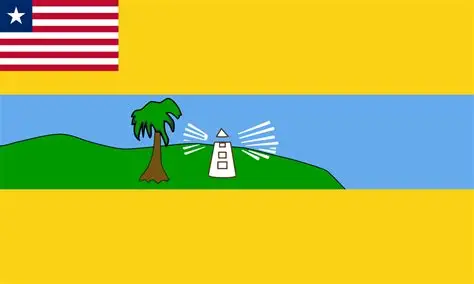
Quick Facts
- Capital: Harper
- Region: Southeastern Liberia
- County established: 1857
- 2022 Population: 172,202
- Known for: Cape Palmas, coastal communities, fishing, and agriculture
- Major ethnic group: Grebo
- Largest city: Pleebo
- Historical distinction: Former Republic of Maryland
- International border: Côte d'Ivoire
Overview
Maryland County is located in southeastern Liberia along the Atlantic Ocean. It borders Grand Kru County to the west, River Gee County to the north, Côte d'Ivoire to the east, and the Atlantic Ocean to the south.
The Cavalla River forms an important part of Liberia's eastern international boundary with Côte d'Ivoire. The county's coastal position has influenced its history, trade, fishing, settlement patterns, and cultural development.
The Early History of Maryland
The modern political history of Maryland began in the nineteenth century. In 1834, the Maryland State Colonization Society established a colony on the southeastern coast of West Africa for free African Americans who were encouraged to settle in Africa.
The settlement developed around Cape Palmas. The area was already home to established African societies, particularly the Grebo and Kru peoples. Relations between the settlers and indigenous communities became an important part of the history of the region.
The Republic of Maryland
Maryland did not immediately become part of Liberia. In 1854, the Maryland colony declared itself independent from the Maryland State Colonization Society and became the independent Republic of Maryland.
Its capital was Harper, located at Cape Palmas. The republic maintained its own government and institutions while occupying territory along the southeastern Liberian coast.
Relations between the Maryland settlers and surrounding indigenous communities became increasingly tense. Disputes involved political authority, land, trade, and control of commercial activities.
Conflict and the 1857 Union with Liberia
In 1856, the Republic of Maryland requested military assistance from Liberia during conflict with Grebo and Kru communities. Liberia, under President Joseph Jenkins Roberts, provided assistance.
After the conflict, the small republic faced the difficulty of maintaining an independent government. Maryland subsequently chose union with Liberia.
In 1857, Maryland was annexed to Liberia and became Maryland County. The transition marked an important stage in the territorial and political development of the Liberian state.
Harper and Cape Palmas
Information coming soon.
People and Ethnic Groups
Maryland County is predominantly associated with the Grebo people, one of the major indigenous communities of southeastern Liberia.
Other communities also live throughout the county, making Maryland culturally diverse. The history of the county reflects centuries of interaction between indigenous societies, settlers from the United States, neighboring West African populations, and later migrants from other parts of Liberia.
Grebo languages are important in local community life, while English is used in government, formal education, and official communication. Liberian English and other local languages are also spoken.
Culture and Traditions
Maryland County has a strong cultural identity shaped by Grebo traditions and the wider cultures of southeastern Liberia. Music, dance, storytelling, traditional ceremonies, food, clothing, crafts, and community gatherings are important expressions of local heritage.
Traditional institutions and community leadership have influenced social life, while Christianity and other religious traditions have also become important parts of the county's modern cultural landscape.
Agriculture and Economy
Agriculture is one of the main economic activities in Maryland County. Many rural households depend on farming for food and income.
Important agricultural activities include the production of rice, cassava, plantains, vegetables, and other food crops. Tree crops and other commercial agricultural activities also contribute to the local economy.
Fishing is particularly important because of Maryland's long Atlantic coastline. Small-scale fishing supports coastal communities and contributes to local markets and food supplies.
Trade and small-scale commerce are also important to communities around Harper, Pleebo, and other population centers.
Trade and Cross-Border Connections
Maryland County's development is closely connected to agriculture, fisheries, education, trade, transportation, tourism, and responsible management of natural resources.
Harper's coastal location and historic sites provide opportunities for cultural and historical tourism. The county's coastline and marine resources also provide opportunities for fisheries and carefully managed coastal tourism.
Improving roads, electricity, healthcare, schools, markets, clean water, transportation, and communications remains important for connecting rural communities with economic opportunities.
Cross-border commerce with Côte d'Ivoire also provides opportunities for regional economic activity and cultural exchange.
Natural Environment
Maryland County contains tropical forests, agricultural land, wetlands, rivers, coastal areas, and marine ecosystems. These natural environments provide resources for farming, fishing, and local livelihoods.
The Cavalla River and other waterways are important environmental and economic resources. Coastal and marine environments also support fishing communities.
Protecting forests, rivers, wetlands, and coastal habitats is important for the county's long-term development. Sustainable management of natural resources can help communities benefit from the environment while protecting it for future generations.
Important Places
- Harper City
- Pleebo
- Cape Palmas
- Cavalla River
- Atlantic coastal areas and beaches
- Forest and agricultural communities
- Tubman University
Education
Education has long been an important part of Maryland County's history. Harper developed as a center of learning during the nineteenth and twentieth centuries.
Tubman University, located in Harper, is one of Liberia's public universities and serves students from Maryland and surrounding southeastern counties.
Schools and educational institutions throughout the county continue to play an important role in preparing young people and supporting regional development.
Maryland County During the Civil Wars
Like much of southeastern Liberia, Maryland County was affected by Liberia's civil wars between 1989 and 2003. Communities experienced displacement, disruption of education and economic activity, and damage to infrastructure.
The county's location near Côte d'Ivoire also meant that conflict in the wider southeastern region had effects across the border. Population movements and regional instability affected communities during different periods of the conflict.
After the wars ended, communities participated in Liberia's broader reconstruction and peacebuilding process. Rebuilding schools, roads, health facilities, markets, and public institutions became important priorities.
Population
Liberia's 2022 National Population and Housing Census recorded approximately 172,202 (2022 Census) in Maryland County.
The population is distributed among urban centers such as Harper and Pleebo as well as numerous rural communities. Population growth and migration continue to influence the county's towns and villages.
Maryland's Role in Liberia's History
Maryland County occupies a special position in Liberian history because its political history began separately from the Republic of Liberia. It existed first as a settlement, then as the Republic of Maryland, before becoming a Liberian county in 1857.
The county's history illustrates the complicated relationship between settlers of African-American descent and indigenous West African societies. Questions of land, political authority, trade, cultural interaction, conflict, and national integration shaped the region's development.
Present-Day Importance
Maryland County's development is closely connected to agriculture, fisheries, education, trade, transportation, tourism, and responsible management of natural resources.
Harper's coastal location and historic sites provide opportunities for cultural and historical tourism. The county's coastline and marine resources also provide opportunities for fisheries and carefully managed coastal tourism.
Improving roads, electricity, healthcare, schools, markets, clean water, transportation, and communications remains important for connecting rural communities with economic opportunities.
Cross-border commerce with Côte d'Ivoire also provides opportunities for regional economic activity and cultural exchange.
Historical Importance
The history of the Republic of Maryland and its incorporation into Liberia is especially important for understanding how the Liberian state expanded beyond its original settlement around Monrovia.
Key Facts About Maryland County
- Maryland is one of Liberia's 15 counties.
- It became a Liberian county in 1857.
- Harper is the county capital.
- Pleebo is the largest city.
- The 2022 census recorded 172,202 residents.
- The county lies along Liberia's southeastern Atlantic coast.
- The Cavalla River forms part of the border with Côte d'Ivoire.
- The territory previously existed as the independent Republic of Maryland.
- Grebo communities have a major historical and cultural presence.
- Tubman University is located in Harper.
- Fishing and agriculture remain important livelihoods.
- Maryland's history is essential to understanding Liberia's early territorial and political development.