Margibi County
Discover the history, communities, culture, economy, and important places of Margibi County, Liberia.
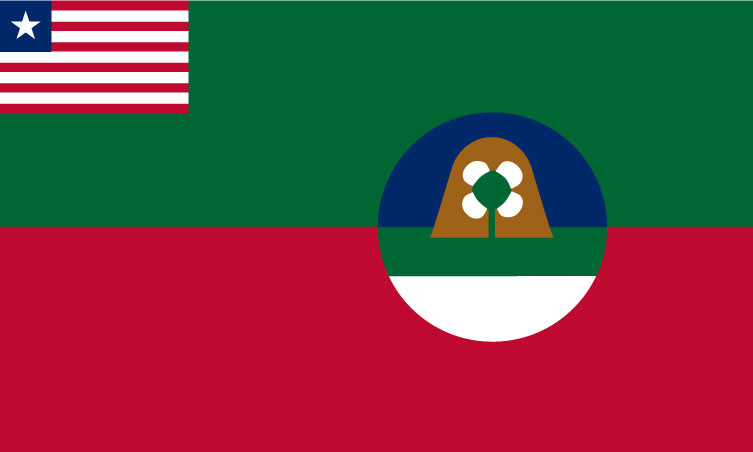
Quick Facts
- Capital: Kakata
- Region: Central Liberia
- Established as a county: 1985
- 2022 Population: 269,467
- Known for: Rubber production and agriculture
- Major communities: Kakata, Harbel, Marshall, and Gibi
- County Status: One of Liberia's 15 counties
Geography and Location
Margibi County is located in central Liberia, close to Monrovia. Its location gives it an important connection between the national capital and communities farther inland.
The county contains a mixture of towns, farming communities, forest areas, wetlands, and large agricultural estates.
Margibi's position along major transportation routes has helped Kakata develop into an important commercial and transportation center. The county also lies within Liberia's historic rubber-producing belt.
Creation and Early History
Margibi County was created in 1985 during the administration of President Samuel K. Doe. The county was formed from the former Marshall and Gibi territories, which had previously been administered as parts of Montserrado County.
The creation of Margibi gave the communities in the area their own county-level administrative structure and placed Kakata at the center of government, commerce, education, and transportation.
The history of Margibi is also closely connected to the development of commercial agriculture and the rubber industry in Liberia. These developments transformed settlement patterns, employment, transportation, and economic activity throughout the region.
Kakata: The County Capital
Information coming soon.
Firestone and the History of Rubber
One of the most important chapters in Margibi's economic history is the development of the Firestone rubber plantation. Firestone began operations in Liberia in 1926 after receiving a major concession from the Liberian government.
The plantation became one of the largest rubber-producing operations in the world and transformed the economy and settlement patterns of the region. The company established Harbel, a company town whose name was formed from Harvey Firestone and his wife Idabelle.
Rubber became one of Liberia's most important export commodities. Firestone also became deeply connected with employment, transportation, housing, education, and other economic activities in Margibi. Historical studies describe the original concession as covering about one million acres.
Firestone's presence has therefore had a lasting impact on Margibi's identity. At the same time, the history of the concession is also part of the wider debate about land, labor, economic power, and foreign investment in Liberia.
Harbel developed as the center of Firestone's plantation operations. It became a company town with administrative offices, industrial facilities, worker communities, and other infrastructure connected to rubber production.
The plantation's large rubber-growing areas helped make Margibi one of Liberia's best-known agricultural and industrial regions. Rubber remains an important part of the county's economic history and present-day identity.
Harbel and the Firestone Plantation
One of the most important chapters in Margibi's economic history is the development of the Firestone rubber plantation. Firestone began operations in Liberia in 1926 after receiving a major concession from the Liberian government.
The plantation became one of the largest rubber-producing operations in the world and transformed the economy and settlement patterns of the region. The company established Harbel, a company town whose name was formed from Harvey Firestone and his wife Idabelle.
Rubber became one of Liberia's most important export commodities. Firestone also became deeply connected with employment, transportation, housing, education, and other economic activities in Margibi. Historical studies describe the original concession as covering about one million acres.
Firestone's presence has therefore had a lasting impact on Margibi's identity. At the same time, the history of the concession is also part of the wider debate about land, labor, economic power, and foreign investment in Liberia.
Harbel developed as the center of Firestone's plantation operations. It became a company town with administrative offices, industrial facilities, worker communities, and other infrastructure connected to rubber production.
The plantation's large rubber-growing areas helped make Margibi one of Liberia's best-known agricultural and industrial regions. Rubber remains an important part of the county's economic history and present-day identity.
Booker Washington Institute
The Booker Washington Institute (BWI) is located in Kakata and is one of Liberia's most important technical educational institutions.
BWI opened in 1929 with financial support from Firestone and the Phelps Stokes Fund. The school was established to provide practical and technical education and became an important institution for training young Liberians.
Over the decades, BWI has trained students in technical, vocational, agricultural, and other practical fields. Its connection with Firestone and Kakata makes it an important part of Margibi's educational and economic history.
Education is an important part of Margibi's development. In addition to BWI, the county has schools and training institutions serving urban and rural communities.
Development priorities include improving schools, healthcare, agricultural productivity, access to markets, electricity, clean water, and employment opportunities.
People and Ethnic Groups
Margibi is culturally diverse. The Bassa and Kpelle are among the historically prominent communities in the county, while people from many other Liberian ethnic groups also live in Margibi.
The 2022 census data shows that Kpelle communities have a significant presence in Margibi. Earlier county demographic studies also identified Bassa as a major population group.
This mixture of communities has contributed to the county's diverse languages, traditions, food, music, and social life.
Languages
English, Liberian English, Kpelle, Bassa, and other Liberian languages
Agriculture and Economy
Agriculture is central to life in Margibi County. In addition to rubber, farming communities produce crops such as rice, cassava, plantains, vegetables, and other food crops.
Rubber production has historically been one of Margibi's most important commercial activities. Smallholder farming, food production, trading, transportation, and services also provide livelihoods for many residents.
Because Margibi is close to Monrovia and connected by major roads, farmers and traders have access to one of Liberia's largest markets. This geographic advantage has contributed to the county's commercial importance.
Natural Resources
Margibi's natural resources include fertile agricultural land, forests, wetlands, rivers, and other water resources. Its climate and soils support a variety of crops and plantation agriculture.
The county's forests and wetlands are also important for biodiversity and environmental protection. Responsible management of these resources is important for agriculture, communities, and future development.
Culture and Traditions
Margibi's culture reflects the traditions of its many communities. Traditional ceremonies, storytelling, music, dance, local foods, family networks, and community events remain important parts of social life.
The county's cultural diversity is also visible in the languages spoken by its residents and in the movement of people between rural communities and growing urban centers such as Kakata.
Margibi During the Civil Wars
Margibi was heavily affected by Liberia's civil wars between 1989 and 2003. Its location near Monrovia and the importance of the Firestone plantation made the county strategically significant during the conflict.
Communities experienced displacement, disruption of education and economic activity, and damage to infrastructure. The conflicts also affected agricultural production and transportation.
After the end of the civil wars, Margibi became part of Liberia's wider reconstruction effort. Roads, schools, businesses, agricultural activities, and public institutions gradually resumed and expanded.
Population
According to Liberia's 2022 Population and Housing Census, Margibi County had a population of 269,467 (2022 Census).
Important Places
- 🏙 Kakata City – County capital and major urban center
- 🌴 Firestone Rubber Plantation – Major part of Margibi's economic history
- 🏘 Harbel – Historic Firestone company town
- 🎓 Booker Washington Institute – Important technical educational institution
- 🏘 Marshall – Important community in Margibi
- 🏘 Gibi – Historic territory and community
- 🌾 Agricultural communities – Important farming areas
- 🛣 Monrovia–Kakata transportation corridor – Major transportation and trade route
Transportation and Trade
Margibi's location makes transportation one of its greatest economic advantages. The major road connection between Monrovia and Kakata carries passengers, agricultural products, commercial goods, and other forms of traffic.
Kakata's role as a transportation hub has encouraged markets, shops, restaurants, services, schools, and other businesses to develop around the city.
Today, Margibi remains one of Liberia's important economic and population centers outside Montserrado. Its closeness to Monrovia, agricultural resources, rubber industry, schools, markets, and transportation network give it a strategic position in the national economy.
The county also has the potential to expand agricultural processing, small businesses, technical education, transportation services, and other industries that can create opportunities for its growing population.
Education and Development
The Booker Washington Institute (BWI) is located in Kakata and is one of Liberia's most important technical educational institutions.
BWI opened in 1929 with financial support from Firestone and the Phelps Stokes Fund. The school was established to provide practical and technical education and became an important institution for training young Liberians.
Over the decades, BWI has trained students in technical, vocational, agricultural, and other practical fields. Its connection with Firestone and Kakata makes it an important part of Margibi's educational and economic history.
Education is an important part of Margibi's development. In addition to BWI, the county has schools and training institutions serving urban and rural communities.
Development priorities include improving schools, healthcare, agricultural productivity, access to markets, electricity, clean water, and employment opportunities.
Present-Day Importance
Margibi's location makes transportation one of its greatest economic advantages. The major road connection between Monrovia and Kakata carries passengers, agricultural products, commercial goods, and other forms of traffic.
Kakata's role as a transportation hub has encouraged markets, shops, restaurants, services, schools, and other businesses to develop around the city.
Today, Margibi remains one of Liberia's important economic and population centers outside Montserrado. Its closeness to Monrovia, agricultural resources, rubber industry, schools, markets, and transportation network give it a strategic position in the national economy.
The county also has the potential to expand agricultural processing, small businesses, technical education, transportation services, and other industries that can create opportunities for its growing population.
Historical Importance
Margibi's history is closely connected to several major themes in Liberia's development: the expansion of administrative counties, commercial agriculture, the rubber industry, foreign investment, technical education, transportation, migration, and post-war reconstruction.
The history of Firestone and Harbel demonstrates the enormous influence that the rubber industry had on Liberia's economy during the twentieth century. Meanwhile, Kakata and BWI demonstrate the importance of education and transportation in the development of central Liberia.
Key Facts About Margibi
- Margibi is one of Liberia's 15 counties.
- It was created in 1985.
- Kakata is the county capital.
- The 2022 census recorded 269,467 residents.
- Rubber production is central to the county's economic history.
- Harbel developed around Firestone's rubber operations.
- Booker Washington Institute is located in Kakata.
- Agriculture remains an important source of livelihoods.
- Margibi is an important transportation link between Monrovia and central Liberia.
- The county is home to diverse Liberian communities and cultures.