Grand Cape Mount County
Explore the history, people, culture, economy, natural resources, and important places of Grand Cape Mount County, Liberia.
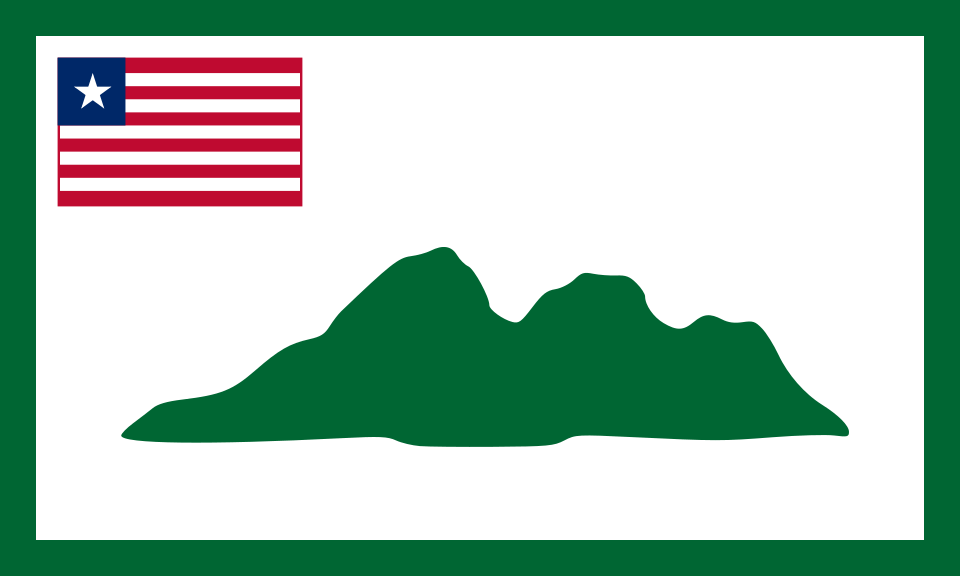
Quick Facts
- Capital: Robertsport
- Region: Northwestern Liberia
- Coastline: Atlantic Ocean
- Major landmark: Lake Piso
- Known for: Gold, diamonds, fishing, farming, and coastal resources
- 2022 Population: 178,867
- County Status: Liberia's fifth county
- Cultural significance: Historic home of the Vai writing tradition
Geography and Location
Grand Cape Mount lies in the extreme northwest of Liberia. It borders Sierra Leone to the north and northwest, Gbarpolu County to the east, Bomi County to the southeast, and the Atlantic Ocean to the west.
The county contains coastal areas, forests, wetlands, rivers, lagoons, agricultural land, and inland communities. Its location has historically made it an important connection between coastal Liberia, Sierra Leone, and communities farther inland.
History
The Cape Mount region has a long history that predates the establishment of the Republic of Liberia. Indigenous communities developed political systems, trading networks, agricultural practices, and cultural institutions long before the arrival of Americo-Liberian settlers.
Portuguese explorers reached the Liberian coast during the fifteenth century. Portuguese navigator Pedro de Sintra is traditionally credited with recording Cape Mount in 1461. Over subsequent centuries, the wider Cape Mount area became part of regional commercial networks involving products such as salt, kola nuts, cloth, camwood, and other forest and coastal goods.
As the Liberian government expanded beyond the earliest coastal settlements, Cape Mount became increasingly connected to the Republic of Liberia. Historical records indicate that the Liberian government claimed Cape Mount as early as 1849. Robertsport was established in the 1850s, and Grand Cape Mount was formally organized as Liberia's fifth county in 1924.
Mining and Mineral Economy
Grand Cape Mount has mineral resources including gold and diamonds. Mining has therefore been part of the county's economic history and continues to provide livelihoods for some communities.
The county also possesses important forests, wetlands, rivers, fisheries, agricultural land, and coastal resources. These resources provide opportunities for economic development but require responsible management to protect the environment and local livelihoods.
Agriculture remains an important part of life in Grand Cape Mount. Rural households cultivate crops for household consumption and local markets.
Rice and cassava are particularly important food crops. Other agricultural activities include vegetable production, tree crops, small livestock raising, and other forms of subsistence farming.
Fishing is especially important around Lake Piso and the coastal communities. Petty trade and other small-scale economic activities also contribute to household incomes.
About Grand Cape Mount County
Grand Cape Mount County is located in northwestern Liberia along the Atlantic coast and the border with Sierra Leone. The county is known for its long coastline, Lake Piso, forests, rivers, fishing communities, agricultural lands, and mineral resources.
Robertsport, the county capital, is located on the Cape Mount peninsula between the Atlantic Ocean and Lake Piso. The city has historically been important for administration, trade, education, and coastal activities and is also known for its beaches and surfing environment.
People, Ethnic Groups, and Languages
The Vai are one of the most historically prominent peoples of Grand Cape Mount. Vai communities developed extensive trading relationships along the coast and with neighboring populations in present-day Liberia, Sierra Leone, and Guinea.
Gola communities have also played an important role in the history of the region. Grand Cape Mount therefore represents a meeting place of several cultural and linguistic traditions.
Vai is an important local language, while Gola, Mende, Liberian English, and other languages may also be heard in different communities. The county's location near Sierra Leone has historically encouraged linguistic and cultural exchange across the border.
Agriculture and Economy
Agriculture remains an important part of life in Grand Cape Mount. Rural households cultivate crops for household consumption and local markets.
Rice and cassava are particularly important food crops. Other agricultural activities include vegetable production, tree crops, small livestock raising, and other forms of subsistence farming.
Fishing is especially important around Lake Piso and the coastal communities. Petty trade and other small-scale economic activities also contribute to household incomes.
Natural Resources
Lake Piso is Liberia's largest lake and forms a major coastal wetland system near Robertsport. The lake and surrounding wetlands support fishing, farming, transportation, and other livelihoods.
Lake Piso was designated a Wetland of International Importance under the Ramsar Convention in 2003. The Ramsar site covers approximately 76,091 hectares and supports important fish, bird, sea turtle, and other wildlife habitats.
Grand Cape Mount also contains forests, rivers, wetlands, beaches, fisheries, agricultural land, and coastal ecosystems that are important to local communities and the wider environment.
Education
Robertsport developed into an important educational center in northwestern Liberia. Missionaries established schools in the region during the nineteenth century, including institutions serving Vai and Gola communities.
St. John's School was established in Robertsport in the late nineteenth century and became part of the educational history of the county. Such institutions helped connect Grand Cape Mount with Liberia's wider educational development.
Culture and Traditions
Grand Cape Mount's cultural heritage includes traditional storytelling, music, dance, community ceremonies, crafts, farming traditions, fishing practices, and indigenous systems of social organization.
Traditional institutions have historically played important roles in community life, education, conflict resolution, social responsibilities, and the preservation of cultural knowledge.
One of the county's greatest cultural contributions is the Vai writing system. During the nineteenth century, Vai scholars developed a syllabic script for writing the Vai language. Duwalu Bukele is traditionally associated with its development in the early 1830s. The script demonstrates the development of an indigenous African writing tradition outside European colonial writing systems.
Important Places
- 🏙 Robertsport – County capital and historic coastal city
- 🌊 Lake Piso – Liberia's largest lake and major wetland
- 🏖 Robertsport beaches – Important coastal and tourism resources
- ⛰ Cape Mount – Historic coastal landmark
- 🌳 Forest and wetland areas – Important ecological resources
- ⛏ Mining areas – Locations associated with gold and diamond mining
Grand Cape Mount County During Liberia's Civil Wars
Like many parts of Liberia, Grand Cape Mount was deeply affected by the civil wars that began in 1989. Communities experienced displacement, disruption of education and health services, economic hardship, and damage to infrastructure.
The county's position near the Sierra Leone border also made it part of a wider regional conflict environment during the years of war in Liberia and Sierra Leone.
After the wars ended, communities faced the difficult process of rebuilding schools, roads, markets, public institutions, and livelihoods.
Population
Liberia's 2022 National Population and Housing Census recorded a population of 178,867 (2022 Census) in Grand Cape Mount County.
Population information is important for understanding the county's needs in areas such as education, healthcare, roads, housing, employment, and other public services.
Development and Present-Day Importance
Grand Cape Mount has opportunities for development in agriculture, fisheries, responsible mining, tourism, transportation, and environmental conservation.
Robertsport's beaches and surfing environment could support tourism development, while Lake Piso provides opportunities for carefully managed ecotourism and fisheries.
Improving roads, electricity, education, healthcare, markets, and other infrastructure remains important for connecting rural communities to economic opportunities.
Historical Importance
Grand Cape Mount occupies a special place in Liberian history. Its importance comes from indigenous political history, Atlantic trade, the expansion of the Liberian state, the development of Robertsport, and the remarkable Vai writing tradition.
The county also demonstrates the close relationship between Liberia's history and its natural environment. Lake Piso, forests, rivers, beaches, and mineral resources have influenced how communities have lived and worked for generations.
Key Facts About Grand Cape Mount County
- Grand Cape Mount is one of Liberia's 15 counties.
- It became Liberia's fifth county in 1924.
- Robertsport is the county capital.
- Lake Piso is Liberia's largest lake.
- Lake Piso has been a Ramsar Wetland of International Importance since 2003.
- The 2022 census recorded 178,867 residents.
- Grand Cape Mount is closely associated with the Vai writing system.
- Rice, cassava, fishing, and small-scale trade are important livelihoods.
- Gold and diamonds are among the county's mineral resources.
- Robertsport and its coastline have important tourism potential.