The Vai People and Their Early History
Published Sun Sep 06 2026
INTRODUCTION
The Vai are one of the important indigenous peoples of Liberia and the wider Upper Guinea Coast of West Africa. They are especially known for their distinctive language, long history in northwestern Liberia, participation in regional trade, rich cultural traditions, and the development of the Vai syllabary, one of Africa’s most notable indigenous writing systems.
The history of the Vai goes back many centuries before the creation of the Republic of Liberia in 1847. Long before American settlers established settlements along the Liberian coast, Vai communities had developed their own societies, political institutions, economic activities, religious traditions, and systems of transmitting knowledge.
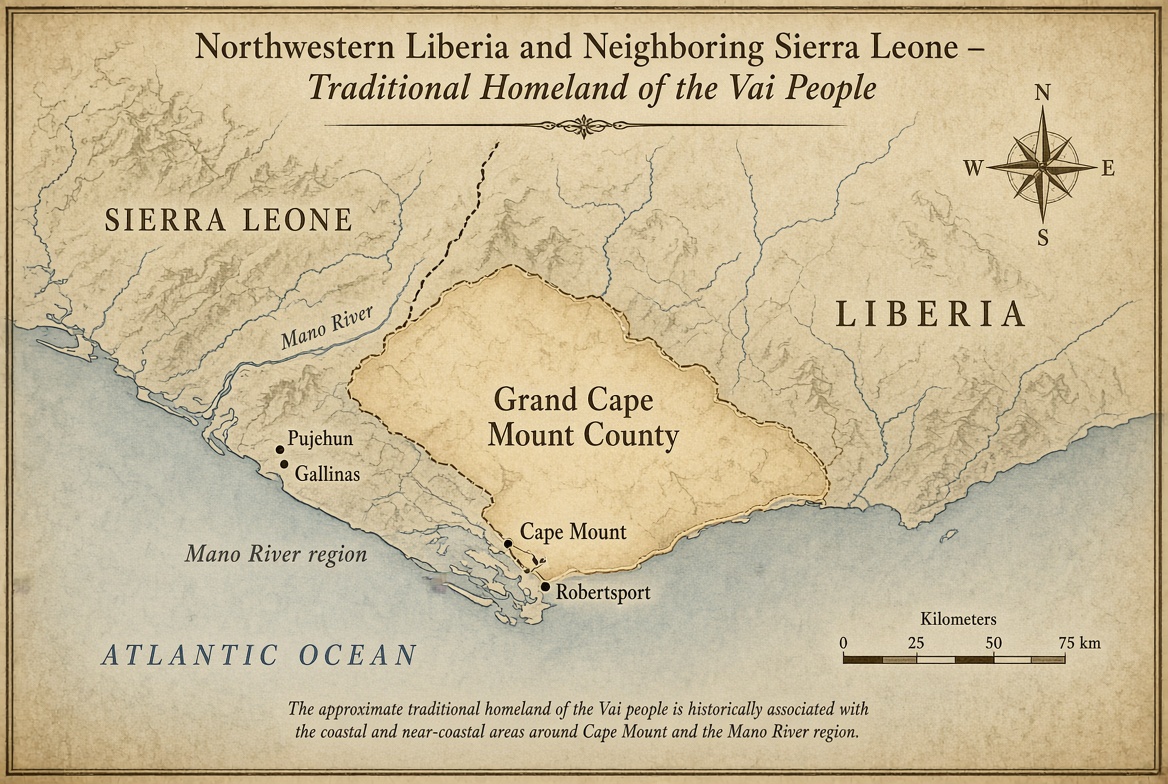
Their traditional homeland extends across northwestern Liberia and neighboring parts of Sierra Leone, with a particularly strong historical presence in what is now Grand Cape Mount County.
Understanding the history of the Vai is therefore an important part of understanding Liberia's history before, during, and after the establishment of the modern Liberian state.
The Origins of the Vai People
The origins of the Vai are connected to the long and complex history of population movements across the Upper Guinea Coast.
Like many peoples in West Africa, the Vai developed through centuries of migration, settlement, interaction, marriage, trade, and political change. Oral traditions preserve accounts of the movements and origins of different communities, although these traditions can differ in their details.
The history of the Vai should therefore not be understood as a single migration story.
Over generations, Vai-speaking communities established settlements in the region that became their historical homeland. Their location brought them into contact with neighboring peoples, including the Gola and Mende, among others.
These interactions influenced the development of Vai society, including language, trade, political relationships, and cultural practices.
The Vai were never completely isolated from the societies around them. People exchanged goods, ideas, customs, and knowledge across community boundaries.
The Traditional Homeland of the Vai
The traditional Vai homeland is located mainly in the forest and coastal areas of northwestern Liberia, extending into neighboring Sierra Leone.
In Liberia, the Vai have historically been strongly associated with Grand Cape Mount County, particularly areas around Cape Mount and the Mano River region.
The geography of this area played an important role in Vai history.
The combination of forests, rivers, fertile land, and access to the Atlantic coast provided opportunities for agriculture, fishing, hunting, and trade.
Rivers also served as routes of movement between communities.
The Vai homeland's position between the interior and the coast eventually helped connect Vai communities to wider regional and Atlantic trading networks.
Vai Society Before the Founding of Liberia
The Vai had established communities long before the arrival of settlers associated with the American Colonization Society.
Traditional Vai society was organized around towns, villages, families, elders, chiefs, and other community institutions.
Political authority was generally distributed among local communities rather than being concentrated under a single ruler controlling all Vai territory.
Local leaders were responsible for important matters such as maintaining order, settling disputes, representing their communities, organizing collective activities, and dealing with neighboring communities.
Elders also held significant authority because they preserved knowledge of traditions, family histories, customs, and community responsibilities.
This system allowed individual communities to maintain considerable independence while remaining connected through trade, marriage, cultural relationships, and diplomacy.

Agriculture and Daily Life
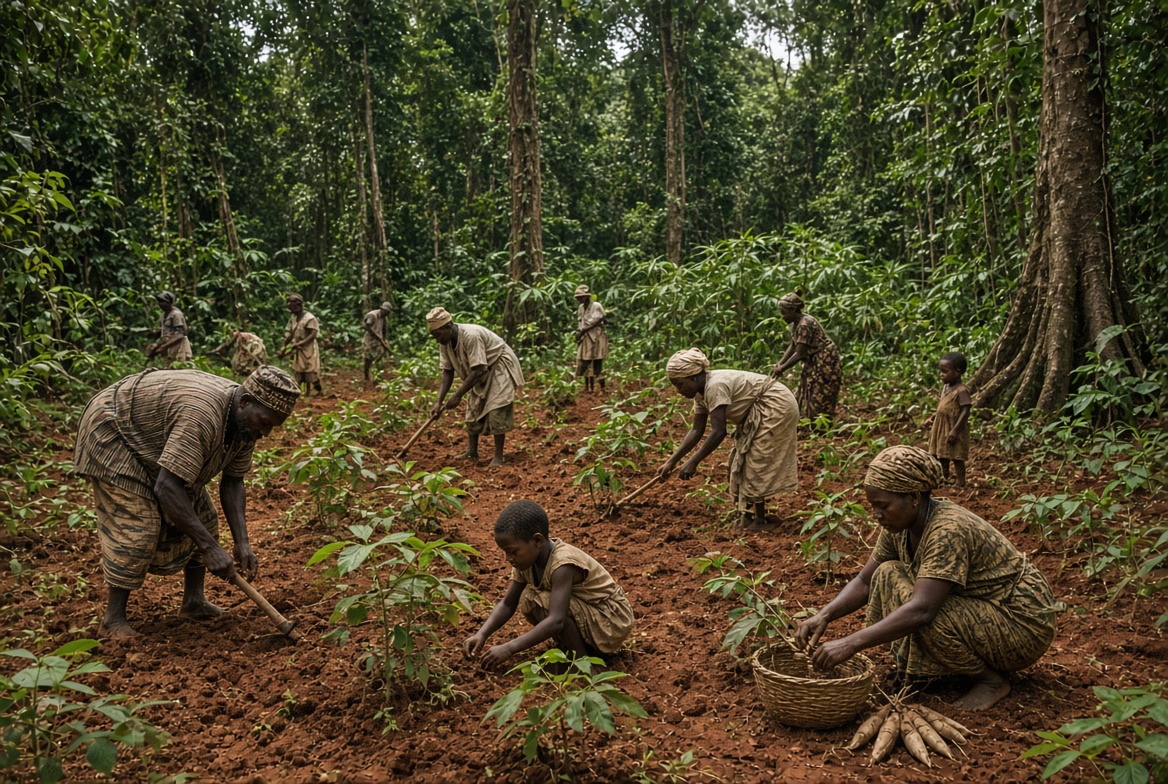
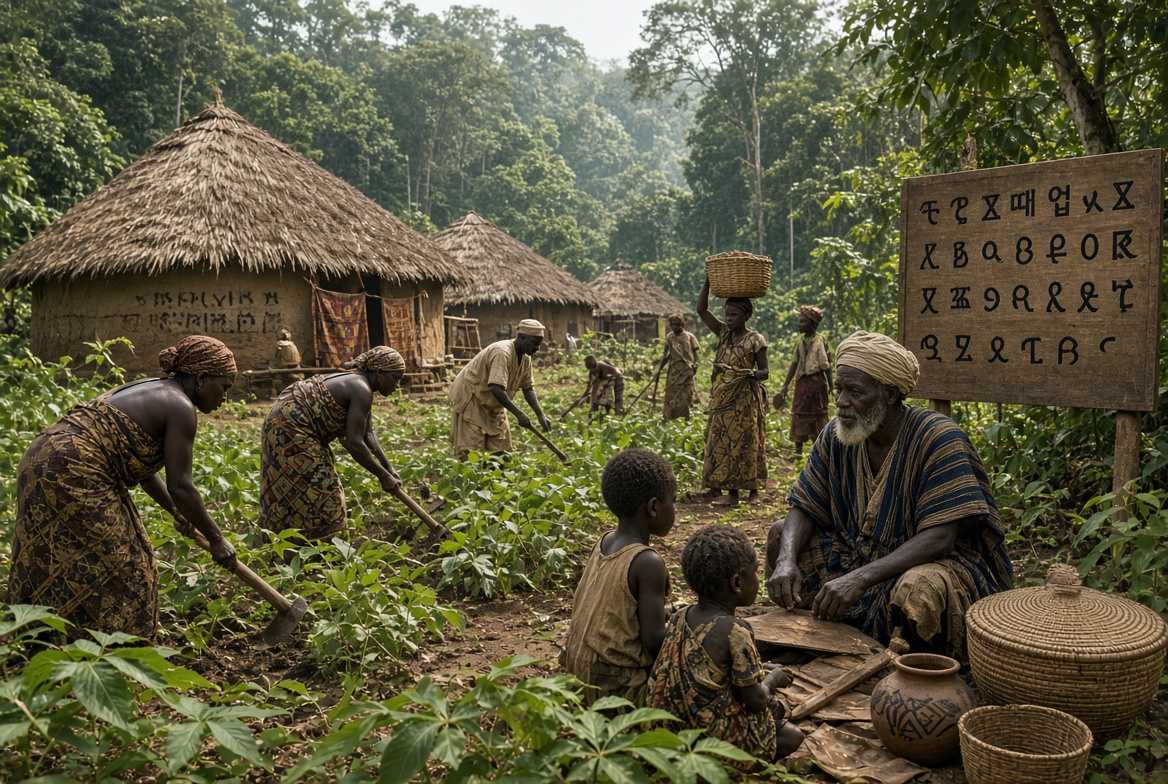
Agriculture was an essential part of traditional Vai life.
Rice was one of the major crops cultivated by communities in the region. Other crops and food plants were also grown according to local environmental conditions.
Farming required considerable cooperation.
Families and communities participated in activities such as clearing land, planting, maintaining fields, harvesting crops, processing food, and storing supplies.
The forest and rivers also provided additional resources.
People hunted animals, caught fish, gathered wild fruits and plants, and collected materials used for food, construction, tools, crafts, and other purposes.
Traditional economic life was therefore based on a combination of farming, fishing, hunting, gathering, craftsmanship, and trade.
The Vai and Regional Trade
Trade became one of the important features of Vai history.
The Vai homeland occupied a strategic position between the interior of West Africa and the Atlantic coast.
This allowed Vai communities to participate in regional trading networks that connected different peoples and markets.
Goods exchanged through these networks could include agricultural products, forest products, salt, cloth, tools, and other commodities.
Trade was not simply an economic activity. It also created opportunities for people from different communities to meet and exchange information and ideas.
Long before European merchants became active in the region, African communities had already developed extensive networks of commerce across West Africa.
European traders later entered these existing networks rather than creating trade in the region from nothing.

European Contact
European contact with the Upper Guinea Coast developed over several centuries.
Portuguese sailors were among the earliest Europeans to establish contact with parts of the West African coast, and other European traders followed.
European merchants became interested in the region because of its commercial resources and its position along the West African coast.
As European commerce expanded, Vai communities and their neighbors became increasingly connected to Atlantic trading networks.
These contacts brought new goods and new commercial opportunities, but they also exposed African societies to major disruptions associated with the Atlantic slave trade.
European contact was therefore a complicated process involving commerce, diplomacy, cultural exchange, competition,
exploitation, and violence.
The Vai and the Atlantic Slave Trade
The Upper Guinea Coast was deeply affected by the Atlantic slave trade.
People were captured and forced into slavery through warfare, raids, kidnapping, political conflicts, and other forms of coercion.
The consequences were serious.
Communities could experience population loss, insecurity, displacement, political instability, and disruption of economic life.
However, African communities were not simply passive participants in these events.
Different communities and leaders attempted to protect their populations, maintain their political independence, control trade, negotiate with outsiders, and respond to changing regional circumstances.
The Vai experience must therefore be understood as part of the much larger history of West Africa during the Atlantic era.
Relations With Neighboring Peoples
The Vai lived alongside several other peoples of the Upper Guinea Coast.
Among their important neighboring peoples were the Gola and Mende, although relationships varied according to location and historical period.
Relations between communities could involve cooperation as well as conflict.
They included:
Trade
Marriage
Political alliances
Cultural exchange
Migration
Diplomacy
Competition
Disputes
Warfare
These relationships contributed to the development of the region's complex cultural landscape.
People could move between communities, establish families through marriage, adopt cultural practices, and participate in economic networks that crossed linguistic boundaries.
Traditional Religion
Before Christianity and Islam became influential among Vai communities, the Vai practiced indigenous religious traditions.
Traditional religious beliefs involved relationships with spiritual forces, ancestors, sacred places, and powers associated with the natural world.
Religion was closely connected with everyday life.
It could influence ceremonies, family relationships, agriculture, leadership, justice, and community responsibilities.
Over time, Islam and Christianity became increasingly influential among Vai communities.
Today, Vai communities include people belonging to different religious traditions.
Traditional Education and Social Institutions
Knowledge in traditional Vai society was transmitted through families, elders, community institutions, practical work, storytelling, ceremonies, and other forms of traditional education.
Young people learned about farming, family responsibilities, social behavior, history, traditions, and community obligations.
Traditional institutions also played important roles in social education and community organization.
The Poro and Sande institutions, which have been historically important across parts of western Liberia and neighboring regions, were associated with education, socialization, initiation, moral instruction, and community responsibilities.
Their practices and roles have varied across communities and historical periods.
The Vai Syllabary
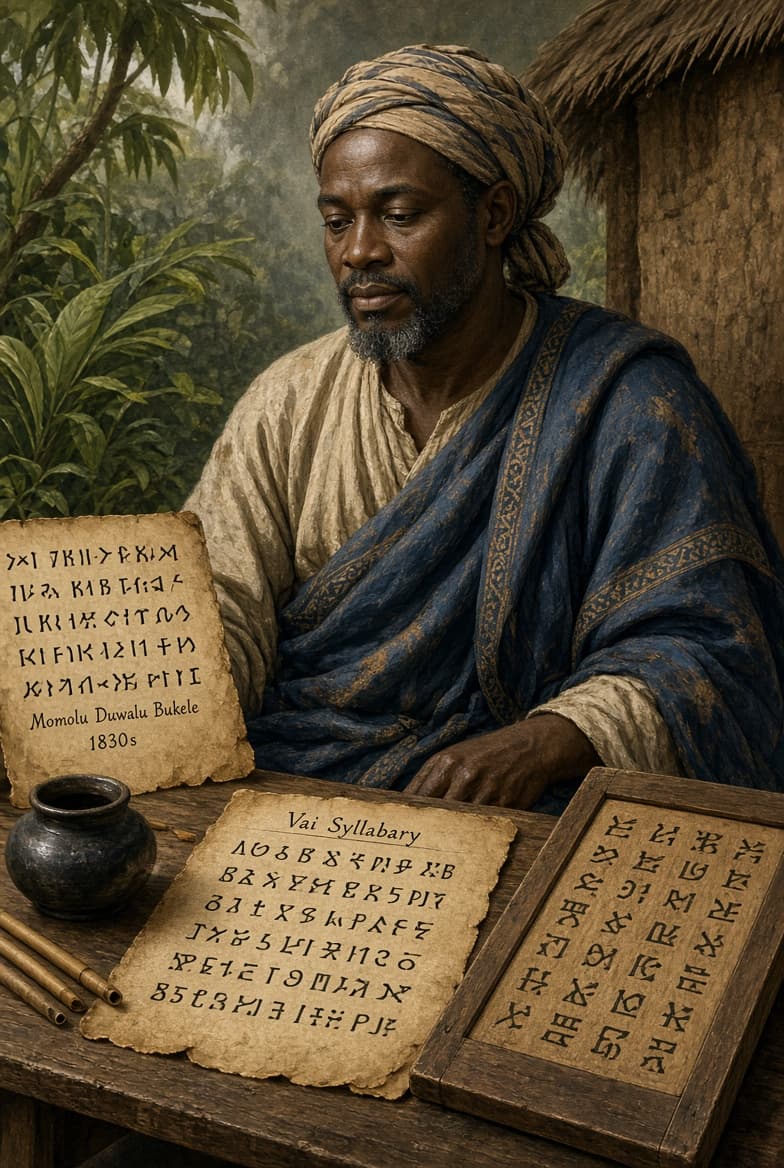
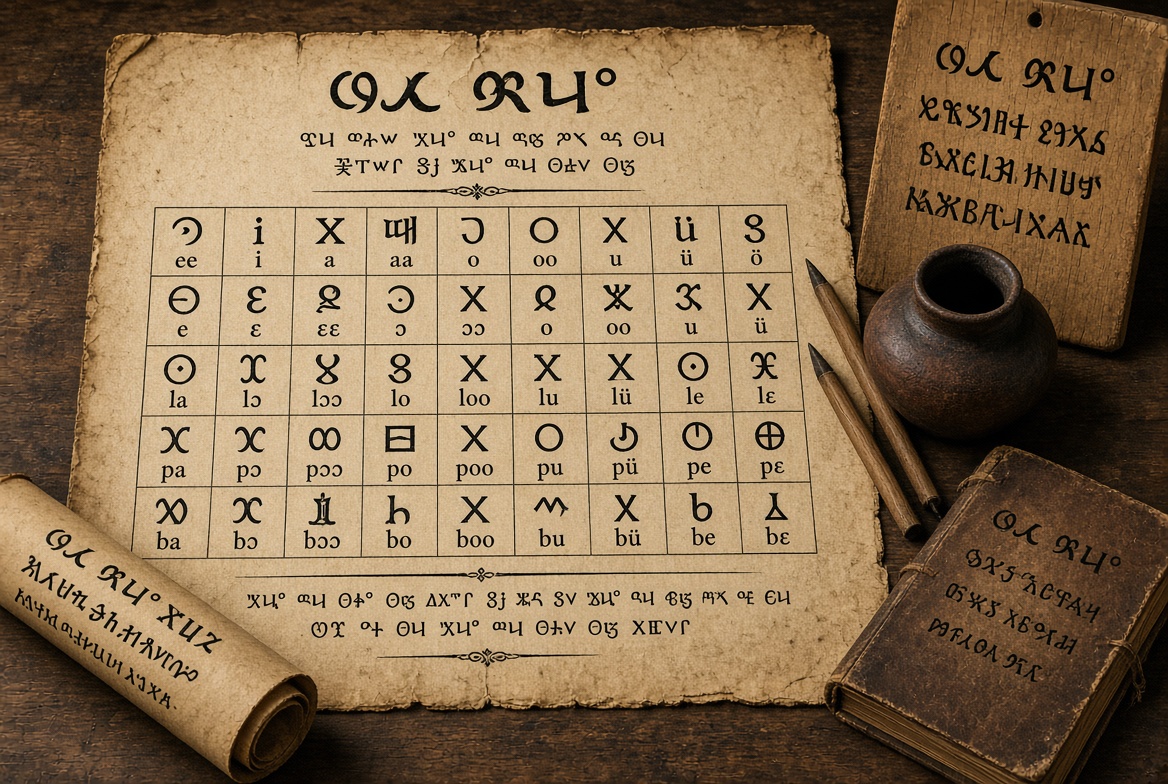
The most internationally famous aspect of Vai history is the development of the Vai syllabary.
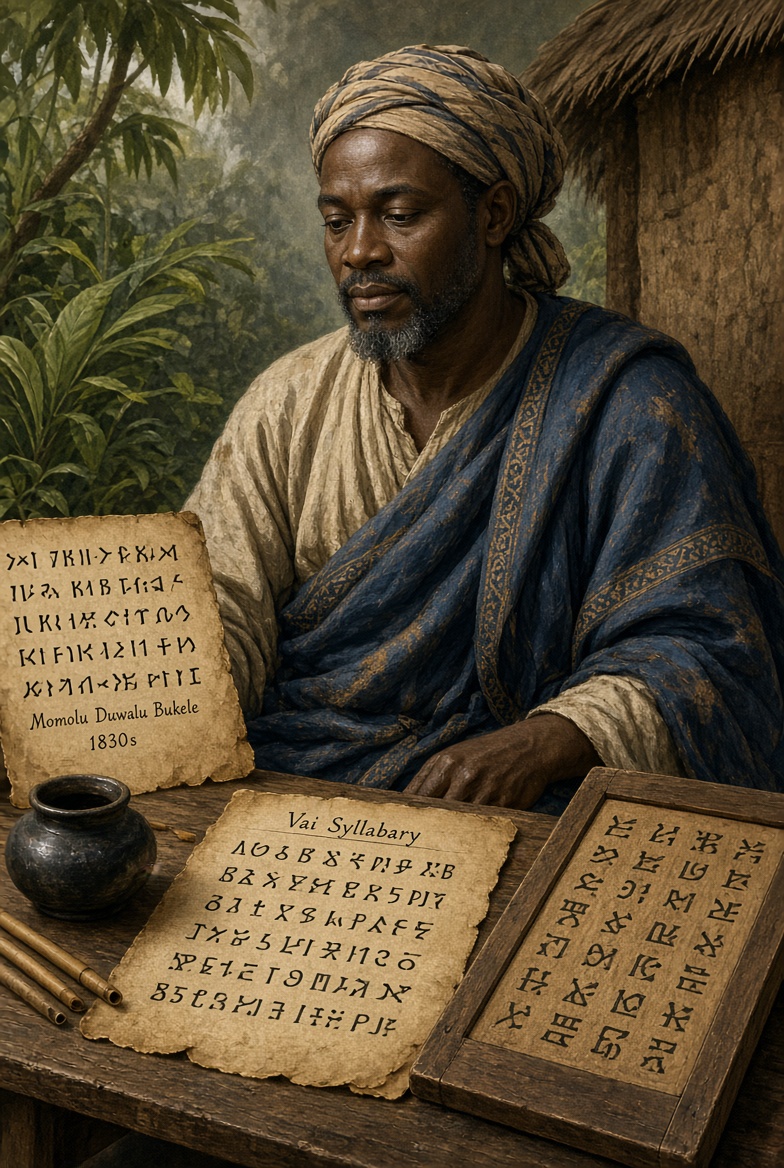
The writing system was developed during the nineteenth century and is traditionally associated with Momolu Duwalu Bukele and other Vai scholars.
Unlike the Latin alphabet, which represents individual sounds using letters, the Vai writing system is a syllabary. Its symbols generally represent syllables.
The development of the Vai script was a remarkable intellectual achievement.
It demonstrated that African societies were capable of creating their own systems for representing language in written form.
The Vai syllabary became an important part of Vai cultural identity and remains one of the best-known examples of an indigenous African writing system.
Momolu Duwalu Bukele
Momolu Duwalu Bukele is traditionally credited with developing the Vai writing system.
Historical traditions concerning the creation of the script contain different accounts about its development and early history.
Nevertheless, Bukele became strongly associated with the creation of the syllabary.
His achievement is important because the writing system was specifically designed to represent the Vai language.
The development of the script also demonstrates the importance of local intellectual traditions in nineteenth-century West Africa.
Vai Writing and Knowledge
The creation of the Vai script provided another way for knowledge to be recorded and communicated.
Vai literacy existed alongside oral traditions and, later, Arabic- and Latin-based writing systems.
This is important because African societies preserved knowledge through many different methods.
These included:
Oral histories
Genealogies
Storytelling
Traditional education
Religious instruction
Material culture
Written records
The Vai syllabary provides particularly strong evidence of the intellectual diversity of African societies.
It also challenges the outdated idea that written systems of communication were completely absent from African societies before European influence.
The Vai and the Founding of Liberia
The establishment of settlements by the American Colonization Society during the nineteenth century changed the political environment of the region.
When Black American settlers began establishing communities along the Liberian coast, indigenous peoples—including the Vai—were already living in the area.
The relationship between the new settlements and indigenous communities developed in different ways.
There was trade, communication, diplomacy, migration, and cooperation, but there were also disputes over land, political authority, trade, and other issues.
As the settlements expanded and Liberia eventually declared independence in 1847, the relationship between the emerging Liberian state and indigenous communities became increasingly important.
The Vai and the Liberian Republic
Liberia's declaration of independence in 1847 created a new political state, but the country did not immediately exercise complete control over all of the territory that is now Liberia.
During the nineteenth and early twentieth centuries, the Liberian government gradually expanded its administrative authority into inland areas.
Vai communities continued to maintain local institutions while increasingly interacting with government officials.
Issues involving taxation, political authority, trade, land, education, and local leadership became important aspects of relations between the Liberian government and indigenous communities.
The process of integrating different indigenous territories into the Liberian state was complicated and sometimes produced conflict.
Vai Culture in Modern Liberia
The Vai remain an important part of Liberia's cultural heritage.
Their language continues to be spoken in Liberia and Sierra Leone, particularly among communities in and around their historical homeland.
The Vai writing system remains a major symbol of their cultural and intellectual heritage.
Modern education, migration, urbanization, and the increasing use of larger languages have influenced the way Vai is used among younger generations.
At the same time, efforts to document and preserve the language and script have helped maintain awareness of Vai heritage.
The Importance of the Vai Language
Language is one of the strongest expressions of cultural identity.
The Vai language contains words, expressions, stories, traditions, and ways of understanding the world that cannot always be completely represented by another language.
Preserving Vai therefore means preserving more than a communication system.
It also helps preserve historical memory and cultural knowledge.
The continued documentation and teaching of the language and its writing system are important parts of preserving Vai heritage for future generations.
The Vai Contribution to Liberia
The history of the Vai demonstrates that Liberia's history did not begin with the arrival of American settlers.
The Vai had already developed communities, agricultural systems, trading relationships, political institutions, religious traditions, educational practices, and cultural identities centuries before the Republic of Liberia was established.
Their contribution to Liberia is especially significant because of their indigenous writing system.
The Vai syllabary represents an important achievement in African intellectual history and is one of the strongest symbols of Liberia's indigenous cultural heritage.
What Happened to the Vai After the Early Period?
The history of the Vai continued to change throughout the nineteenth and twentieth centuries.
The expansion of the Liberian state, the growth of Christianity and Islam, Western-style education, new economic activities, migration, and increased interaction with neighboring communities all influenced Vai society.
Some traditional practices changed, while others survived.
Vai communities also became increasingly connected to Liberia's national political and economic life.
Despite these changes, the Vai maintained important elements of their language and cultural identity.
Why the History of the Vai Matters
The history of the Vai matters because it gives us a deeper understanding of Liberia before the creation of the modern republic.
It shows that Liberia was already home to complex African societies with their own political systems, economies, religions, educational traditions, languages, and intellectual achievements.
The Vai story is also important because it connects Liberian history to the wider history of West Africa.
Their experiences were shaped by regional migration, trade, European contact, the Atlantic slave trade, the creation of Liberia, and the development of the modern state.
Most importantly, the Vai syllabary demonstrates the creativity and intellectual capacity of African societies.
The Vai are therefore not simply a group mentioned in Liberia's history. Their history is an important part of the story of how Liberia developed and how its diverse peoples contributed to the country's identity.
Key Facts
People: Vai
Main historical homeland: Northwestern Liberia and neighboring Sierra Leone
Major Liberian area: Grand Cape Mount County
Language: Vai
Language family: Mande
Famous achievement: Development of the Vai syllabary
Important historical figure: Momolu Duwalu Bukele
Major traditional activities: Agriculture, fishing, hunting, crafts, and trade
Important neighboring peoples: Gola, Mende, and other Upper Guinea Coast communities
Major historical connections: Regional African trade, Atlantic commerce, and the development of Liberia
Historical importance: The Vai are one of Liberia's most culturally and intellectually significant indigenous peoples.
Conclusion
The history of the Vai reaches deep into the history of the Upper Guinea Coast.
Long before Liberia became an independent republic, Vai communities had established settlements and developed their own systems of agriculture, trade, political organization, religion, education, and cultural expression.
Their location connected them to neighboring African societies and eventually to European and Atlantic trading networks.
But the Vai's most famous historical achievement is their indigenous writing system.
The Vai syllabary stands as a powerful reminder that African societies developed their own intellectual traditions and methods of recording language.
Today, the Vai remain an important part of Liberia's cultural heritage.
Their history helps us understand that the story of Liberia is much older than the Republic founded in 1847—and that the country's history must include the indigenous peoples whose societies existed long before the modern Liberian state.