The Republic of Maryland: The African American State That Became Part of Liberia.
Published Thu Aug 13 2026
Introduction
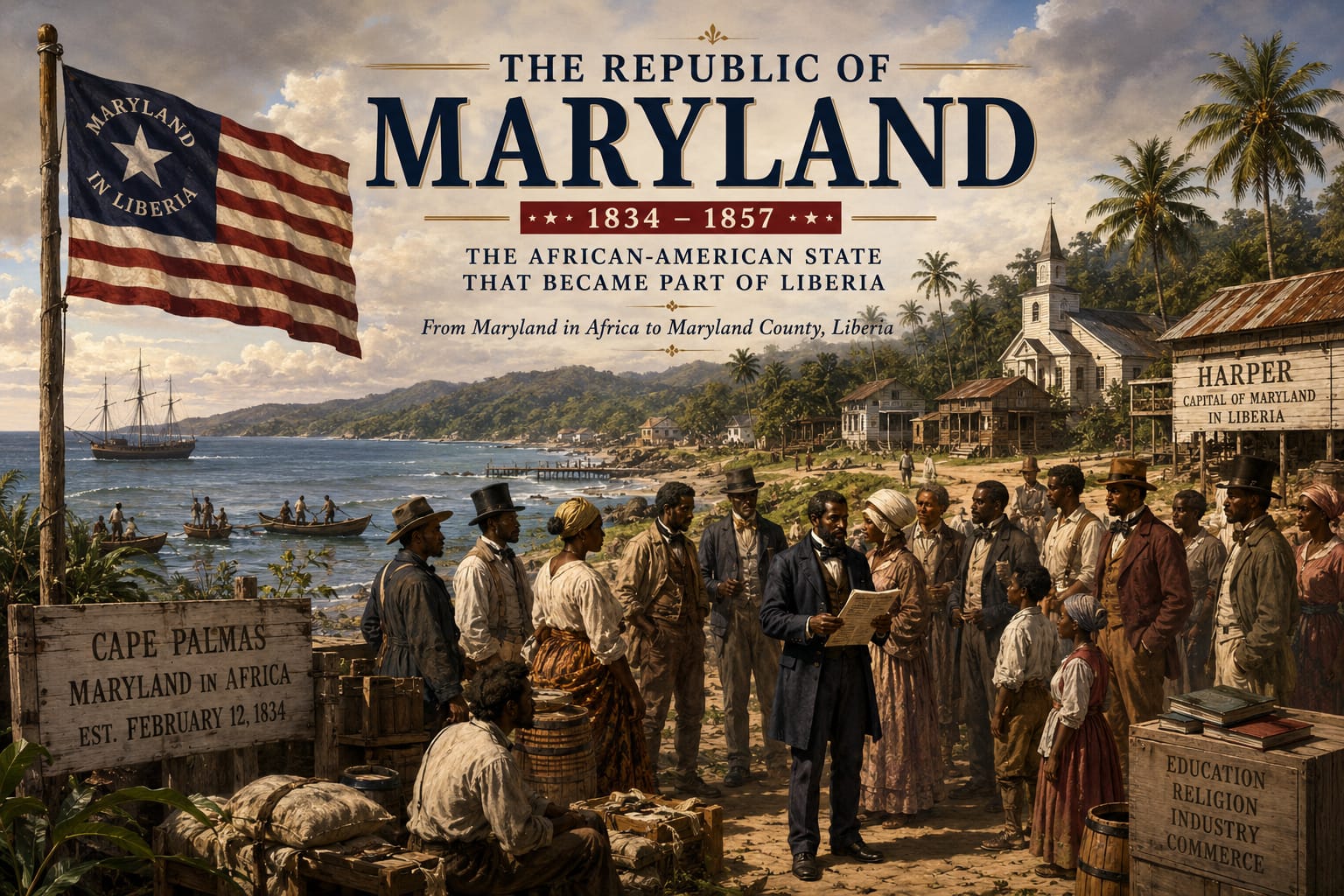
The Republic of Maryland was a small African American settler state on the southeastern coast of present-day Liberia. It existed as a separate political entity from 1834 to 1857, when it was annexed by Liberia and became Maryland County.
Originally known as Maryland in Africa, the settlement was established by the Maryland State Colonization Society to resettle free African Americans and formerly enslaved people from the United States in West Africa.
For a brief period, Maryland developed its own government, laws, schools, churches, trade networks, and political institutions. In 1854, it declared independence from the Maryland State Colonization Society and became known as Maryland in Liberia, or the Republic of Maryland.
However, the new republic struggled to defend itself against resistance from neighboring African communities. After seeking military assistance from Liberia, its leaders eventually accepted that the small state could not survive independently. On April 6, 1857, Maryland was formally annexed by Liberia and became Maryland County.
The Background: Colonization and Liberia
The history of Maryland in Liberia is connected to the broader American colonization movement of the nineteenth century.
The American Colonization Society (ACS) was founded in 1816. It promoted the relocation of free African Americans and formerly enslaved people from the United States to settlements on the West African coast.
The movement was supported by people with very different motives. Some slaveholders believed free Black people posed a threat to the slave system in the United States. Some white Americans believed African Americans could never receive equal treatment in the United States. At the same time, some abolitionists and religious leaders supported African colonization because they believed African Americans would have greater opportunities in Africa.
However, many free African Americans strongly opposed colonization. They argued that the United States was their home and that they had the right to live as free citizens there.
Despite this opposition, thousands of African Americans eventually migrated to West Africa.
The ACS established the colony that became Liberia, with Monrovia as its principal settlement.
But Maryland's colonization movement followed a somewhat different path.
The Maryland State Colonization Society
The Maryland State Colonization Society was established as a branch of the larger American Colonization Society.
The Maryland organization wanted to create its own settlement in West Africa for African Americans connected to Maryland.
In December 1831, the Maryland legislature appropriated $10,000 over 26 years to support the transportation of free Black people and formerly enslaved people to Africa.
The original plan envisioned transporting thousands of people, although the actual number who migrated was far smaller.
The society also had economic ambitions. It hoped that its settlement would develop its own trade connections and become an important commercial center along the West African coast.
The Settlement at Cape Palmas
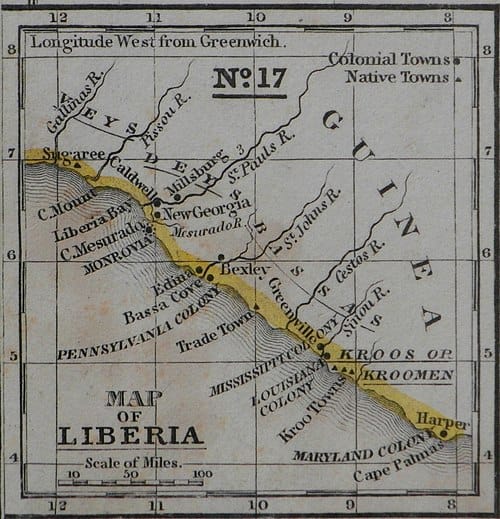
The first major Maryland settlement was established at Cape Palmas in 1834.
Cape Palmas lies in southeastern Liberia near the modern border with Côte d'Ivoire. The location was strategically important because of its access to the Atlantic Ocean and nearby waterways.
The settlement was named Maryland in Africa.
The settlers were primarily free African Americans and formerly enslaved people from the United States, especially from Maryland.
They established communities, farms, churches, schools, and trading activities.
But they were not settling an empty land.
The region was already home to African societies, including the Grebo and Kru peoples. Relations between the settlers and surrounding communities became one of the most important issues in the history of Maryland in Liberia.
John Brown Russwurm
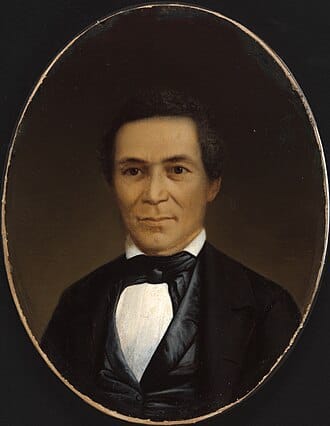
One of the most important figures in the history of Maryland in Liberia was John Brown Russwurm.
Russwurm was born in New York in 1799 and became one of the earliest African-American newspaper editors in the United States.
Before becoming governor of Maryland in Africa, he worked for the American Colonization Society and served as an editor of the Liberia Herald.
In 1836, the Maryland State Colonization Society appointed Russwurm as governor of Maryland in Africa.
His appointment was historically significant because he became the colony's first governor of mixed African and European ancestry.
Russwurm served for more than a decade.
During his administration, he encouraged immigration, agriculture, education, and commerce. He also worked to strengthen the political and economic institutions of the settlement.
Russwurm remained governor until his death in 1851.
His leadership left an important mark on the development of Maryland in Liberia.
Liberia Becomes Independent
While Maryland was developing separately, the other American settlements along the West African coast were moving toward political unity.
In 1838, several American settlements were united into the Commonwealth of Liberia.
Liberia eventually declared its independence on July 26, 1847.
The new Republic of Liberia was centered around Monrovia and controlled a much larger territory than Maryland.
Maryland, however, remained separate.
The Maryland State Colonization Society wanted to preserve its political independence and maintain control over trade in the Cape Palmas region.
As a result, Liberia and Maryland existed alongside each other as separate political entities.
From Colony to State
Maryland gradually developed greater political independence.
On February 2, 1841, Maryland in Africa declared itself a state and became known as the State of Maryland.
The colony also developed its own legal and political institutions.
In 1847, the Maryland State Colonization Society published a constitution and laws for Maryland in Liberia. These institutions were heavily influenced by the political traditions of the United States.
Maryland had its own government, officials, laws, courts, and economic policies.
Its capital was Harper, a settlement at Cape Palmas that remains an important city in southeastern Liberia today.
Life in Maryland in Liberia
Although Maryland was small, it developed a community with many institutions associated with a modern state.
Christianity became an important part of settler society.
Churches and schools were established, while English became the dominant language of the settler administration.
At the same time, the settlers interacted with African communities in the surrounding region, whose languages, political systems, cultures, and economic interests were different from those of the American settlers.
Trade became particularly important.
Maryland's leaders hoped to make Cape Palmas an important commercial center. The state's location along the coast gave it access to regional and international trade.
However, economic competition and disagreements over political authority contributed to tensions between the Maryland settlers and neighboring African communities.
The Independence of Maryland
By the early 1850s, Maryland's leaders were moving toward complete political independence.
In 1853, a referendum was held concerning independence.
The result supported independence, and on May 29, 1854, Maryland officially declared itself independent.
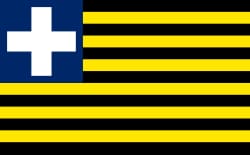
The new country adopted the name Maryland in Liberia.
It is also commonly referred to as the Republic of Maryland.
Its capital remained Harper.
The new republic had its own government and continued to operate independently from Liberia.
For a short time, West Africa therefore contained two neighboring republics associated with the American colonization movement:
Liberia and Maryland in Liberia.
The Republic Faces Resistance
Independence brought Maryland a major problem.
The republic was small and had limited military resources.
Relations with neighboring African communities had already been difficult, and tensions intensified after independence.
Among the groups involved in resistance were the Grebo and Kru.
The conflict was not simply a matter of African communities opposing African-American settlers. It involved deeper disputes over political authority, trade, territory, taxation, and control of coastal commerce.
Maryland's government struggled to maintain control and defend its settlements.
The situation eventually became serious enough that Maryland requested military assistance from Liberia.
Liberia Comes to Maryland's Aid
Liberia was considerably stronger than Maryland and possessed greater military and political resources.
Liberian President Joseph Jenkins Roberts sent assistance.
Liberian forces joined Maryland's forces against the opposing local forces.
Together, they were able to defeat the immediate military challenge.
However, the conflict demonstrated a serious weakness in the Republic of Maryland.
The country could declare independence, but maintaining that independence required resources that the small republic did not possess.
The war therefore changed the political future of Maryland.
The Decision to Join Liberia
After the conflict, Maryland's leaders increasingly recognized that the republic could not easily survive as an independent country.
Its population was small.
Its military resources were limited.
Its economy depended heavily on regional trade.
And it was surrounded by African communities with their own political interests.
Liberia, on the other hand, was already an established independent republic with greater territory, population, and military capacity.
Maryland therefore moved toward union with Liberia.
A referendum was held on the question of annexation.
The result ultimately favored joining Liberia.
Annexation in 1857
On April 6, 1857, Maryland was formally annexed by Liberia.
The former Republic of Maryland ceased to exist as an independent country.
Its territory became Maryland County, one of the counties of the Republic of Liberia.
The city of Harper became the capital of the new county.
This brought an end to the remarkable 23-year history of Maryland as a separate political entity.
From that point forward, the history of the region became part of the history of Liberia.
What Happened to Maryland's Political Legacy?
Although the Republic of Maryland disappeared as an independent country, its political and cultural legacy remained.
The settlers established communities that continued to develop after annexation.
Harper remained an important center in southeastern Liberia.
The region also became closely associated with the history and culture of Maryland County.
The story of Maryland in Liberia also demonstrates that the creation of Liberia was not a single, simple process.
Several separate American-sponsored settlements existed along the West African coast before eventually becoming incorporated into Liberia.
Maryland was one of the most significant examples.
Why the Republic of Maryland Matters in Liberian History
The Republic of Maryland is important because it reveals how complicated the formation of Liberia was.
Liberia did not simply appear as one unified country overnight.
Different settlements had different origins, governments, economic interests, and relationships with surrounding African societies.
Maryland developed its own political identity before eventually becoming part of Liberia.
Its history also shows the complicated relationship between African-American settlers and indigenous African communities.
The settlers came to Africa with ideas about government, Christianity, education, trade, and political independence that had developed in the United States.
But they entered a region that already had established societies, leaders, cultures, and systems of political authority.
The resulting interactions could produce cooperation and trade, but they could also produce conflict.
The eventual annexation of Maryland into Liberia was therefore not merely a change of borders. It was part of the larger process through which different communities and territories were incorporated into the Liberian state.
The Legacy of John Brown Russwurm
John Brown Russwurm remains one of the most important figures connected to Maryland in Liberia.
His career connected the African-American press in the United States, the American colonization movement, Liberia, and Maryland in Africa.
As governor, he promoted education, agriculture, immigration, and economic development.
His long administration helped give Maryland in Africa a distinct political identity.
His death in 1851 came only a few years before Maryland declared independence.
Today, his story forms an important part of the broader history of African-American migration and the development of Liberia.
Key Facts
Maryland settlement established: 1834
Location: Cape Palmas, southeastern Liberia
Original name: Maryland in Africa
Capital: Harper
Major settler population: Free African Americans and formerly enslaved African Americans, particularly from Maryland
Major neighboring peoples: Grebo and Kru
John Brown Russwurm became governor: 1836
Russwurm died: 1851
Maryland became a state: 1841
Independence referendum: 1853
Declaration of independence: May 29, 1854
Independent name: Maryland in Liberia / Republic of Maryland
Annexed by Liberia: April 6, 1857
After annexation: Became Maryland County, Liberia
Conclusions
The Republic of Maryland was one of the most unusual political experiments in nineteenth-century West Africa.
Founded by African Americans from Maryland, it began as a settlement supported by a U.S. state colonization society. Over time, it developed its own government and eventually declared itself an independent republic.
But independence proved difficult to maintain.
Military conflicts with neighboring African communities exposed the republic's limited resources, while its dependence on Liberia for military assistance demonstrated how vulnerable the small state was.
In 1857, Maryland chose union with Liberia.
The Republic of Maryland disappeared from the map, but its legacy survived through Maryland County, Harper, and the people and communities of southeastern Liberia.
Its history is therefore not a separate story from Liberia's history—it is one of the important chapters in explaining how the modern Republic of Liberia was formed.