
The Founding of Monrovia
Published Sat Sep 26 2026
introduction
Monrovia is the capital of Liberia and one of the oldest continuously developing settlements established by African Americans on the West African coast. Its origins date to the early 1820s, when the American Colonization Society established a settlement at Cape Mesurado for free African Americans migrating from the United States.
The founding of Monrovia was not a single event. It developed through several stages: the failed settlement at Sherbro Island, the search for a permanent location, the acquisition of land at Cape Mesurado, the arrival of settlers in 1822, the establishment of a community near the Mesurado River, and the eventual renaming of the settlement as Monrovia in 1824.
The settlement was also established in a region that was already inhabited by African communities with their own political authorities, economic systems, cultures, and trading networks. The development of Monrovia therefore became part of a much larger history involving African societies, African American migration, American colonization, commerce, diplomacy, and territorial expansion.
Before Monrovia
The area where Monrovia stands today was part of the West African coastal region commonly associated with the Grain Coast.
Long before the arrival of American settlers, communities in the region maintained systems of agriculture, fishing, trade, political authority, and communication with neighboring societies.
Cape Mesurado was particularly important because of its location near the Atlantic Ocean and the mouth of the Mesurado River. The surrounding waterways provided access to the interior, while the coast connected the area to wider Atlantic trading networks.
The settlement that later became Monrovia was therefore established within an existing African landscape rather than on unoccupied territory.
The American Colonization Society
The origins of Monrovia were connected to the American Colonization Society, established in the United States in 1816.
The Society promoted the migration of free African Americans to settlements in West Africa. Its supporters had different motivations, including religious, racial, political, and colonization-related ideas.
The first major attempt to establish a settlement took place farther north at Sherbro Island in present-day Sierra Leone in 1820.
That settlement experienced severe difficulties, particularly disease, and many settlers died.
The failure demonstrated the need for another location.
Searching for a New Location
In 1821, the American Colonization Society sent Eli Ayres to investigate possible locations farther south along the West African coast.
Lieutenant Robert F. Stockton of the United States Navy assisted Ayres.
They eventually focused on Cape Mesurado, an area strategically located near the Atlantic Ocean and the Mesurado River. The Library of Congress identifies the land acquired at Cape Mesurado as the territory that later became the site of Monrovia.
The acquisition of the territory has been described differently in historical sources.
American colonization records often presented the transaction as a purchase from local African leaders. Other historical evidence emphasizes the unequal circumstances of the negotiations and the coercion used by Stockton during the process. The Library of Congress notes that some accounts describe local leaders being forcefully persuaded to surrender territory.
This part of the story is important because the founding of Monrovia involved not only migration but also the acquisition of territory already connected to African political communities.
The Arrival at Cape Mesurado
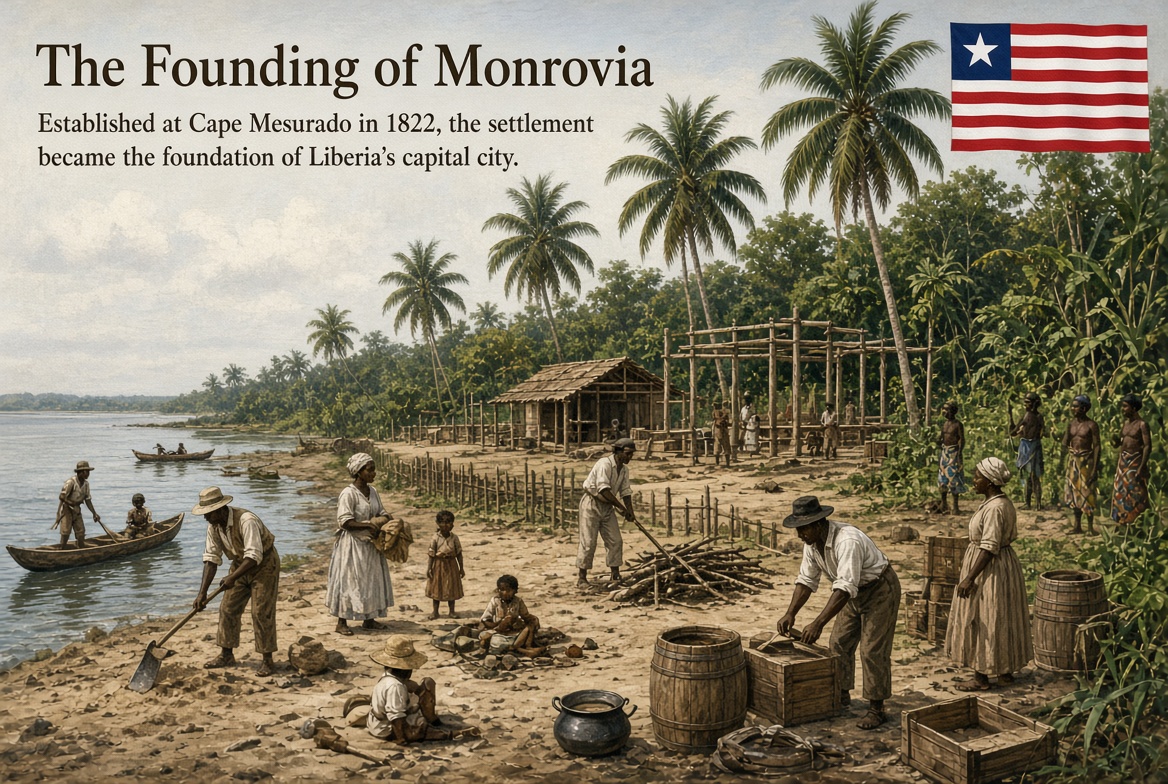
On April 25, 1822, survivors of the Sherbro Island settlement arrived at Cape Mesurado and began establishing a new community.
The settlers faced a difficult environment and limited supplies. They had to construct shelters, obtain food and fresh water, establish defenses, and organize a functioning settlement.
The community initially remained small.
The settlers were not simply building houses. They were attempting to create a permanent society with political institutions, religious organizations, economic activities, and systems of administration.
The survival of the settlement was uncertain during these early years.
Providence Island
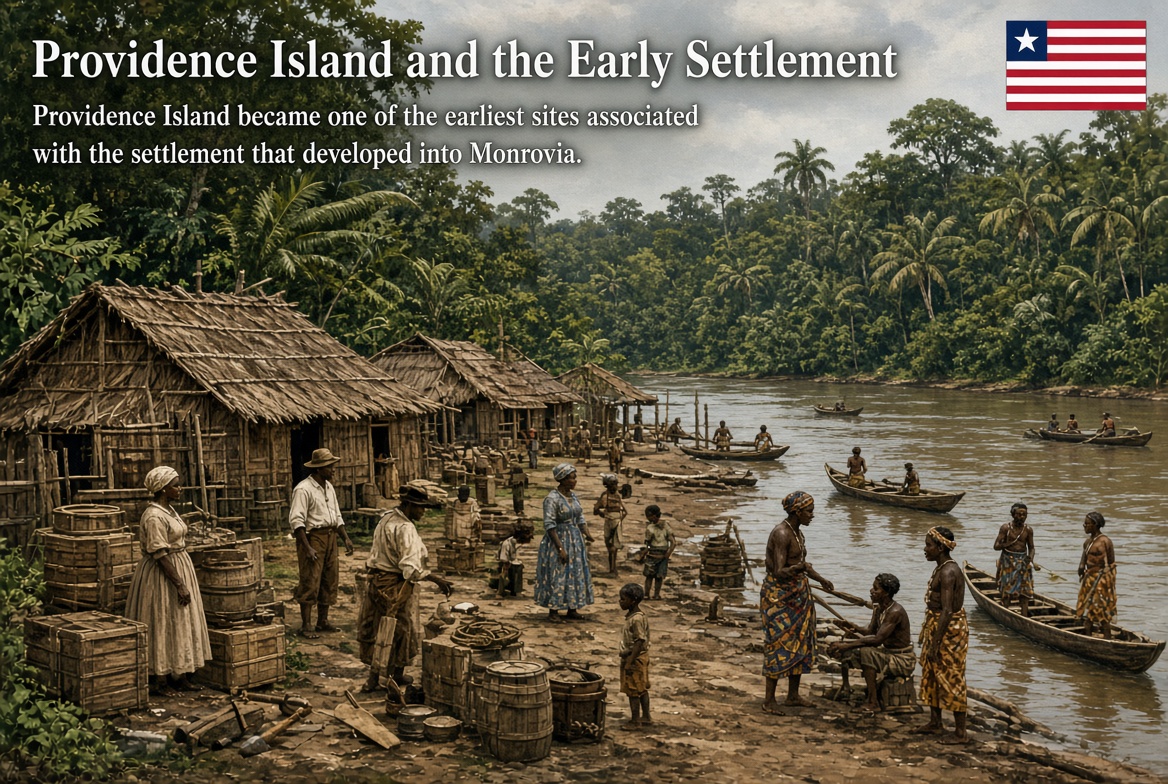
One of the most important locations in the early history of Monrovia was Providence Island, a small island near the mouth of the Mesurado River.
The early settlers used the island as part of their first settlement.
Its location near the river and coast made it important to the survival and development of the community.
Providence Island later became an important symbol of Liberia's founding history. Today, it is remembered as one of the earliest sites associated with the settlement that developed into Monrovia.
The Settlement Called Christopolis
The early settlement was initially known as Christopolis.
The name reflected the strong Christian influence within the colony. Many of the settlers and colonial leaders were associated with Christian churches and missionary organizations.
Christianity became an important part of the developing settlement's education, social organization, and public life.
The settlement, however, remained under the authority of the American Colonization Society.
The Society appointed representatives to administer the colony, while the settlers themselves increasingly wanted a greater role in managing their own affairs.
Jehudi Ashmun and the Early Colony
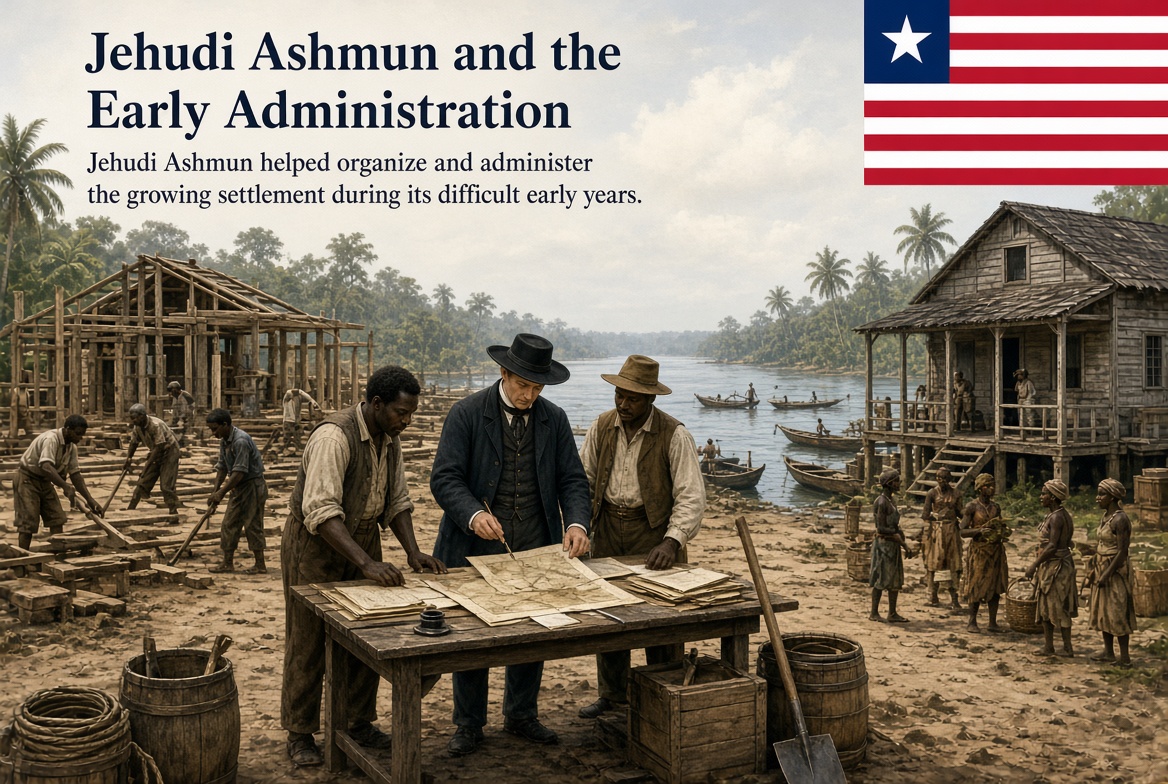
One of the most important figures in the early development of the settlement was Jehudi Ashmun.
Ashmun was a Methodist missionary who arrived in West Africa in 1822 and became an important administrator of the colony.
He helped organize the settlement's government, land distribution, defenses, agriculture, commerce, and relations with neighboring African communities.
Ashmun also produced detailed observations and maps of the region.
His work provides historians with valuable information about the early colony, although his writings also reflected the perspectives and assumptions of a colonial administrator.
The Library of Congress identifies Ashmun as one of the central figures in the early development of Liberia.
Life in the Early Settlement
Life in early Monrovia was difficult.
The settlers had to adapt to the climate and environment of West Africa. Disease remained a serious threat, while food supplies and other necessities could be limited.
The community depended heavily on agriculture, fishing, trade, and supplies brought through the coastal trading network.
Settlers also established homes, churches, schools, and administrative structures.
Over time, the settlement became more organized.
The arrival of additional emigrants from the United States increased the population and contributed to the development of a more permanent community.
Relations With Indigenous Communities
The growth of the settlement brought the newcomers into increasingly close contact with surrounding African communities.
The region around Cape Mesurado was already inhabited by African peoples, including communities identified in historical sources as Dey and Bassa.
These communities possessed their own leaders, economic systems, political interests, and territorial claims.
Relations between the settlers and neighboring communities included trade and negotiation, but they also became increasingly tense as the colony expanded.
Historical evidence shows that Indigenous communities resisted the expansion of the settlement at different times. The Library of Congress notes that early Liberian expansion sometimes resulted in conflict with Indigenous Africans.
This history is essential to understanding Monrovia's founding.
The city did not develop independently of the African societies around it. Its growth changed the political and economic landscape of the region.
The Renaming of Monrovia
The settlement underwent an important change in 1824.
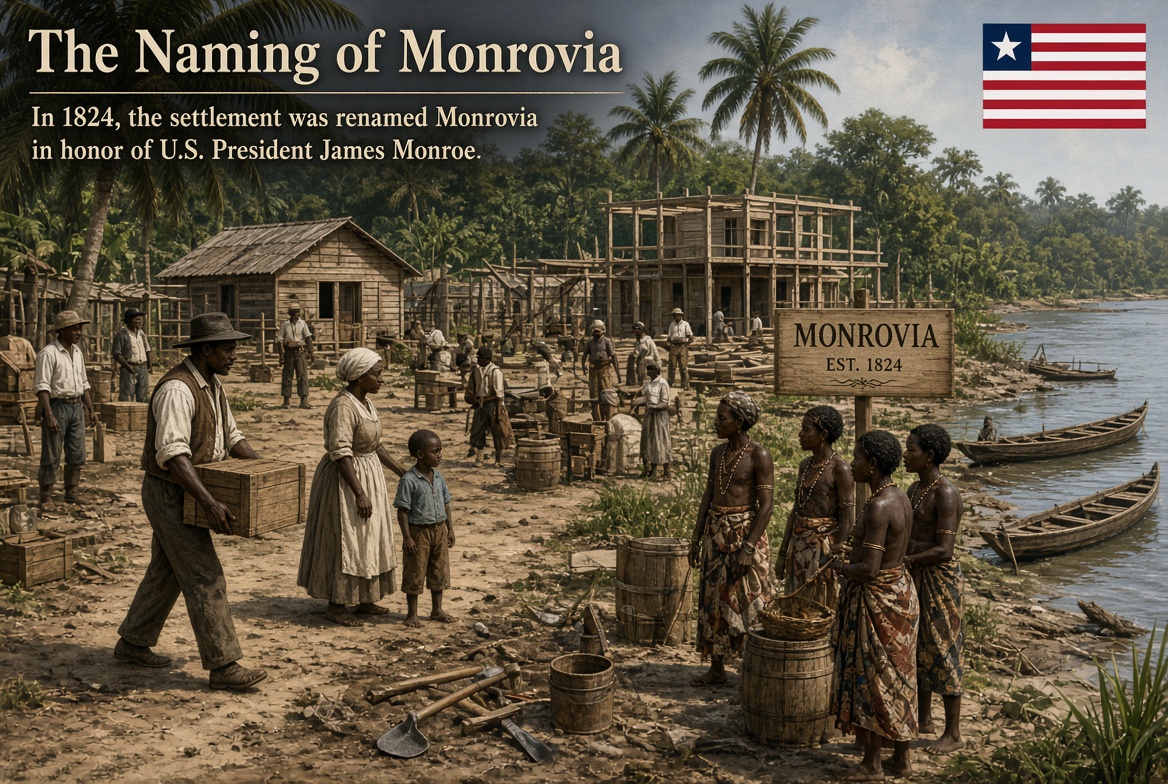
The settlement previously known as Christopolis was renamed Monrovia in honor of James Monroe, who was President of the United States from 1817 to 1825.
At the same time, the territory was formally called Liberia.
The Library of Congress records the renaming as one of the major developments of 1824.
The name Monrovia connected the new settlement directly to the political support the colonization project had received in the United States.
It also marked the development of a more clearly defined colonial identity.
Why Monrovia Became Important
Monrovia's location gave it several important advantages.
It stood on the Atlantic coast and near the mouth of the Mesurado River. This made it suitable for maritime trade and communication.
The settlement could also serve as a political center for the growing colony.
As additional settlements were established along the Liberian coast, Monrovia increasingly became the main administrative and commercial center.
Ships arriving from the United States and other parts of the Atlantic world used the settlement as an important point of contact.
Merchants, missionaries, settlers, African traders, and representatives of foreign organizations all became part of the city's developing history.
Growth of the Colony
Monrovia did not remain an isolated settlement.
The American Colonization Society and other colonization organizations established additional settlements along the Liberian coast.
Settlements associated with different American states and organizations eventually developed in places such as Cape Palmas and other coastal areas.
Over time, these settlements became connected through political and economic relationships.
Monrovia remained the most important political center.
In 1838, several colonies were brought together to form the Commonwealth of Liberia. The merger created a more unified political structure and increased Monrovia's importance as a central administrative location.
Monrovia and the Formation of Liberia
The founding of Monrovia was closely connected to the development of Liberia itself.
The settlement was initially controlled by the American Colonization Society rather than functioning as an independent country.
During the 1820s and 1830s, the colonists developed institutions of government and systems of law.
The colony gradually acquired greater political organization.
By the 1830s, Liberia consisted of several settlements and had developed a more structured colonial administration.
Monrovia served as the central political and economic hub.
The settlement therefore became more than a place where emigrants lived. It became the administrative heart of the emerging Liberian political system.
From Monrovia to the Republic
The next major transformation occurred in 1847.
Representatives of the Liberian settlements declared independence from the American Colonization Society and established the Republic of Liberia.
Joseph Jenkins Roberts became the republic's first president.
Monrovia became the capital of the new republic.
The city that had begun as a small settlement at Cape Mesurado in 1822 had therefore become the political center of an independent African republic only twenty-five years later.
The United States did not immediately recognize Liberia as an independent state. Formal U.S. recognition came in 1862.
The Meaning of Monrovia's Founding
The founding of Monrovia has several layers of historical meaning.
For African American settlers, the settlement represented the creation of a community in Africa after generations of racial discrimination and political exclusion in the United States.
For the American Colonization Society, it represented the establishment of a permanent colony connected to its colonization project.
For Indigenous African communities, however, the arrival and expansion of the settlement represented the emergence of a new political power in a region where established societies already existed.
These different perspectives are necessary for understanding the city's history.
Monrovia's founding was therefore both a migration story and a colonization story.
It involved African American aspirations, American political interests, African societies, territorial negotiations, commerce, Christianity, and the creation of new political institutions.
Monrovia's Historical Legacy
The importance of Monrovia continued long after its founding.
After independence in 1847, the city became the capital of the Republic of Liberia.
Government institutions, schools, churches, businesses, newspapers, and diplomatic organizations developed there.
Monrovia became the country's principal center of political life and international relations.
The city's history also reflected the wider tensions within Liberian society, particularly the complicated relationship between Americo-Liberian settlers and Indigenous African peoples.
Those relationships continued to influence Liberian political and social history for generations.
What Happened to Providence Island?
Providence Island became one of the most important historical sites associated with the founding of Liberia.
Although the early settlement was small, the island became a symbolic reminder of the beginning of the Liberian state.
The site has continued to be associated with the arrival of the settlers and the earliest stages of the colony.
It represents the starting point of a historical process that eventually transformed the settlement at Cape Mesurado into the capital of an independent republic.
Why the Founding of Monrovia Matters
The founding of Monrovia matters because it marks the beginning of one of the most significant political developments in nineteenth-century West Africa.
A small settlement established in 1822 eventually became the capital of Liberia.
The settlement survived disease, shortages, political disagreements, conflicts, and territorial challenges.
It expanded from a small coastal community into the administrative center of a growing colony.
In 1847, it became the capital of an independent republic.
Understanding Monrovia's founding also requires recognizing the people who lived in the region before the settlement appeared and the complex relationships that developed between Indigenous African communities and the newcomers.
The history of Monrovia is therefore not simply the story of a city being built.
It is the story of how migration, colonization, African political societies, and state formation came together on the Liberian coast.
Conclusion
Monrovia began as a small settlement at Cape Mesurado in the early 1820s.
The arrival of Black American settlers in 1822 created the foundation for the settlement. The community initially developed around Providence Island and the mainland near the Mesurado River.
The settlement was first known as Christopolis and was renamed Monrovia in 1824 in honor of President James Monroe. At the same time, the territory became formally known as Liberia.
Over the following decades, Monrovia grew into the political and commercial center of the colony.
When Liberia declared independence in 1847, Monrovia became the capital of the new republic.
Today, Monrovia remains at the center of Liberia's national life.
Its history began nearly two centuries ago with a small settlement on the West African coast, but its development would eventually shape the political history of an entire country.
Learning Objectives
After studying this article, students should be able to:
Explain how Monrovia developed from the early settlement at Cape Mesurado.
Describe the importance of Providence Island.
Explain why the settlement was renamed Monrovia in 1824.
Identify the role of Jehudi Ashmun in the early colony.
Explain the relationship between the settlers and Indigenous African communities.
Describe how Monrovia became the political center of Liberia.
Explain the connection between the founding of Monrovia and Liberia's independence in 1847.
Key Terms
Cape Mesurado: The coastal area where the settlement that became Monrovia was established.
Providence Island: An island near the mouth of the Mesurado River associated with the earliest settlement.
Christopolis: The early name of the settlement before it was renamed Monrovia.
Monrovia: The capital of Liberia, named in 1824 in honor of U.S. President James Monroe.
Jehudi Ashmun: A Methodist missionary and important early administrator of the Liberian colony.
American Colonization Society: The organization that sponsored the settlement of free African Americans in West Africa.
Commonwealth of Liberia: The political union created in 1838 when several Liberian settlements were brought together.
Discussion Questions
Why was Cape Mesurado important to the founding of Monrovia?
What role did Providence Island play in the early settlement?
Why was Christopolis renamed Monrovia?
Who was Jehudi Ashmun, and why was he important?
How did the arrival of the settlers affect existing African communities?
Why did Monrovia become the center of the developing colony?
How did the founding of Monrovia contribute to the creation of the Republic of Liberia?
Key Facts
1821: Eli Ayres and Robert F. Stockton acquired territory at Cape Mesurado for the colonization project.
April 25, 1822: Survivors of the Sherbro Island settlement arrived at Cape Mesurado.
1822: The first permanent settlement associated with Monrovia was established.
1822: Jehudi Ashmun arrived and became an important early colonial administrator.
1824: The settlement of Christopolis was renamed Monrovia after James Monroe.
1824: The territory was formally called Liberia.
1838: Several Liberian settlements were united into the Commonwealth of Liberia.
1847: Liberia declared independence and Monrovia became the capital of the new republic.
1862: The United States formally recognized the Republic of Liberia.
Sources
Library of Congress, History of Liberia: A Time Line.
Library of Congress, Liberia: A Resource Guide.
Library of Congress, African-American Mosaic: Colonization.
Library of Congress, Liberia Map Collection.
U.S. Department of State, Office of the Historian, Liberia.
Library of Congress, From Colony to Independence: Mid-19th Century Maps of Liberia.