The Founding of Liberia: From the Abolition Movement to the End of the Colonial Period (1808–1839)
Published Fri Aug 07 2026
Introduction
This chapter examines the events that led to the founding of Liberia, including the reasons why the United States Government and the American Colonization Society established Liberia. It also discusses the creation of other colonies along the Grain Coast by colonization societies in America.
The story of Liberia’s beginning is closely connected to the history of slavery in the United States, the abolition movement, and the efforts to relocate freed Africans to Africa.
The Abolition and Colonization Movements
The founding of Liberia owes much to the problems created by slavery in America. Many people spoke strongly against slavery because they believed it violated the laws of God. Others opposed slavery because they believed it denied human beings their dignity and basic rights.
Those who opposed slavery and worked toward freeing Africans were called abolitionists.
When the United States government prohibited the importation of slaves in 1808, many Africans had already gained their freedom through different means. Some escaped from slavery, some worked to purchase their freedom, while others were freed through the decisions of their masters.
However, the growing population of freed Africans created serious concerns in American society.
First, many slave owners feared that the presence of free Africans would encourage enslaved people to resist slavery and possibly rebel.
Second, some Americans believed in racial superiority and argued that Africans and white Americans should not live together. They believed that separating the two groups was necessary.
The third and most serious problem was the repeated rebellions by enslaved and freed Africans.
Three important uprisings were:
The Cato Rebellion of 1740
The Cato Rebellion took place in Charleston, South Carolina, and was led by an enslaved man named Cato. The rebellion created great fear among plantation owners and increased efforts to control enslaved Africans.
The Denmark Vesey Rebellion of 1822
In 1822, Denmark Vesey, a formerly enslaved African, organized another planned rebellion in Charleston, South Carolina. The uprising caused many deaths and led South Carolina to introduce stricter laws controlling enslaved and free Africans.
The Nat Turner Rebellion of 1831
The Nat Turner Rebellion occurred in Cross Keys, Virginia, in 1831. It frightened many Americans, including people who did not own slaves.
After these rebellions, some states passed laws preventing Africans from learning to read and write, attending certain gatherings, moving freely in groups, or assembling for different purposes.
Although abolitionists opposed slavery for different reasons, many eventually believed that relocating freed Africans outside America was the best solution.
Africa became the preferred destination for several reasons. Many Europeans and Americans at the time wrongly believed that Africans lacked religion and civilization according to Western standards. Religious groups believed freed Africans could introduce Christianity and Western education to Africa.
Another reason was the belief that freed Africans could help establish the first modern African state created by people of African descent, especially those returning from America.
The freed Africans who arrived in the nineteenth century became known as pioneers. A pioneer is someone who goes ahead to prepare a place for others who may follow later.
Paul Cuffe and the Colonization Movement
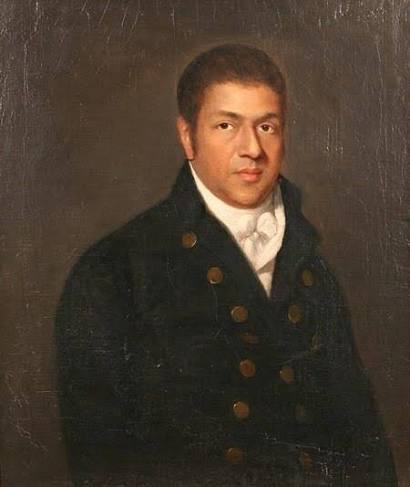
One of the early supporters of returning freed Africans to Africa was Paul Cuffe (also written as Cuffy or Cuff).
Paul Cuffe was born on January 7, 1757, in Massachusetts, to a Black father and an Indian mother.
He became a successful sea merchant and believed strongly in helping freed Africans return to Africa. In 1815, he transported thirty-eight freed Africans to Sierra Leone at his own expense.
Later, he shared his ideas about African colonization with the American Colonization Society.
Paul Cuffe died on September 9, 1817.
The Formation of the American Colonization Society
On December 28, 1816, an organization was established in Washington, D.C., to help relocate freed Africans from the United States. This organization was called the American Colonization Society (ACS).
The main force behind its creation was Robert Finley.
Other important founders included Bushrod Washington, who became the first president of the Society, and Elijah Caldwell, who served as the first general secretary.
The settlement of Caldwell in Montserrado County was later named in memory of Elijah Caldwell.
Within a few years, several smaller colonization societies were created across the United States to support the American Colonization Society in solving the challenges created by slavery and the increasing number of freed Africans.
Samuel John Mills and Ebenezer Burgess
On November 5, 1817, the American Colonization Society appointed Samuel John Mills to travel to Africa and search for land where freed Africans from America could settle.
Mills selected Ebenezer Burgess as his traveling companion. The two men left Philadelphia, Pennsylvania, on November 16, 1817, and traveled through England.
Their purpose in visiting England was to seek permission from the British government to establish a settlement for freed Africans near Sierra Leone.
At that time, Sierra Leone had already been established as a settlement for formerly enslaved Africans who had supported Britain during the American War of Independence.
Mills and Burgess eventually arrived in Sierra Leone, but Governor Charles McCarthy rejected their request. He believed that an American colony nearby would compete with Sierra Leone’s trade and reduce the economic importance of the British colony.
After this rejection, Mills and Burgess traveled to Sherbro Island.
John Kizell
Sherbro Island was made up of several kingdoms, including those ruled by Kings Somano, Safa, and Sherbro.
Mills and Burgess received important assistance from an African named John Kizell.
Kizell was born in Sherbro and was the son of a town chief. As a child, he was kidnapped and sold into slavery. He was eventually taken to Charleston, South Carolina.
During the American Revolution, British forces invaded Charleston. Kizell chose to support the British, and through this decision he and many other Africans gained their freedom.
Afterward, Kizell returned to Sierra Leone, where he helped the British expand their colony.
When Mills and Burgess arrived at Sherbro Island, Kizell provided them with food, shelter, and assistance. He also helped arrange meetings between the Americans and African rulers.
Eventually, King Sherbro and other leaders agreed to allow the Americans to obtain land. However, they stated that the agreement would only become final after Mills and Burgess returned with settlers and after the local people approved the arrangement.
Mills and Burgess returned to America with a copy of the agreement. Unfortunately, Samuel John Mills died during the journey and was buried at sea.
The report prepared by Burgess gave the American Colonization Society greater confidence that establishing a settlement in Africa was possible.
Millsburg in Montserrado County was later named in memory of Samuel John Mills and Ebenezer Burgess.
The Voyage of the Elizabeth
In early 1820, the American Colonization Society and the United States government decided to send the first group of settlers to Africa.
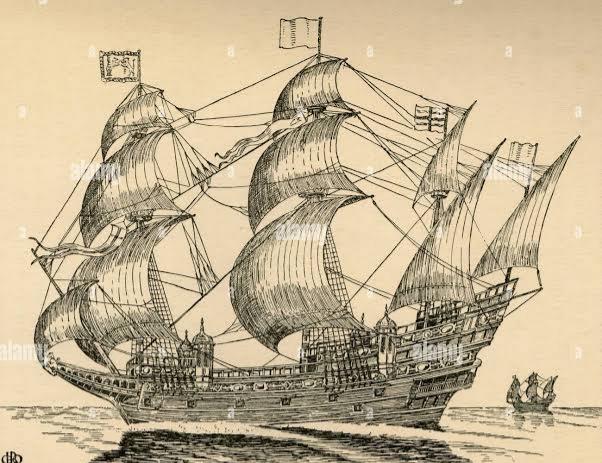
The group traveled on the ship Elizabeth, which became known as the "Mayflower of Liberian history." The Mayflower was the ship that carried one of the earliest groups of English settlers to North America in 1620.
The Elizabeth left New York Harbor on February 6, 1820, and arrived in Freetown, Sierra Leone, on March 9.
On board were eighty-six men, women, and children from different parts of the United States:
New York — 40 settlers
Pennsylvania — 33 settlers
Virginia — 9 settlers
Maryland — 2 settlers
District of Columbia — 2 settlers
It is important to note that the United States government did not initially view the settlers as founders of a new African nation.
The government considered them employees who would prepare a settlement where freed Africans and Africans rescued from slave ships could temporarily stay.
The settlers were accompanied by Samuel Bacon and John P. Bankson, representatives of the United States government.
The American Colonization Society sent Samuel A. Crozier, who also served as the group’s doctor.
Crozierville in Montserrado County was named in memory of Samuel A. Crozier
Sherbro Island
After spending one week in Freetown, the settlers moved to Sherbro Island and arrived on March 20, 1820.
However, the settlement attempt became disastrous.
The environment was extremely difficult, and malaria killed all the government agents and nearly half of the settlers.
The settlement also suffered from disagreements between John Kizell and Daniel Coker, one of the leading settlers.
Before his death, Samuel Crozier appointed Daniel Coker as temporary leader. However, many settlers expected John Kizell to take that position.
Because of these disagreements, Kizell withdrew his support, and the attempt to establish a settlement near Sierra Leone failed.
The Relief Expedition of 1821
In 1821, a relief mission was organized to assist the surviving settlers.
The American Colonization Society sent Joseph Andrus and Christian Wiltberger, while the United States government sent Ephraim Bacon, brother of Samuel Bacon, along with Jonathan B. Winn.
The group included thirty-three additional settlers and traveled aboard the ship Nautilus.
The Nautilus left America on January 23, 1821, and reached Freetown on March 8.
After spending two weeks in Sierra Leone, Joseph Andrus and Ephraim Bacon continued southeast toward the area that would later become Liberia.
They left Winn and Wiltberger in charge of the remaining settlers on Sherbro Island.
From Sherbro Island to Bassa and Ducor
After leaving Sherbro Island on March 22, 1821, Joseph Andrus and Ephraim Bacon traveled southeast and arrived in the Bassa region on April 1.
They requested a meeting with King Jack Ben, one of the important rulers in the area. The meeting was arranged through Bottle Beer, a Kru man who lived in Bassa.
After almost two weeks of private discussions between King Jack Ben and the Americans, an open meeting was held. During the meeting, the king and his people agreed to lease or "sell" land to the Americans.
An agreement was written and sent to the American Colonization Society for approval. However, the Society rejected the agreement on July 13, 1821.
There were two major reasons for this rejection.
First, the Bassa people made it clear that the settlement should not interfere with the slave trade that existed in their territory.
Second, the Society believed the cost demanded for the land was too high.
While Andrus and Bacon were negotiating in Bassa, the surviving settlers were moved from Sherbro Island to Fourah Bay near Freetown.
The rescue operation was carried out by Captain Robert Field Stockton of the United States naval ship Alligator.
Stockton Creek near Monrovia was later named in his memory.
The First Ducor Conference
Late in 1821, Eli Ayres, a surgeon in the United States Navy, was sent with additional supplies to assist the settlers.
Together with Captain Robert Stockton, Ayres traveled toward Cape Mesurado, also known as Ducor, and arrived on December 11, 1821.
Negotiations for land began the following day, December 12. This meeting became known as the First Ducor Conference.
The conference lasted only a few days.
The interpreter during the negotiations was John S. Mill, a trader of mixed African and European ancestry. He was the son of an Englishman and an African woman.
Mill had received education in America and England. However, after returning to Africa, he became involved in the slave trade.
He died in Monrovia on July 25, 1824.
The negotiations between the Americans and African leaders ended on December 15, 1821.
On that day, an agreement known as the Ducor Contract was signed.
This agreement provided land that later became part of the Republic of Liberia.
Ayres and Stockton paid approximately three hundred dollars' worth of goods and promised to provide the remaining payment later.
The African leaders who placed their marks on the Ducor Contract included:
King Kaanda Njola, a Gola ruler known in Liberian history as Zoda.
King Long Peter, another Gola ruler.
King Peter, a Dei ruler whose African name was Kai.
King Jimmy, believed to have been a Dei ruler.
King Bah Gwogro, a Dei ruler known as George.
The witnesses to the agreement were John S. Mill and John Craig.
It is important to understand that the land was not purchased by Ayres and Stockton personally. They were acting on behalf of the American Colonization Society.
Until 1847, all land agreements made by the colony were done in the name of the American Colonization Society.
African and European Names
Many African leaders involved in Liberia’s early history were known by European names.
This happened because some African names were difficult for Europeans and Americans to pronounce.
As a result, some African rulers adopted European names, including names of kings, nobles, or European leaders with whom they had developed relationships.
The Arrival on Providence Island.
After completing the Ducor Contract, Eli Ayres returned to Sierra Leone to bring the remaining settlers.
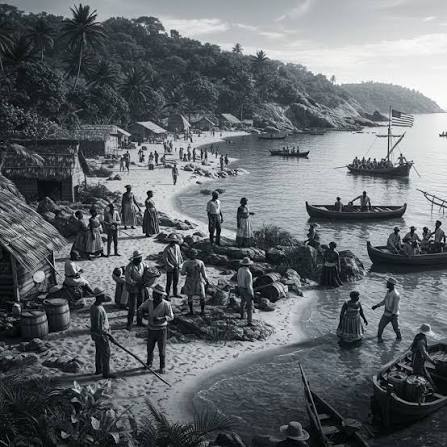
On January 7, 1822, Ayres returned with the settlers and landed on Dozoa Island near present-day Monrovia.
This event became known as the arrival of the pioneers.
Dozoa Island was first renamed Perseverance to represent the determination of the settlers who had overcome many challenges.
Later, the name was changed to Providence Island because the settlers believed their arrival was a special blessing from God.
January 7 was later celebrated as Pioneers' Day until it was abolished by the People's Redemption Council in 1980.
The Second Ducor Conference
The pioneers did not immediately gain complete control of the land they had received.
While Eli Ayres was away in Sierra Leone, King Peter of Bushrod Island was criticized by his people for allowing foreigners to occupy the land.
Many Africans argued that, according to their traditional laws, land belonged to the entire community and could not be sold by one person, including a king.
Because of this disagreement, another meeting was organized. This became known as the Second Ducor Conference.
The conference eventually decided in favor of the settlers, allowing them to remain.
Two major factors helped the pioneers.
First, an American warship was nearby during the conference. Those opposing the settlers feared that continued resistance might lead to military action against their communities.
Second, not all African leaders opposed the settlement.
Some leaders, including Kings Ba Caia and Tom, supported the settlers.
The strongest African supporter was King Sao Boso of the Kamara Clan, whose kingdom was known as Condo.
Boso warned that if the settlers were forced away from the land they had purchased, he and his allies would fight in their defense.
King Sao Boso
King Sao Boso was one of the most important African supporters of the early settlers.
He was of Mandingo origin. His father, Koilifi Kamara, came from present-day Guinea, while his mother was Bandi.
Boso was raised by his uncle, Litombe Steve, in Mamboma, located in present-day Lofa County.
As a young man, Boso became a respected stevedore while working on British ships along the West African coast.
He was also known as a courageous military leader. After establishing his own town of Totokwele, he gradually expanded his influence by bringing other towns under his control.
One of the important towns he controlled was Bopolu, which later became the center of his government.
King Sao Boso died in 1836.
The Settlement on the Mainland
After the Second Ducor Conference ended, Eli Ayres returned to Sierra Leone to bring the remaining settlers to Liberia.
Many settlers returned with him, although some, including Daniel Coker, decided to remain in Sierra Leone.
After spending four months on Providence Island, where houses were being constructed on Cape Mesurado, the settlers moved to the mainland on April 25, 1822.
The settlement was placed under the leadership of Frederick James.
The Colony of Liberia: 1822–1839
Between 1822 and 1839, Liberia existed as a colony controlled by the American Colonization Society.
A colony is a territory that does not have full independence and is governed by another authority.
Liberia did not become an independent country until July 26, 1847.
During the colonial period, Liberia was governed by officials called agents.
These agents were not elected by the Liberian people. Instead, they were appointed by the American Colonization Society.
The colonial government consisted of three main branches.
The Colonial Council
The Colonial Council consisted of the vice-agent and two councilors elected by the settlers.
The council served mainly as an advisory body to the agent. It was not an independent legislative institution.
The Executive Branch
The executive branch was led by the agent.
Because the agent was appointed by the American Colonization Society, he was responsible to the Society rather than the settlers.
The vice-agent assisted the agent and was elected by the settlers.
The agent was the most powerful official in the colony. He had the authority to reject the choices made by settlers for the Colonial Council.
The Judiciary Branch
The judicial system consisted of the Court of Monthly Sessions.
The agent served as the head of this court and was assisted by two justices of the peace.
Other departments of the colonial government included:
Agriculture committee
Public works committee
Colonial militia
Officials appointed by the agent included teachers, the colonial secretary, librarian, auctioneer, storekeeper, and court officials.
Eli Ayres
Eli Ayres served as the first major leader of the colony between 1822 and 1823.
His administration was short, and he was later replaced by Jehudi Ashmun, a Congregationalist minister.
Jehudi Ashmun, First Agent of the Colony of Liberia
Jehudi Ashmun was born in New York in 1794.
Historians have provided different explanations for why Ashmun came to Africa.
Some believe he came to work and repay debts he owed in America.
Others believe he came as a missionary seeking forgiveness and hoping to spread Christianity.
However, according to Ashmun himself, he was employed by the American Colonization Society to assist in transporting settlers to Africa.
Ashmun became one of the most important leaders in early Liberian history because of his role in strengthening and defending the colony.
The Twin Battles of 1822
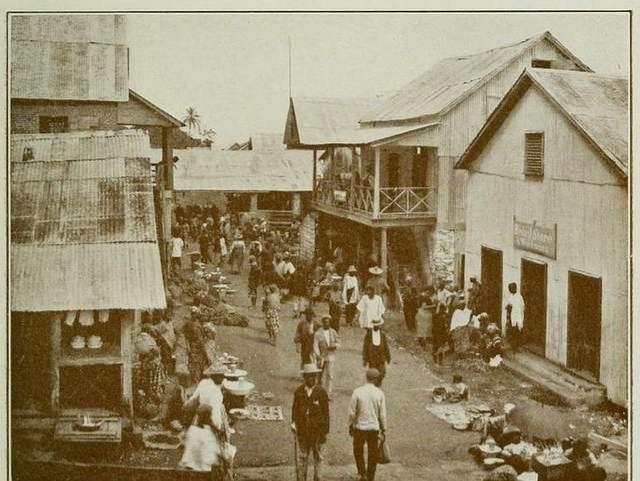
During Ashmun’s administration, settlers and African communities around Cape Mesurado fought two major battles.
These conflicts are known in Liberian history as the Twin Battles of 1822.
The first battle took place on November 10, 1822, and became known as the Battle of Crown Hill.
During the attack, African forces quickly pushed back the guards protecting the settlement.
However, instead of continuing the attack, they stopped to collect items from abandoned buildings.
This gave Jehudi Ashmun, Elijah Johnson, and the settlers time to reorganize.
The settlers then used their weapons and cannons to defend themselves.
After about thirty minutes of fighting, the attacking forces, made up mainly of Vai, Dei, and Mambahm Bassa fighters, were defeated.
Following their victory, the settlers declared November 11 as Thanksgiving Day to give thanks for their survival.
Later, on January 15, 1870, the Liberian National Legislature officially established Thanksgiving Day as a national holiday.
The African forces, however, were not defeated completely.
They prepared for another attack.
The second confrontation began on the night of November 30, 1822.
This time, the attackers surrounded the settlement and attempted several times to break through the defenses.
The settlers resisted the attacks, and after about one and a half hours, the attackers withdrew.
This battle became known as the Battle of Fort Hill.
Causes of the Twin Battles
To fully understand the Twin Battles of 1822, it is important to examine the causes behind the conflict.
One major cause was the failure of the settlers to complete the payment for the land agreement signed on December 15, 1821.
Many African leaders believed that the agreement had not been fully respected because the promised goods had not been completely delivered.
Another important reason was that many local communities opposed the idea of selling their land.
According to traditional African customs, land belonged to the entire community and could not simply be transferred by one individual.
An incident involving Captain Knight of the British Navy may have also increased tensions.
On March 20, Captain Knight was traveling to Sierra Leone with thirty recaptured Africans when his ship stopped near Cape Mesurado to collect fresh water.
Strong waves pushed the vessel onto the shore, and Africans from the kingdom of Bah Gwogro boarded the ship.
At that time, some coastal communities followed a tradition that goods from damaged ships belonged to the people whose territory the ship had entered.
A conflict developed between Captain Knight and the Africans. When settlers heard the disturbance, they rushed to assist the British crew.
After a short confrontation, the Africans withdrew.
For some African leaders, the settlers were simply another African group and should have placed themselves under the authority of local rulers.
Some leaders questioned why the settlers maintained their connection with Americans instead of joining the protection of African kingdoms.
Chief Ba Caia
During the difficult period leading to the Twin Battles, Chief Ba Caia played an important role in supporting the settlers.
His chiefdom included Gomez Island, located opposite Providence Island.
When the settlers faced serious difficulties, Ba Caia helped them in several ways.
First, he provided food and water when the settlers could no longer receive supplies from King George and other leaders.
Second, he kept Jehudi Ashmun and the settlers informed about preparations being made by those planning attacks.
Third, he attempted several times to create peace between the settlers and opposing African leaders.
Although some of his people participated in the fighting, Chief Ba Caia himself refused to join the attacks against the settlers.
The Remonstrance of 1823
In December 1823, the settlers sent a formal complaint to the American Colonization Society.
This document became known as the Remonstrance of 1823.
A remonstrance is a formal protest or statement of grievances.
One major complaint was about the distribution of land.
The settlers argued that those who had lived longer in Liberia should receive more land than newer arrivals.
Many settlers were also unhappy with Ashmun’s policy of encouraging economic independence.
Because of these disagreements, many settlers began ignoring laws and government decisions.
Ashmun struggled to restore order and convince settlers to support his policies.
Frustrated by the situation, Ashmun left Liberia on April 1, 1824, and returned to America through the Cape Verde Islands.
Elijah Johnson
After Ashmun’s departure, he appointed Elijah Johnson to manage the settlement.
Johnson was born in New York and arrived in Liberia aboard the Elizabeth in 1820.
He played an important military role in defending the settlement during its early years.
Elijah Johnson was also the father of President Hilary Richard Wright Johnson, who served as President of Liberia from 1884 to 1892.
He was also the grandfather of Chief Justice Frederick Eugene Richelieu Johnson, who served from 1924 to 1933.
The Plan of the Civil Government of Liberia
In 1824, Ralph Randolph Gurley, the corresponding secretary of the American Colonization Society, was appointed acting agent and sent to Liberia.
During his journey, Gurley convinced Jehudi Ashmun to return to his position.
While traveling back to Liberia, Ashmun and Gurley created a new system of laws and government for the settlement.
This document became known as the Plan of the Civil Government of Liberia, also called the Gurley Constitution.
The laws created under this plan were known as the Digest of Laws.
Gurley held several meetings with settlers and worked to rebuild confidence between the people and the colonial government.
By the time he left Liberia on August 22, 1824, he had helped restore stability and strengthened respect for the government.
The Naming of Monrovia and Liberia
Jehudi Ashmun originally named the settlement at Ducor Christopolis, meaning "City of Christ."
In 1824, General Robert Goodloe Harper of Baltimore changed the name to Monrovia.
The name Monrovia was chosen in honor of James Monroe, the fifth President of the United States, whose administration supported the establishment of Liberia.
General Harper also gave the name Liberia to the colony.
The name Liberia comes from the Latin word "liber," meaning free.
Ashmun’s Fight Against the Slave Trade
During his time as agent, Jehudi Ashmun worked to suppress slavery and the slave trade around the colony, especially in areas near Bassa and Monrovia.
In 1825, Ashmun destroyed a large slave camp near Digby.
The following year, he destroyed another slave camp in the Bassa region.
Ashmun served as agent of the American Colonization Society and the United States government for six years.
In March 1828, he left Liberia permanently.
Jehudi Ashmun died on August 25, 1828.
Ashmun Street in Monrovia was named in his memory.
The Reverend Lott Carey, Acting Agent (March–November 1828)
Lott Carey was a former enslaved African American from Richmond, Virginia.
He purchased his freedom and traveled to Africa aboard the Nautilus in 1821.
After Ashmun’s departure, Lott Carey became acting agent of the colony.
During his administration, he obtained additional land from Kings James, Old Peter, and Long Peter.
However, his leadership was short-lived.
In November 1828, a conflict developed after Africans attacked the colony’s warehouse at Digby.
The settlers prepared for defense and began making ammunition during the night.
An accident caused an explosion that killed several people, including Lott Carey, who died from his injuries on November 10, 1828.
Colson Waring, the assistant acting agent, managed the settlement until Ashmun’s replacement arrived.
Carey Street in Monrovia and the City of Careysburg in Montserrado County were named in memory of Lott Carey.
Richard Randall
Richard Randall was a native of Annapolis, Maryland.
Before becoming agent, he served as the colonial physician in Liberia.
His administration was brief and faced few major events.
Randall died from brain disease on April 29, 1829.
He was succeeded by Joseph Mechlin.
Randall Street in Monrovia was named in his memory.
Joseph Mechlin
Joseph Mechlin served as agent of the colony from 1829 to 1834.
One of his major achievements was improving the road connecting Bopolu and Millsburg.
This improvement strengthened communication, trade, and relationships between the Kingdom of Condo and the Liberian settlement.
During Mechlin’s administration, the Maryland State Colonization Society attempted to establish a separate colony in West Africa.
In 1831, Dr. James Hall arrived with 146 settlers to begin the foundation of that settlement.
However, Mechlin opposed the creation of another colony separate from Liberia.
His opposition temporarily stopped Maryland’s colonization effort.
Like previous agents, Mechlin faced demands from settlers who wanted greater participation in government.
In 1833, Joseph Jenkins Roberts and Anthony D. Williams were sent to America to request greater political rights for settlers.
Mechlin also faced criticism over his personal behavior and policies.
Some reports accused him of drinking alcohol excessively and violating laws concerning the sale of alcohol.
Because of political problems and declining health, Mechlin resigned in 1834.
He was replaced by John B. Pinney.
Mechlin Street in Monrovia was named in his memory.
John B. Pinney
John B. Pinney was also from Baltimore.
Like earlier agents, he faced political challenges during his administration.
One major disagreement involved his attempt to establish a Supreme Court of Appeals.
Many people believed this action violated existing laws because the Court of Monthly Sessions already handled similar responsibilities.
The disagreement led to political tension and a riot in Monrovia between March and April 1834.
By May, Pinney had lost much of his authority, and Vice-Agent Nathaniel Brander began carrying out many duties of the office.
Pinney left Liberia in October 1834 and did not return for nearly forty-four years.
He later returned in 1878 as a missionary and became a teacher at Liberia College.
John B. Pinney died in America on December 25, 1882.
Ezekiel Skinner
Ezekiel Skinner arrived in Liberia on August 12, 1835, to become the next colonial agent.
His administration was also short.
One of his political opponents was Dr. John Brown Russwurm.
Russwurm was born in Jamaica in 1799 and came to Liberia in 1829.
In 1830, he founded Liberia’s first newspaper, the Liberia Herald.
Political disagreements involving Russwurm and others contributed to Skinner’s departure.
Skinner left Liberia in September 1836.
He was succeeded by Anthony D. Williams
Anthony D. Williams and the End of the Colonial Period
Anthony D. Williams became the final colonial agent of the Colony of Liberia.
He served from 1836 until April 1839.
During his administration, Liberian settlements continued to expand, and efforts were made to bring different settlements under a more organized system of government.
By this period, the colony had grown significantly.
The settlers increasingly demanded greater control over their own affairs and a government that represented them.
The colonial period eventually ended as Liberia moved toward independence.
On July 26, 1847, Liberia declared itself a free and independent republic.
The former colony became the first independent republic in Africa.
References
Abayomi Wilfrid Karnga, A History of Liberia: A Study of the Political, Social, and Economic Development of the Republic of Liberia. Joseph saye Guannu was a prominent Liberian historian, educator, and author known for his work on Liberian history and political studies.