The Early Republic of Liberia: Joseph Jenkins Roberts and the Challenges of Independence, 1847–1856
Published Tue Aug 11 2026
: The Early Republic of Liberia: Joseph Jenkins Roberts and the Challenges of Independence, 1847–1856:
Introduction
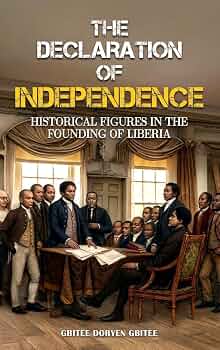
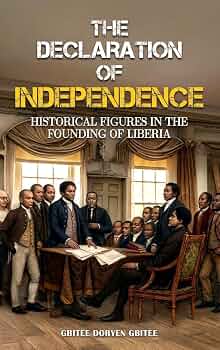
On July 26, 1847, Liberia declared its independence and became a sovereign republic. The declaration marked the beginning of a new chapter in West African history. Liberia was no longer governed as a collection of American-sponsored settlements or as the Commonwealth of Liberia. It now had its own constitution, elected government, and claim to national sovereignty.
But declaring independence was only the beginning.
The new republic faced enormous challenges. Its leaders had to establish an effective government, defend Liberia's independence, develop the economy, establish diplomatic relationships with foreign countries, and extend the authority of the government beyond the settlements along the coast.
At the center of these early challenges was Joseph Jenkins Roberts, Liberia's first president. His presidency helped establish many of the political and diplomatic foundations of the young republic.
The years from 1847 to 1856 were therefore crucial in determining what kind of country Liberia would become.
Liberia Becomes an Independent Republic
Liberia's Declaration of Independence was adopted on July 26, 1847. The new constitution created a republican system of government modeled in significant ways on the political traditions familiar to the settlers who had come from the United States.
The government was divided into three main branches: the executive, legislative, and judicial branches.
The president served as head of state and government, while the legislature was responsible for making laws. The constitution also established a court system to administer justice.
The new republic was initially centered around Monrovia and several other settlements along the coast.
However, Liberia's borders and the authority of its government were not yet firmly established across the territory that would eventually become the modern country.
Joseph Jenkins Roberts Becomes Liberia's First President
Joseph Jenkins Roberts became the first president of the Republic of Liberia.
Roberts had already played an important role in the administration of Liberia before independence. He had served as governor of the Commonwealth of Liberia and had become one of the most influential political figures among the settlers.
His experience made him an important choice to lead the new republic.
As president, Roberts faced the difficult task of transforming a newly independent settlement into a functioning sovereign state.
His government needed to demonstrate that Liberia could govern itself and maintain its independence despite the presence of powerful European colonial interests along the West African coast.
The Challenge of International Recognition
One of Roberts' most important responsibilities was securing international recognition for Liberia.
Liberia's leaders understood that independence would be difficult to protect if other countries refused to recognize the new republic.
Britain was one of the most important countries in this process.
British recognition of Liberia came in 1848. Other countries gradually followed, helping Liberia strengthen its position as an independent state.
Recognition was important because European powers were rapidly expanding their influence in Africa during the nineteenth century.
Liberia's leaders wanted to establish the country as a sovereign African republic rather than allow it to become another European colony.
Diplomacy therefore became one of the most important tools used by the early Liberian government.
Liberia and the United States
Liberia maintained a particularly close relationship with the United States because of the country's origins.
The American Colonization Society had supported the settlement of freed African Americans in West Africa, and many of Liberia's early settlers had cultural and political connections to the United States.
However, Liberia's declaration of independence also represented an important step toward political independence from American control.
The relationship between the two countries remained significant, but Liberia increasingly presented itself as an independent nation capable of conducting its own foreign affairs.
The United States eventually recognized Liberia in 1862, during the presidency of Stephen Allen Benson, but Roberts had already spent his presidency working to establish Liberia's international position.
Building the Government of the New Republic
Independence created the need for a permanent national administration.
Liberia's government had to collect revenue, enforce laws, operate courts, maintain public order, and manage relations with communities both inside and outside the settlements.
The task was difficult because the new government had limited financial resources.
Liberia did not have the large population, developed infrastructure, or strong economy that would have made governing easier.
The government depended heavily on customs duties and trade along the coast.
This meant that Liberia's ports and commercial activities were extremely important to the survival of the young republic.
Relations With Indigenous Communities
One of the most complicated issues facing the early republic was Liberia's relationship with Indigenous African communities.
The settlers who established Liberia occupied only parts of the territory that would eventually become the country.
Many Indigenous communities already lived in the region and had their own political systems, traditions, economies, and leaders.
The relationship between the settlers and Indigenous communities varied from place to place.
There were trade relationships, negotiations, alliances, and agreements. There were also conflicts, particularly when the expanding authority of the Liberian government came into contact with existing political communities.
The Liberian government wanted to establish authority over a larger territory.
Indigenous leaders, meanwhile, had their own interests and did not necessarily recognize the authority claimed by the government in Monrovia.
This created a long-term challenge that continued throughout Liberia's nineteenth-century history.
Expanding Liberia's Territory
The early republic gradually attempted to extend its influence along the coast.
The government wanted to bring more territory under Liberian authority for several reasons.
First, controlling territory was important for national security.
Second, Liberia wanted to prevent foreign powers from claiming coastal areas that Liberian leaders considered part of their country.
Third, expanding territorial control would increase access to trade and natural resources.
The process was not simple.
Liberia's government had limited military and administrative resources, while Indigenous political communities maintained their own authority.
As a result, Liberia's territorial expansion occurred through a combination of treaties, negotiations, trade relationships, political agreements, and armed conflicts.
The Importance of Trade
Trade was essential to the early Liberian economy.
Liberia's coastal location gave it access to the Atlantic Ocean and international commerce.
Products such as agricultural goods and other commodities were exchanged through coastal trading centers.
Customs duties collected at ports provided an important source of government revenue.
However, Liberia's economy remained relatively small.
The government needed revenue to operate, but its ability to collect taxes and customs duties across the territory was limited.
This financial weakness made it difficult to build roads, strengthen government institutions, and extend effective administration into the interior.
The Creation of a National Identity
Independence also created a larger question:
What did it mean to be Liberian?
The country's population included Americo-Liberian settlers and a much larger number of Indigenous peoples belonging to different communities.
The political institutions created by the new republic were strongly influenced by the experiences and traditions of the settlers.
At the same time, Liberia existed in a region with its own long-established African societies and cultures.
The early republic therefore faced the difficult task of developing a national identity in a country with different communities, histories, and political traditions.
This issue would remain important throughout Liberia's later history.
Roberts' First Presidency Ends
Joseph Jenkins Roberts served as president from 1848 to 1856.
His administration established important foundations for Liberia's future.
He helped strengthen Liberia's international position and worked to establish diplomatic relationships with foreign governments.
His government also attempted to expand Liberia's territorial authority and develop the country's political and economic institutions.
When Roberts' first presidency ended in 1856, Liberia had survived its first years as an independent republic.
The country was still facing major challenges, but it had established itself as an independent political entity on the West African coast.
What Happened After Roberts?
After Roberts left office in 1856, Stephen Allen Benson became Liberia's second president.
Benson inherited a country that was still developing its government and attempting to expand its authority.
His presidency would bring new developments in Liberia's foreign relations, territorial expansion, and internal administration.
Roberts, however, would eventually return to Liberia's presidency.
The early years of the republic therefore did not represent the end of his political career.
Why the Early Republic Matters
The period from 1847 to 1856 was one of the most important foundation periods in Liberian history.
Liberia had achieved independence, but independence had to be defended and made practical.
The early government had to prove that the republic could survive in a region where European powers were increasingly competing for territory and influence.
The period also established political patterns that would influence Liberia for decades.
The relationship between the government and Indigenous communities, the importance of coastal trade, the influence of Americo-Liberian political institutions, and Liberia's connections with foreign powers all became major themes of the country's later history.
Most importantly, the early republic demonstrated that Liberia had survived the difficult transition from an American-sponsored settlement to an independent African republic.
Key Facts
- 1847: Liberia declared independence and adopted its constitution.
- 1848: Joseph Jenkins Roberts became Liberia's first president.
- 1848: Britain recognized Liberia's independence.
- 1847–1856: Liberia worked to establish its government and strengthen its international position.
- Liberia faced major challenges involving territorial expansion, economic development, diplomacy, and relations with Indigenous communities.
- Coastal trade and customs revenue were important to the young republic's economy.
- 1856: Stephen Allen Benson succeeded Roberts as president.
- The early republic established political and diplomatic foundations that influenced Liberia for generations.
Conclusion
The declaration of independence in 1847 gave Liberia sovereignty, but building a functioning nation required much more than declaring independence.
Under Joseph Jenkins Roberts, Liberia took its first major steps as an independent republic. The government established diplomatic relationships, developed political institutions, expanded its territorial ambitions, and attempted to strengthen its economy.
Yet many of the country's greatest challenges were still ahead.
Liberia had to determine how its government would relate to the many Indigenous communities within and around its expanding territory, how it would develop its economy, and how it would protect its independence as European colonial expansion accelerated across West Africa.
The story of Liberia after 1847 was therefore not simply the story of a country becoming independent.
It was the story of a young republic trying to **turn independence into a functioning nation