Language, Education and Identity in Nineteenth-Century Liberia
Published Mon Sep 21 2026
introduction
The history of nineteenth-century Liberia was shaped not only by migration, politics, religion, and territorial expansion, but also by language. From the establishment of the first settlements to the creation of the Liberian Republic, language was closely connected to education, political authority, cultural identity, and Liberia's relationship with the United States.
English gradually became the principal language of Liberia's government, schools, newspapers, and political leadership. For many settlers and officials associated with the American Colonization Society, English represented more than communication. It connected Liberia to the United States and to the educational, religious, and political traditions from which many settlers had come.
Yet Liberia was never a one-language society. African languages remained central to everyday life, while several communities developed or maintained important written traditions. Muslim Mandingo communities used Arabic literacy, the Vai developed an indigenous writing system, and missionary activity contributed to the development of written Grebo. These traditions demonstrate that literacy in nineteenth-century Liberia was not exclusively a Western achievement.
English and the Formation of a Liberian Identity
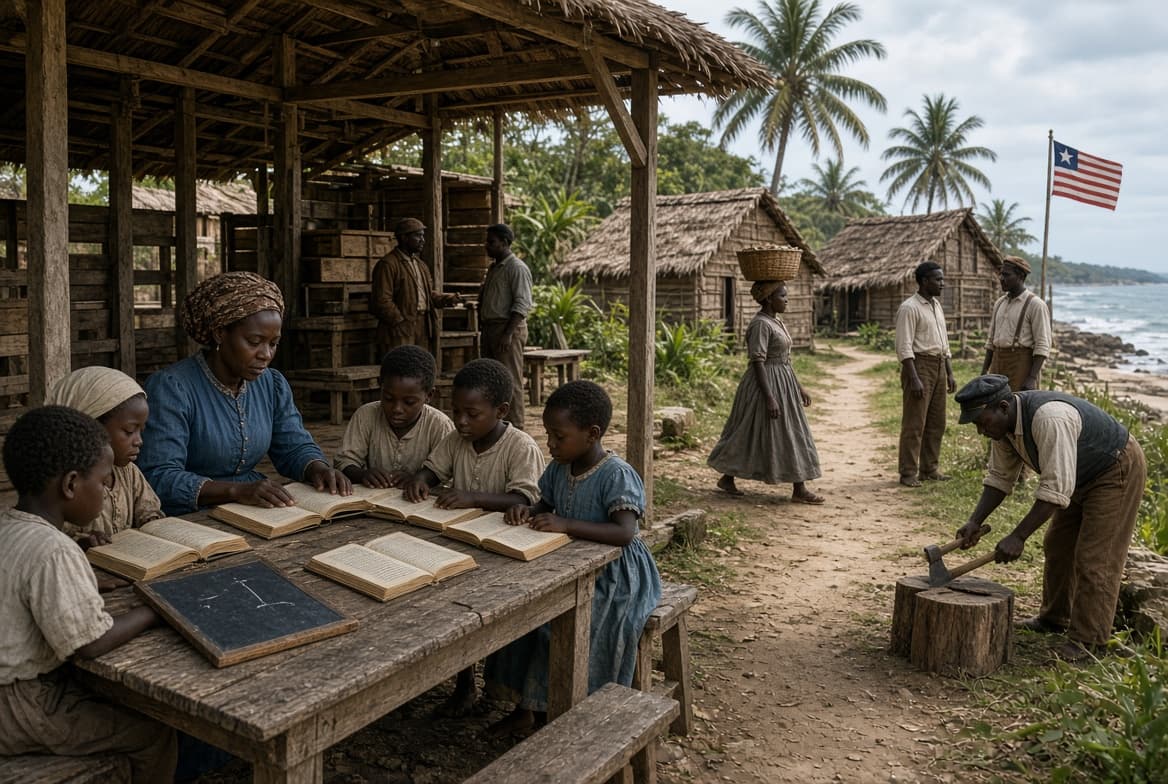
English acquired an important position from the earliest years of the settlements. The American Colonization Society promoted Liberia to Black Americans partly on the argument that emigrants would not have to abandon their existing language. Many prospective settlers already spoke English, making it easier to establish communities and institutions modeled partly on American society.
For settlers, English became closely associated with Christianity, education, literature, government, and political institutions. It also helped maintain an intellectual connection with the United States.
Alexander Crummell, one of the leading intellectuals of nineteenth-century Liberia, expressed this idea particularly clearly. In his 1860 Independence Day address in Harper, he presented English as an important inheritance of African Americans returning to Africa.
The language therefore acquired both practical and symbolic importance. It was the principal language through which the settler political establishment imagined the new republic and presented Liberia to the outside world.
The Reality of English Literacy Among Settlers
The importance attached to English should not be confused with widespread literacy.
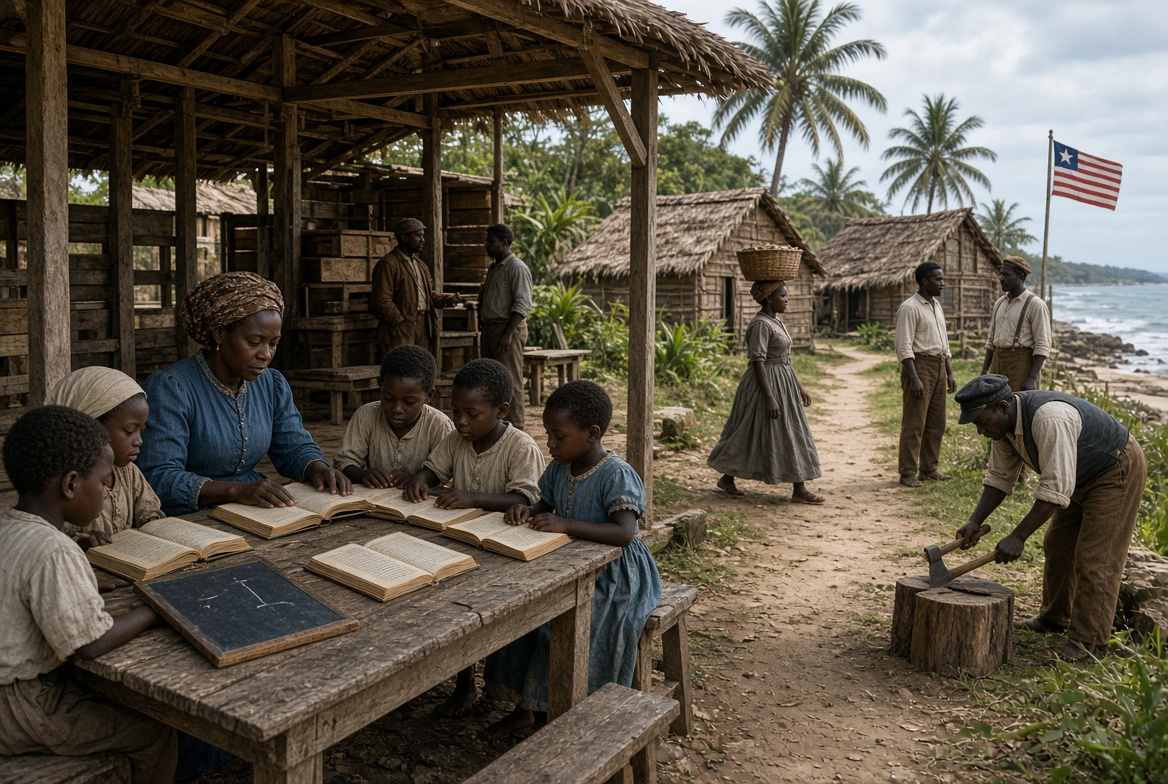
Many immigrants who arrived in Liberia had received limited formal education. Research discussed by John V. Singler indicates that during the first two decades of settlement, fewer than one-quarter of immigrants possessed basic literacy. Later immigration did not immediately eliminate this educational gap.
Liberian settler society consequently contained people with very different levels of education. Highly educated figures such as Alexander Crummell and Edward Wilmot Blyden existed alongside immigrants who had received little formal schooling.
The English spoken in Liberia was also diverse. Different varieties were influenced by African and Caribbean speech patterns, as well as by older English-based contact languages that had developed along the West African coast.
English was therefore simultaneously a language of government and education, a cultural symbol, and an aspiration. The commitment to English was sometimes considerably greater than the actual level of English literacy among the population.
English and Indigenous Communities
The expansion of Liberian settlements brought English into increasing contact with indigenous communities.
Some early settler officials held negative attitudes toward African languages. Jehudi Ashmun, an important administrator of the early colony, expressed unfavorable opinions about languages including Dey, Vai, and Bassa. Such attitudes reflected a broader belief among some settlers that English was better suited to education, Christianity, written communication, and government.
Missionaries faced a more complicated situation. To spread Christianity and establish schools, they needed to communicate with local communities. Some therefore developed educational programs using African languages, although many missionaries regarded vernacular education as a step toward Christianity and eventually toward Western-style education.
English nevertheless remained central to Liberia's wider educational and political system.
Why Some Indigenous Communities Wanted English
The spread of English was not simply the result of government pressure. For some indigenous communities, learning English offered practical advantages.
Liberian settlements were becoming centers of trade, government, missionary activity, and international commerce. People who could communicate with settlers, merchants, missionaries, and foreign officials could gain access to opportunities unavailable to those without such language skills.
This helps explain the development of the wardship system. Some parents from nearby communities entrusted children to settler families so they could learn English and become familiar with Western-style education.
Indigenous leaders also requested schools. Coastal chiefs sometimes offered land for educational institutions on the condition that young people from their communities would receive instruction in English.
English could therefore serve as a pathway to trade, government communication, education, and political relationships beyond the local community.
Education and the Roberts Administration
The connection between education and government policy became particularly visible during the administration of Joseph Jenkins Roberts.
As the Liberian government expanded its authority along the coast, treaties were negotiated with various indigenous leaders. Some agreements included promises to establish schools.
Education could make agreements with the Liberian government more attractive to local leaders. However, the government's ability to fulfill these promises was limited.
Liberia had very few financial resources, while missionary organizations also faced shortages of money, teachers, and educational materials. Even providing schools for settler children was difficult, making a large educational system for indigenous communities extremely challenging.
This created a persistent gap between the educational ambitions expressed by Liberian officials and what could actually be provided.
Mandingo Arabic Literacy
Liberia's linguistic history was also shaped by Islamic literacy.
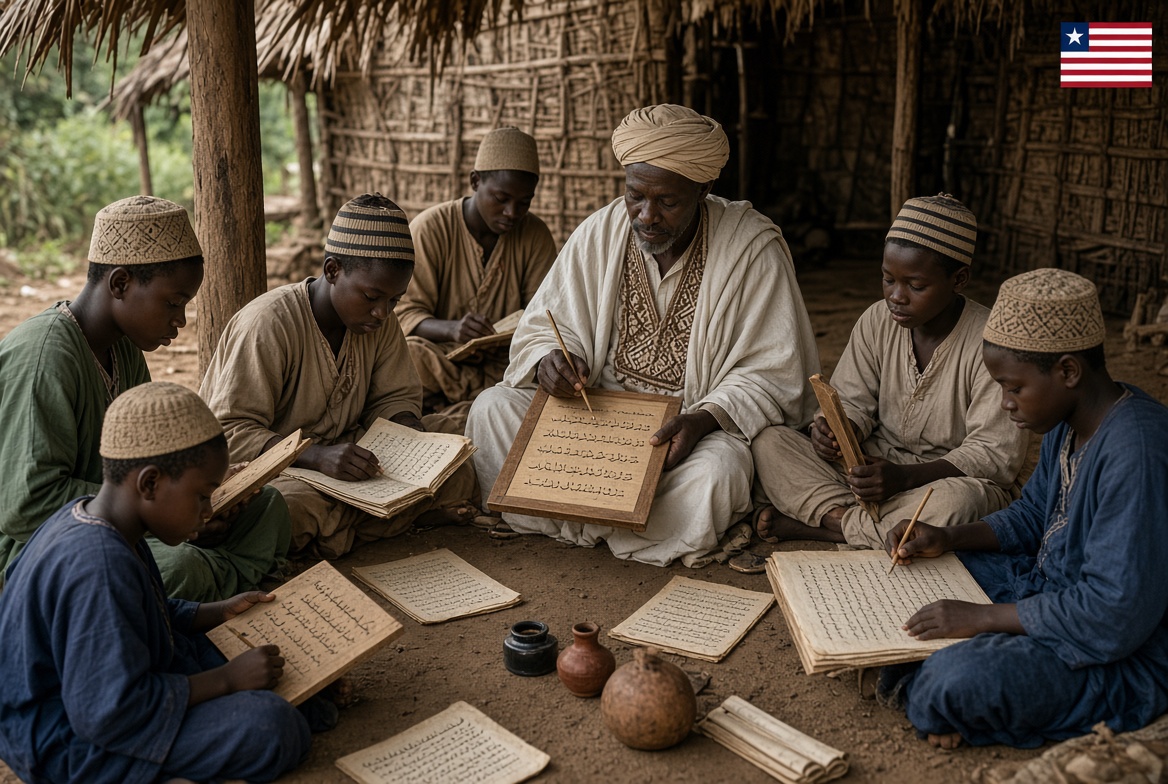
Mandingo communities possessed a written tradition based on Arabic through Islamic education. This tradition connected Mandingo religious and intellectual life to a much wider Muslim world extending across West Africa.
Only a portion of the Mandingo population may have possessed more than basic Arabic literacy, but the existence of the tradition was nevertheless important. Writing could be used for religious learning, commercial communication, and political purposes.
Mandingo Arabic literacy also complicated the idea that literacy was something introduced into the region only through American settlers and European missionaries.
The Vai Writing System
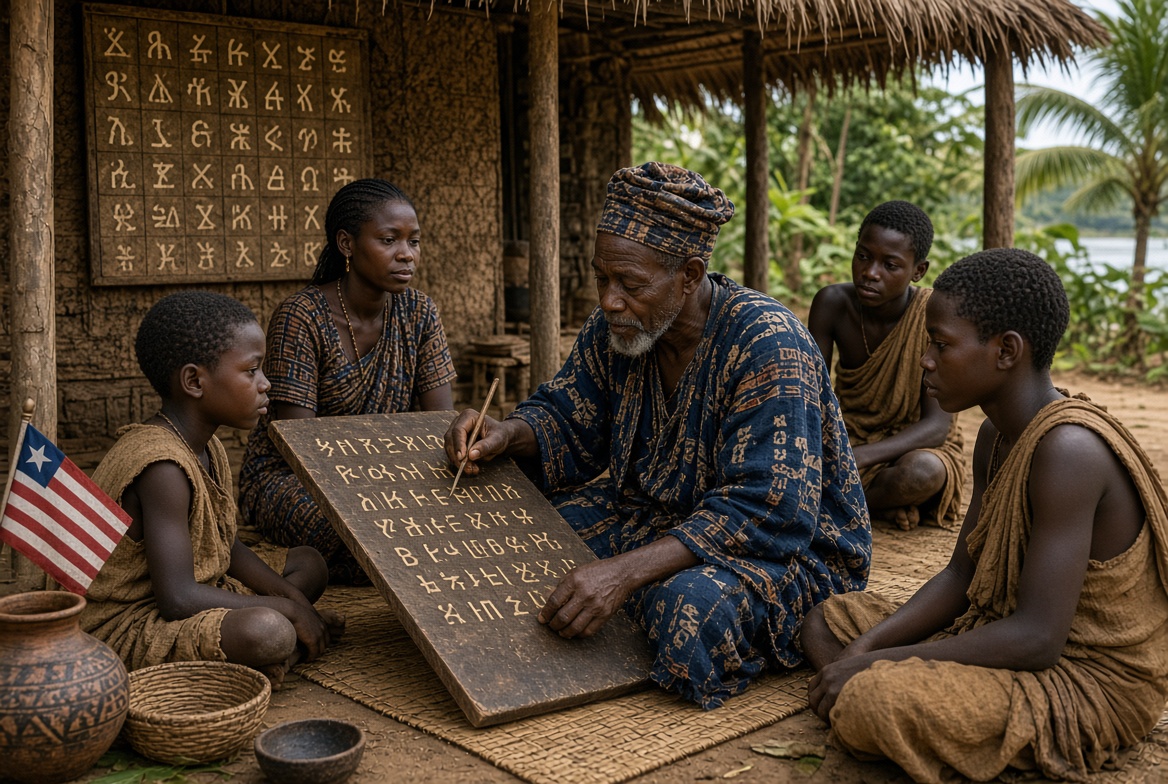
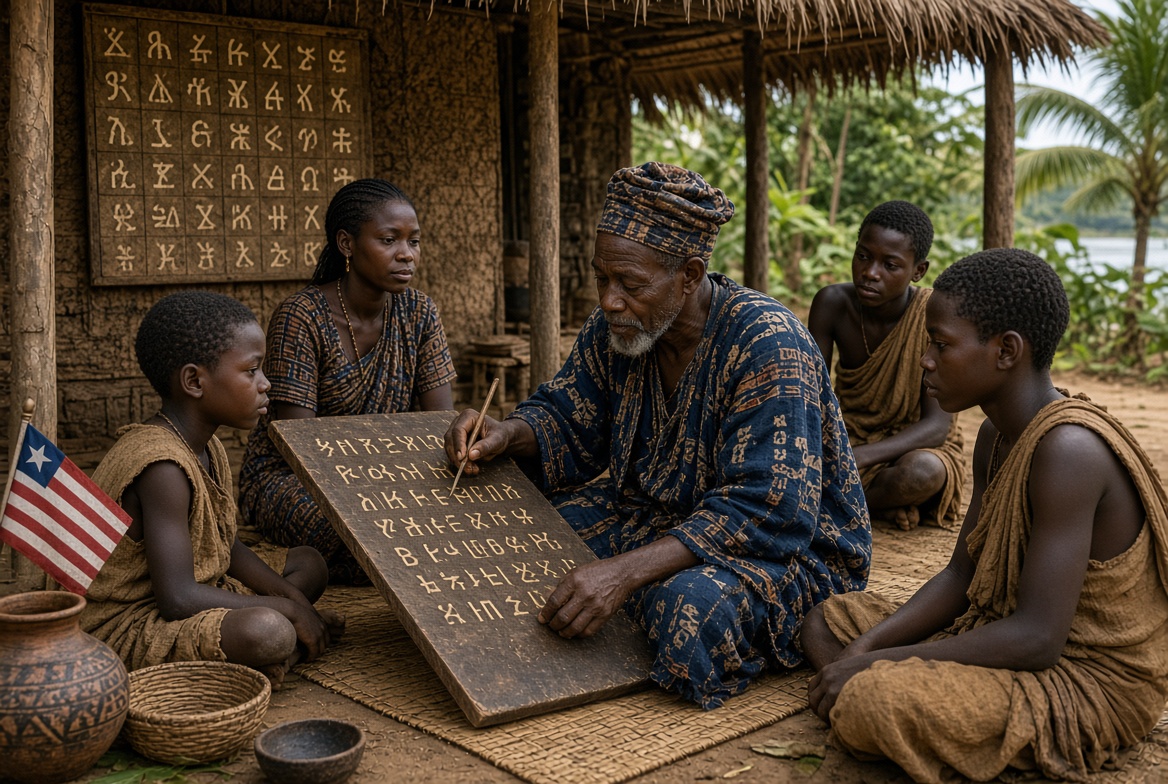
The development of the Vai writing system was one of the most remarkable examples of indigenous literacy in nineteenth-century Liberia.
During the early nineteenth century, Duwalu Bukele became associated with the creation of the Vai syllabary. Scholars have debated the precise influences behind its development, with proposed influences including Arabic literacy, earlier educational activity, and knowledge of other writing systems.
Regardless of the exact combination of influences, the significance of the Vai script is clear: the Vai developed a writing system of their own rather than simply adopting one imposed by the Liberian government.
By the 1850s, the existence of Vai literacy was increasingly recognized outside the Vai community. President Stephen A. Benson reportedly regarded the Vai as intellectually advanced compared with some immigrants from the United States.
The Vai example demonstrated that African societies possessed their own intellectual traditions and could develop systems of writing independently.
Grebo Literacy and Missionary Education
Grebo history provides another important example of the relationship between language, education, and politics.
Grebo communities in the Cape Palmas region had long-established political and economic institutions before the arrival of settlers. The Maryland-in-Africa settlement developed in this region, creating sustained interaction between Grebo communities and settlers.
Treaties made by the Maryland State Colonization Society sometimes contained specific promises to establish schools for African children. According to the research discussed by Singler, twelve treaties involving land transfers were signed, and eleven included specific commitments concerning schools.
Missionary organizations, including the American Board of Commissioners for Foreign Missions and the Protestant Episcopal Church, became involved in fulfilling these educational commitments.
Unlike some settler officials, these missionaries were willing to develop literacy in indigenous languages. Their work contributed to the development of written Grebo.
The missionaries generally intended vernacular literacy to support Christianity and Western education. But written Grebo eventually acquired broader cultural and political significance.
The Cavalla Messenger
The development of written Grebo was particularly visible through publications such as the Cavalla Messenger.
The newspaper contained both English and Grebo material and included discussions of Grebo history and cultural traditions. Its existence showed that literacy in an indigenous language could support more than religious instruction.
Readers could encounter information about their own history and culture in their own language. Written Grebo therefore became connected with cultural awareness at a time when relations between Grebo communities and settler authorities were increasingly tense.
During the 1870s, Bishop Johann Auer introduced changes to Grebo orthography that helped make written Grebo more accessible. Literacy became widespread in some areas around Cavalla, where Auer reported high levels of reading and writing ability among men.
This development contributed to Grebo cultural and political consciousness, although literacy alone did not cause resistance to Liberian authority. Conflicts over land, political control, and competing claims to authority were already central to relations between Grebo communities and the Liberian government.
English Literacy and Political Activism
Grebo leaders also used English for political purposes.
English literacy gave educated Grebo leaders access to newspapers, foreign governments, and international political discussions. Through English-language publications, some encountered reports about political developments elsewhere in West Africa, including the Fante Confederation on the Gold Coast.
English was also important in diplomatic communication.
In 1856, Grebo representatives sent a letter to the British government opposing the territorial claims of Liberian settlers and expressing willingness to come under British protection. English therefore became a tool through which Grebo leaders could communicate with foreign governments and participate in international political discussions.
This produced an important contrast: written Grebo could strengthen cultural communication within the community, while English could provide access to political networks beyond Liberia.
Education Among the Settlers
The Liberian government placed considerable importance on education, but building a broad school system was difficult.
The country lacked sufficient money, trained teachers, and textbooks. Missionary organizations also operated under financial and logistical limitations.
Despite these difficulties, a small educated intellectual class emerged. John Russwurm, Alexander Crummell, and Edward Wilmot Blyden became among the most prominent intellectual figures associated with nineteenth-century Liberia.
Their writings and public activities contributed to debates about education, African identity, language, culture, and the purpose of the Liberian republic.
Liberia College
The establishment of Liberia College represented one of the country's most important educational ambitions.
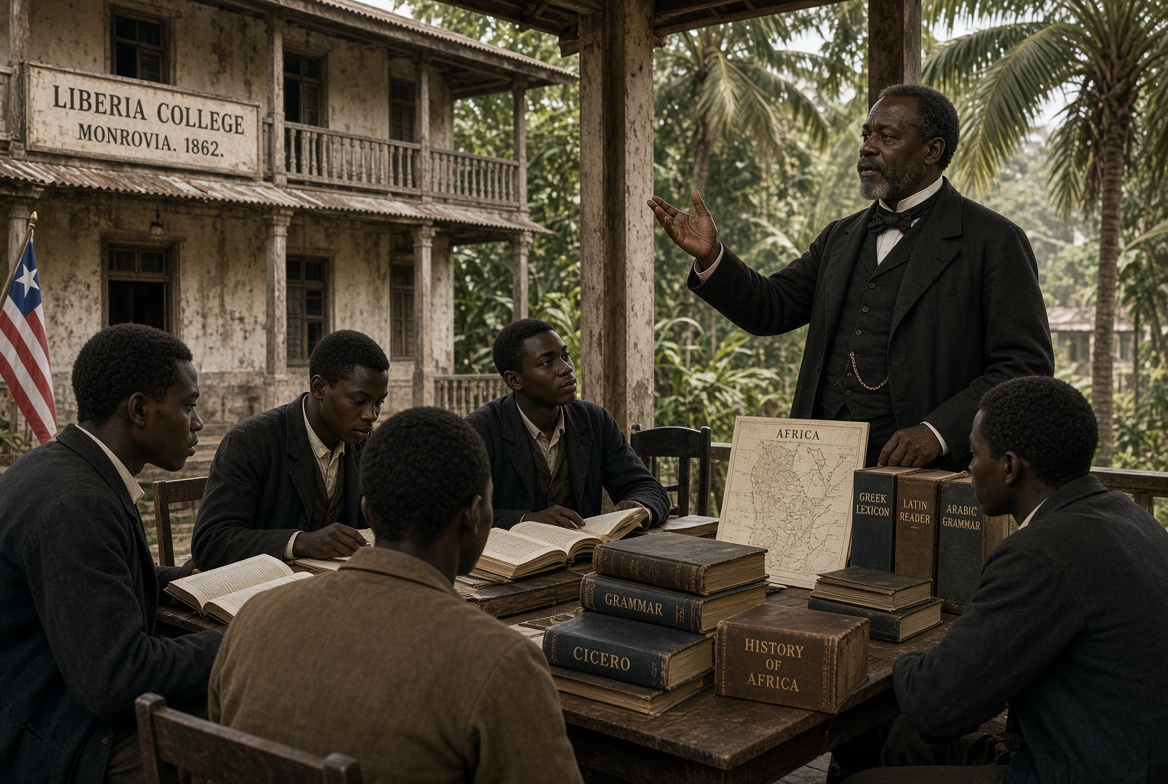
The institution opened its first class in 1863, when only seven students passed the entrance examination, which included Greek, Latin, and mathematics. Enrollment remained extremely small. According to Singler, the college rarely had more than ten students at one time and graduated only ten students during its first forty years.
Despite these numbers, Liberia College possessed considerable symbolic importance.
Its curriculum included Greek, Latin, mathematics, English grammar, geography, and other subjects associated with nineteenth-century classical education. The institution represented Liberia's effort to establish an educated intellectual class within the new republic.
For the American Colonization Society and Liberia's political elite, higher education also demonstrated the country's connection with American and Western educational traditions.
The Classical Curriculum
The emphasis on Greek and Latin reflected the educational ideals of the nineteenth century.
At the opening of Liberia College, Joseph Jenkins Roberts defended the importance of classical and modern languages within a broad education. Edward Wilmot Blyden, who taught Greek and Latin, likewise recognized the intellectual value of classical learning.
These languages had little practical role in everyday Liberian communication. Their importance came largely from the belief that knowledge of classical literature and languages represented advanced scholarship.
This reveals the broader orientation of Liberia's elite educational system. English was the principal modern language of public life, while Greek and Latin represented the classical foundation of the Western educational model.
Edward Wilmot Blyden's Challenge
Edward Wilmot Blyden eventually became one of the strongest critics of this educational orientation.
Blyden's views developed over time. Although he initially participated in the English-centered educational system, he increasingly questioned an approach that placed European literature and cultural assumptions at the center of African education.
When he became president of Liberia College in 1880, these concerns became more prominent.
In his 1881 inaugural address, Blyden criticized the heavy use of European literature in educating African students. He argued that African education should help students understand their own history and civilization rather than viewing Africa primarily through European assumptions.
He also wanted Arabic and West African languages to receive a greater place in education. One condition associated with his acceptance of the Liberia College presidency was the employment of a teacher of Arabic and other West African languages, although this proposal was never fulfilled.
Blyden did not reject education or classical learning altogether. Instead, he argued for an educational system that combined mathematics and classical studies with greater attention to African languages, history, and identity.
His position generated controversy. Reports that English studies had been restricted under his leadership produced a strong reaction from some Liberian settlers and American Colonization Society supporters. Liberia College trustees subsequently denied the accusation.
Although Blyden did not fundamentally change Liberia's language policy, his arguments raised questions that would remain important long after his time: Should African education reproduce foreign intellectual models, or should it be shaped more directly by African languages, history, and cultural experience?
Language, Power, and the Meaning of Liberia
The history of language in nineteenth-century Liberia was closely connected to the question of what the new republic was supposed to represent.
The settlers sought to establish a Black republic while bringing political institutions, Christianity, educational traditions, and cultural ideas shaped partly by the United States. English became one of the strongest connections between Liberia and that American background.
It was used in government, education, newspapers, diplomacy, and much of the public life of the settler community.
At the same time, indigenous communities maintained their own languages and literary traditions. Arabic connected Mandingo communities to Islamic networks across West Africa. The Vai syllabary demonstrated an indigenous approach to writing. Written Grebo provided new opportunities for education and cultural expression.
Language could therefore have different meanings for different communities.
English could provide access to government and commerce. African languages remained essential to community life. Indigenous writing systems could preserve cultural identity. Literacy could also become a political resource.
The Limits of Nineteenth-Century Education
One of the clearest features of Liberia's educational history was the gap between ambition and reality.
Schools were established, treaties promised educational institutions, missionaries developed literacy programs, newspapers were published, and Liberia College was created. Yet the overall educational system remained small.
Financial limitations were a major obstacle. There were too few teachers and textbooks, and the government lacked the resources necessary to establish universal education.
Even Liberia College, the country's most prominent institution of higher learning, educated only a very small number of students.
Consequently, nineteenth-century Liberia's language policy was more successful in establishing English as a language of government and political identity than in creating widespread English literacy.
A Multilingual Liberia
By the end of the nineteenth century, English had become the principal language of the Liberian state, but Liberia remained linguistically diverse.
English dominated government, formal education, diplomacy, newspapers, and much of the political life of the republic. At the same time, African languages continued to serve communities throughout the country.
Mandingo communities maintained Arabic literacy through Islamic traditions. The Vai continued using their indigenous writing system. Grebo communities developed written literature through missionary education and increasingly used literacy for cultural and political purposes.
Liberia's linguistic history was therefore not simply a story of English replacing African languages. It was a history of interaction, adaptation, unequal political power, and competing forms of literacy.
Different communities learned and used different languages for different purposes.
Legacy of Nineteenth-Century Language Policy
The linguistic foundations established during the nineteenth century had a lasting influence on Liberia.
English became firmly established as the principal language of government, education, newspapers, and political leadership. At the same time, the survival of African languages and literary traditions demonstrated that Liberia's history could not be understood solely through the experiences of its settlers.
The stories of Mandingo Arabic literacy, the Vai writing system, Grebo publications, missionary education, and English-language political activism reveal the many ways Liberians used language to respond to political and social change.
Blyden's educational arguments also left an important intellectual legacy. His questions about African languages, African history, and the purpose of education went beyond the nineteenth century and continued to raise broader questions about how African societies should shape their own educational systems.
Conclusion
Language was far more than a means of communication in nineteenth-century Liberia. It was connected to education, political authority, cultural identity, religion, commerce, and competing ideas about what Liberia should become.
English became the principal language of the Liberian state and was closely associated with the political and educational traditions brought by the settlers from the United States. Some indigenous communities also sought English education because it offered access to trade, government, schools, and wider political networks.
But Liberia was never simply an English-speaking society.
Mandingo communities maintained Arabic literacy, the Vai developed their own writing system, and missionary activity helped establish written Grebo. These traditions demonstrated that African communities possessed their own intellectual and literary histories.
Education remained limited by shortages of money, teachers, and books, while Liberia College became a symbol of intellectual ambition despite its small enrollment. Edward Wilmot Blyden challenged the dominance of European-centered education and called for greater recognition of African languages, history, and intellectual traditions.
The linguistic history of nineteenth-century Liberia was therefore also a history of power and identity. English became dominant within the state, but African languages and literary traditions continued to shape the lives and political experiences of Liberia's diverse communities.
Understanding this multilingual past provides a fuller picture of nineteenth-century Liberia: not simply as a society divided between English-speaking settlers and African communities, but as a complex place where different peoples used language and literacy to pursue education, commerce, cultural preservation, political influence, and their own visions of the country's future.