
Introduction to Liberia: The Land, Climate, Environment, and Historical Background
Published Wed Aug 05 2026
Introduction
This chapter introduces the geography of Liberia and explains how the country's physical environment has shaped its history and people. It explores Liberia's land, climate, vegetation, forests, wildlife, and the importance of studying the nation's history.
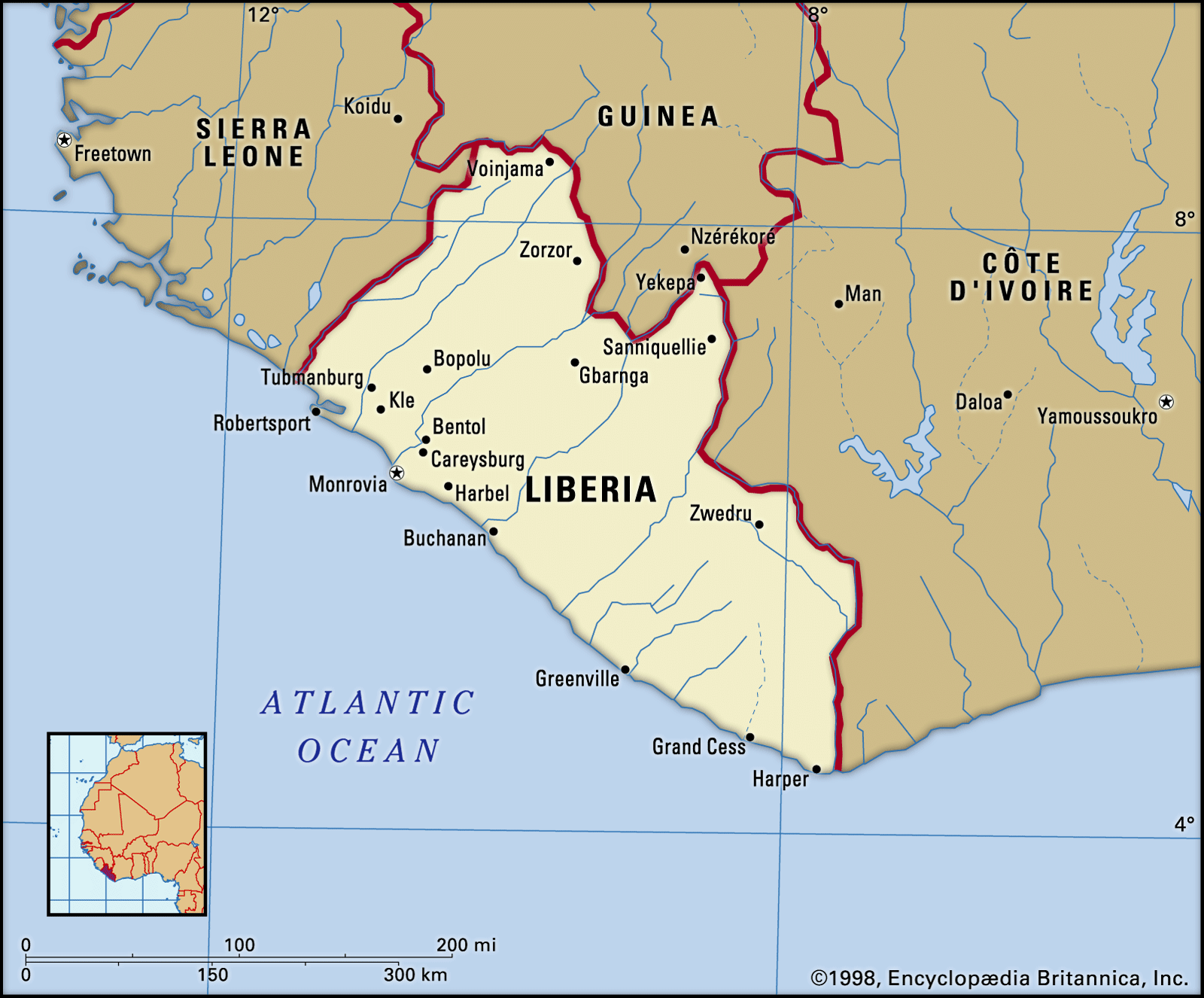
Map showing the location of Liberia on the west coast of Africa.
The Land
Liberia is located on the west coast of Africa. It shares borders with three neighboring countries and the Atlantic Ocean:
West: Sierra Leone
North: Guinea
East: Côte d'Ivoire (Ivory Coast)
South: Atlantic Ocean
Liberia covers approximately 38,250 square miles (111,369 square kilometers) and has a coastline stretching about 350 miles (565 kilometers) along the Atlantic Ocean.
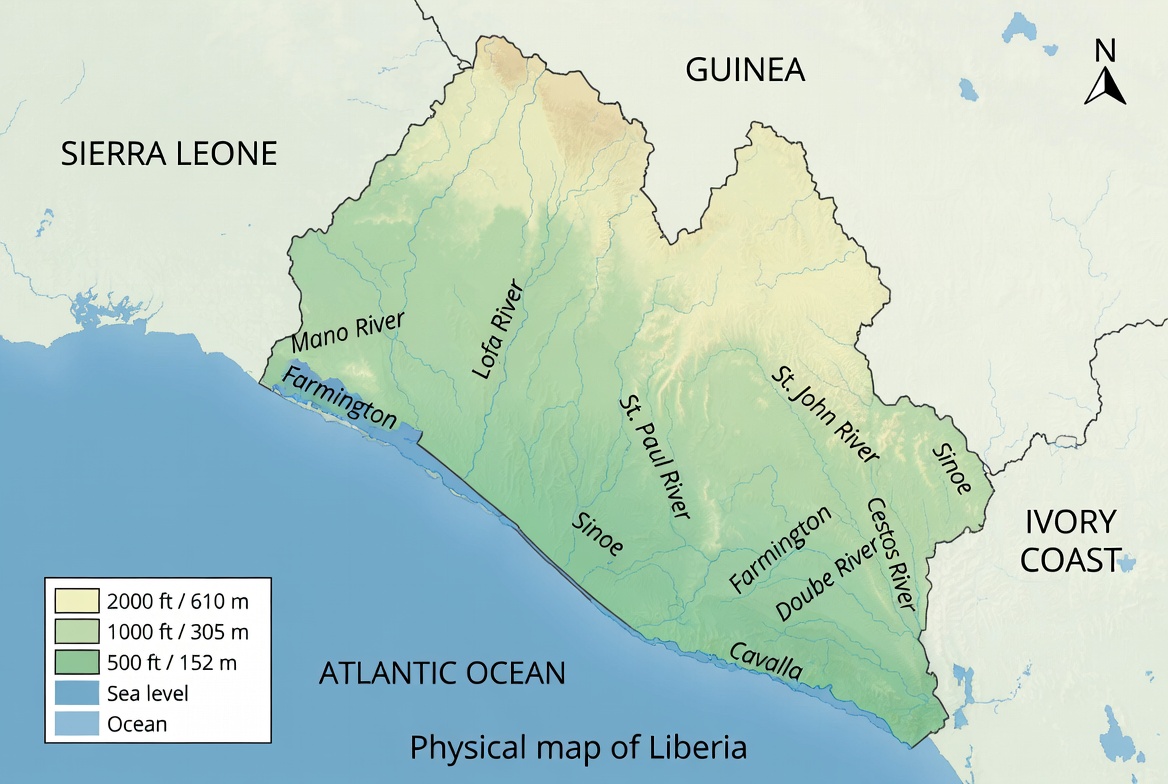
Liberia's geographical location, neighboring countries, and Atlantic coastline.
Climate and Rainfall
Liberia lies between 4°39′ and 8°30′ north of the Equator, giving it a tropical, humid climate with an average temperature of about 80°F (27°C) throughout the year.
The country has two main seasons:
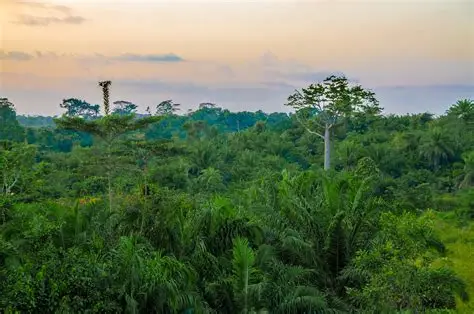
Liberia's tropical climate supports abundant rainfall and dense vegetation.
Rainy Season: May to October
Dry Season: November to April
Rainfall is highest along the coast. Monrovia, the capital city, receives an average annual rainfall of about 185 inches (4,700 mm), making it one of the wettest capitals in the world. Inland towns such as Suakoko, Tappita, and Zwedru receive around 80 inches (2,000 mm) of rainfall each year, while many other parts of the country receive slightly higher amounts.
Liberia's landscape can be divided into three natural regions:
The Coastal Belt – About 40 miles (64 kilometers) wide, this region is characterized by sandy beaches, mangrove swamps, lagoons, and coastal plains.
The Plains and Hills – This central region receives abundant rainfall and supports diverse vegetation and wildlife.
The Plateau and Forest Region – Located in northern and northeastern Liberia, this region contains dense tropical forests and several of the country's highest mountains, including Mount Wologizi and Mount Nimba.
Rising to approximately 4,500 feet (1,380 meters) above sea level, Mount Nimba is the highest point in Liberia.
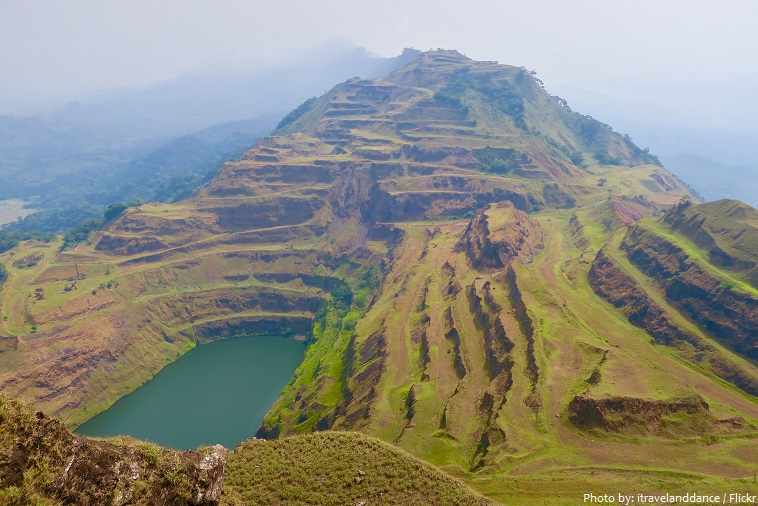
Mount Nimba, Liberia's highest mountain.
Islands
Liberia has several islands, many of which hold historical significance. One of the most important is Providence Island
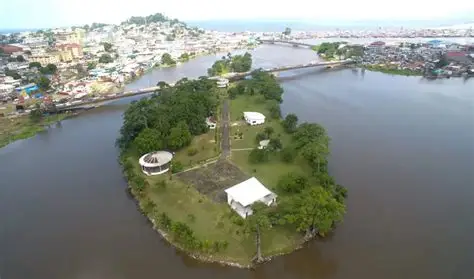
Providence Island, a historic site connected to Liberia's early settlement.
Located between the Mesurado River and Stockton Creek near Monrovia. It was here that the first group of settlers from the United States landed on January 7, 1822, marking an important event in Liberia's modern history.
Other notable islands include:
Bushrod Island (Montserrado County)
Massating Island (Grand Cape Mount County)
Dobli Island (Bong County)
Dead Island (Maryland County)
Rivers
Liberia's six principal rivers are:
Cavalla River
Cestos River
St. Paul River
Lofa River
St. John River
Mano River
The Cavalla River forms part of Liberia's border with Côte d'Ivoire, while the Mano River forms part of the border with Sierra Leone. All six rivers flow into the Atlantic Ocean.
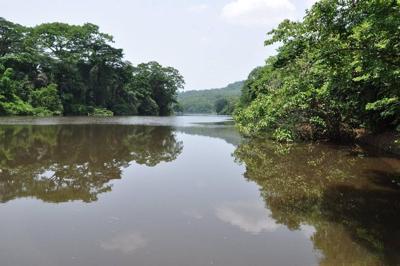
One of Liberia's major rivers flowing toward the Atlantic Ocean.
Lakes and Capes
Among Liberia's largest lakes are Lake Piso in Grand Cape Mount County and Lake Shepherd in Maryland County. The country's largest man-made lake is Lake Tileh, located in Sanniquellie, Nimba County.
Liberia's three major capes are:
Cape Mesurado (Montserrado County)
Cape Mount (Grand Cape Mount County)
Cape Palmas (Maryland County)
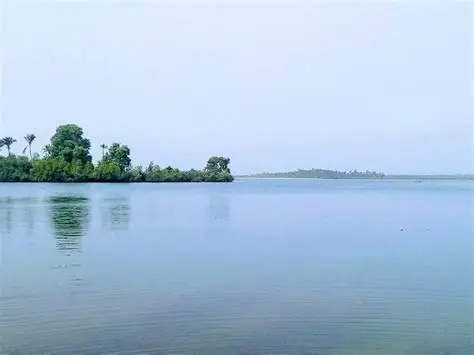
Lake Piso, one of Liberia's largest natural lakes.
Forests and Wildlife
Liberia's evergreen rainforest covers nearly 14 million acres of land, making it one of the largest remaining blocks of the Upper Guinean Rainforest in West Africa. These forests contain approximately 235 species of commercially valuable timber, many of which are used in construction, furniture making, and other industries.
Liberia is also home to a remarkable variety of wildlife. International attention was drawn to the country's rich biodiversity after Swiss naturalist Johann Büttikofer documented his travels and scientific observations during visits between 1879–1882 and 1886–1887.
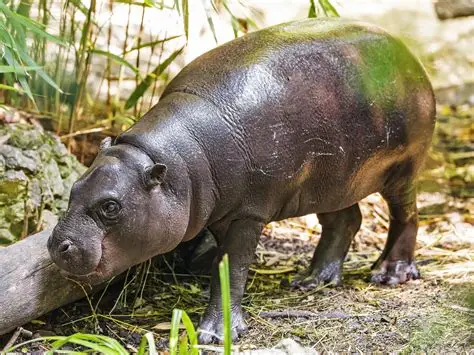
More than 200 species of birds have been recorded in Liberia. The country is also known for the pygmy hippopotamus, one of West Africa's rarest mammals and an important symbol of Liberia's natural heritage. Although the species also occurs in a few neighboring countries, Liberia remains one of its most important habitats.
Over the years, wildlife populations have declined in some areas because of deforestation, agriculture, hunting, and expanding human settlements. Conservation efforts continue to protect Liberia's unique biodiversity.
Liberia's tropical rainforest contains rich biodiversity.
The pygmy hippopotamus is one of Liberia's most famous wildlife species.
The Historical Context
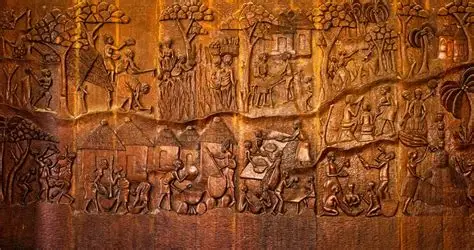
Traditional communities preserve history through stories, culture, and oral traditions.
The Meaning and Sources of History
History is the study of past events and the people who experienced them. Historians learn about the past through several important sources, including written records, archaeology, and oral traditions.
Archaeology is the study of objects left behind by earlier societies, such as houses, tools, weapons, pottery, and other artifacts. These discoveries help us understand how people lived long before written records existed.
Another important source is oral history. Before many Liberian communities developed writing systems, they preserved their history by passing it down from one generation to another through storytelling. Respected elders and community historians memorized important events, traditions, and genealogies and taught them to future generations.
The Importance of Studying Liberian History
Studying Liberian history helps us understand where the country's people came from, how different communities developed, and how Liberia became the nation it is today. Oral traditions indicate that many ethnic groups migrated into present-day Liberia from other parts of West Africa.
Historical evidence suggests that some ancestors came from regions that are now Mali, Sierra Leone, Guinea, Burkina Faso (formerly Upper Volta), and Côte d'Ivoire. These migrations may have occurred between the thirteenth and sixteenth centuries, or even later.
Factors may have contributed to these migrations:
Disease (Pestilence): Epidemics may have forced communities to leave their homes in search of safer places.
War: Conflict and repeated attacks by stronger groups encouraged many people to migrate.
Overpopulation: Growing populations created pressure on available farmland and natural resources.
Drought: Long periods without rainfall caused food shortages and made farming increasingly difficult.
Studying Liberia's history also helps us understand how early communities organized their governments, practiced their religions, developed their cultures, and built their societies.
Finally, learning Liberian history reminds us that the country's development was shaped by the contributions of many different peoples and communities. Earlier historians often focused mainly on Western-educated Liberians while overlooking the achievements of indigenous societies. Modern historical scholarship seeks to present a more balanced and inclusive account by recognizing the important roles played by all Liberians in building the nation.
References
Joseph Saye Guannu, History of Liberia
Additional geographical and historical information from modern reference sources and government publications.