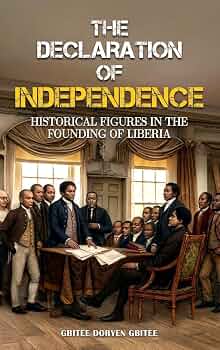
From the Commonwealth of Liberia to the Declaration of Independence, 1839–1847
Published Mon Aug 10 2026
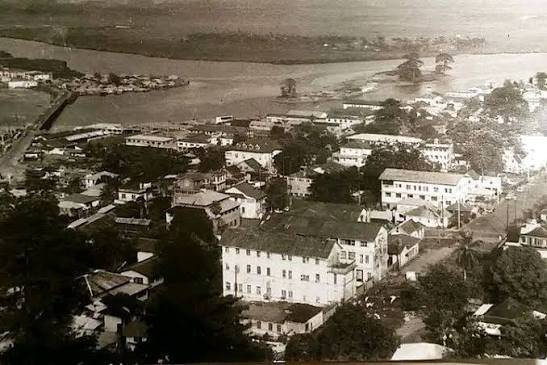
Introduction
The period between 1839 and 1847 was one of the most important turning points in Liberian history. During these eight years, the separate settlements along the Liberian coast were brought together under a common government, Liberia expanded its territorial control, developed stronger economic and political relationships with the outside world, and eventually declared itself an independent republic.
The journey from the Commonwealth of Liberia to the Republic of Liberia was shaped by several important developments, including territorial expansion, relations with European powers and the United States, disagreements between settlers and Indigenous communities, and the growing desire of Liberians to govern themselves.
The Formation of the Commonwealth of Liberia
After seventeen years of colonial development, the separate settlements were united in 1839 to form the Commonwealth of Liberia.
The decision to establish a common government was largely made in the United States, particularly among supporters of the American Colonization Society. At the time, the settlements were relatively small and lacked the military and economic strength necessary to defend themselves individually.
The union brought several settlements under one political administration. Grand Bassa Cove became Grand Bassa County, while the main settlement around Monrovia became Montserrado County. In 1842, Mississippi in Africa joined the Commonwealth and became Sinoe County.
The union strengthened the settlements by allowing them to combine their resources for defense, trade, administration, and economic development.
The constitution of the Commonwealth was prepared by Thomas Buchanan, who had previously served as governor of Grand Bassa Cove.
The government consisted of three main branches. The legislative body was known as the Council of Liberia and consisted of six elected councilors. The executive branch was headed by a governor appointed by the American Colonization Society. The governor was assisted by a lieutenant-governor elected by the colonists.
The judicial system consisted of a Supreme Court and several justices of the peace. Judges were appointed by the governor.
Although the Commonwealth gave the settlements a stronger central government, Liberia had not yet achieved full political independence.
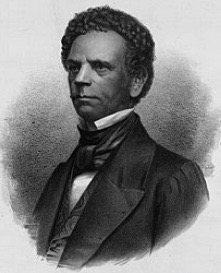
Thomas Buchanan and Joseph Jenkins Roberts
The first governor of the Commonwealth of Liberia was Thomas Buchanan, who served from 1839 until his death in 1841.
Buchanan played an important role in expanding Liberian territory. During his administration, additional lands were acquired, particularly through agreements with local rulers in the Bassa region.
Buchanan died on September 3, 1841. He was succeeded by Lieutenant-Governor Joseph Jenkins Roberts.
Roberts was born in Norfolk, Virginia, in 1809. He migrated to Liberia in 1829 with his mother and two brothers, John and Henry. He later became one of the most influential political and economic figures in early Liberian history.
During the years leading up to independence, Roberts continued Liberia's territorial expansion. Between 1843 and 1847, land was acquired through agreements with rulers among the Gola and Vai peoples.
Roberts would eventually become the first president of the independent Republic of Liberia.
Liberia's Territorial Expansion
Territorial expansion was an important feature of the Commonwealth period.
Liberia's leaders sought to bring more coastal territories and surrounding communities under Liberian authority. This was accomplished through a combination of negotiations, treaties, purchases of land, military action, and agreements with local rulers.
The expansion brought Liberia into closer contact with numerous Indigenous communities.
These relationships were complicated. In some places, local leaders cooperated with Liberian authorities. In other areas, disagreements developed over land, trade, political authority, and the question of who had the right to govern particular territories.
The expansion of Liberia also helped increase trade between the coastal settlements and communities farther inland.
Liberia and the Outside World
During the Commonwealth period, Liberia increasingly interacted with European nations, the United States, and the American Colonization Society.
The American Colonization Society continued to play an important role in Liberia's political and economic affairs. However, Liberian leaders increasingly wanted greater control over their own government and foreign relations.
One major problem was the treatment of Liberia by foreign trading vessels.
British and French ships sometimes entered Liberian ports, conducted commercial activities, and refused to pay customs duties required by Liberian authorities. These incidents demonstrated a major weakness in Liberia's position.
Although Liberia claimed authority over its territory, it lacked the international recognition and diplomatic power of established independent states.
Liberian leaders therefore increasingly believed that independence was necessary if Liberia was to protect its territory, enforce its laws, and establish formal relationships with other countries.
The Little Ben Affair
One of the events that accelerated Liberia's movement toward independence was the Little Ben affair.
On April 15, 1845, the British-owned vessel Little Ben was seized in the Bassa region after Liberian authorities accused it of violating the Commonwealth's customs regulations.
The British responded by taking back the vessel. They also seized a Liberian ship called the John Seys, owned by Stephen Allen Benson, accusing it of involvement in the slave trade.
The matter eventually went before a court in Freetown, where the Liberian vessel was cleared of the accusations and ordered to be released.
The incident demonstrated how difficult it was for the Commonwealth government to enforce its laws against foreign powers.
Governor Joseph Jenkins Roberts brought the issue to the attention of the American Colonization Society.
The Society eventually concluded that Liberia's continued dependence on the ACS was not a sufficient solution to its international problems. Instead, Liberia needed to take responsibility for its own government and foreign relations.
On January 18, 1846, the American Colonization Society informed the Liberian people that the time had come for them to assume responsibility for the entire work of self-government, including the management of their foreign relations.
The movement toward independence had therefore become much more serious.
The Road to Independence
Liberian leaders responded by preparing for the establishment of an independent government.
A Constitutional Convention was held in Monrovia from June 5 to July 25, 1847.
Delegates representing the three counties—Montserrado, Grand Bassa, and Sinoe—worked on a constitution that established a republican system of government.
Most of the constitution was prepared by the delegates themselves. The section dealing with land still owned by the American Colonization Society was written by John Simon Greenleaf, a professor at Harvard Law School.
On July 26, 1847, the convention formally announced to the world that the Commonwealth of Liberia had become the Republic of Liberia.
The document making this announcement became known as the Declaration of Independence.
Hilary Teage and the Declaration of Independence
The Declaration of Independence was drafted by Hilary Teage, one of the important political figures of early Liberia.
Teage was born in Virginia in 1802 and migrated to Liberia with his family aboard the Nautilus in 1821.
He later became active in Liberian government and politics and played an important role in the country's transition to independence.
The Declaration of Independence explained why the people of Liberia believed they had the right to establish their own government.
It described the discrimination and restrictions that people of African descent had experienced in the United States, including exclusion from political participation, restrictions on civil rights, and the denial of opportunities available to other groups.
The document argued that the Liberian people had the right to establish a government capable of protecting their freedom and directing their own affairs.
Eleven of the twelve delegates to the Constitutional Convention signed the Declaration.
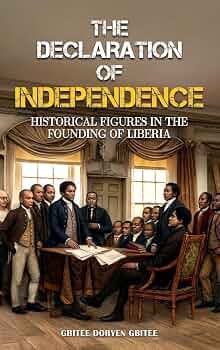
Signatories of the Declaration of Independence
Montserrado County
Samuel Benedict
Elijah Johnson
John B. Gripon
Beverly R. Wilson
John N. Lewis
Hilary Teage
Grand Bassa County
Anthony W. Gardner
Ephraim Titler
John Day
Amos Herring
Sinoe County
Richard E. Murray
John Prout, who served as secretary of the convention, did not sign the Declaration.
The Declaration of Independence and the Constitution were adopted at Providence Baptist Church in Monrovia on July 26, 1847.
The First Constitution of Liberia
The Constitution of the First Liberian Republic established the basic structure of the new government.
It contained five major articles.
Article I: Declaration of Rights
Article I outlined fundamental rights and principles.
It established the idea that government exists to serve the people and may exercise only powers granted to it by the people.
It also recognized religious freedom, equality before the law, freedom from government oppression, peaceful assembly, and freedom of the press.
These principles became important foundations of the new republic.
Article II: The Legislature
Article II established the legislative branch of government.
The legislature consisted of two chambers:
The Senate
The House of Representatives
The article described the selection of legislators, their terms of office, and their responsibilities in making laws.
Article III: The Executive
Article III established the executive branch.
The executive was headed by the President, assisted by the Vice President.
The article defined their qualifications, powers, duties, and terms of office.
Article IV: The Judiciary
Article IV established the judicial branch of government.
It addressed the organization of the Supreme Court, the responsibilities of its members, and the types of cases falling under its jurisdiction.
Article V: Citizenship and Constitutional Amendments
Article V dealt with citizenship and the process for changing or amending the Constitution.
Together, these five articles provided the legal foundation for the First Liberian Republic.
Liberia's Flag
Liberia's national flag developed from an earlier flag used during the colonial period.
The first flag was used between 1827 and 1847 and contained thirteen stripes—seven red and six white—with a blue field containing a white cross.
When independence was declared on July 26, 1847, the United States flag was initially raised.
Liberia later introduced its present national colors on August 24, 1847. This date became known as Flag Day.
The Liberian flag contains eleven alternating red and white stripes and a blue square in the upper-left corner containing a single white star.
The eleven stripes represent the eleven signers of the Declaration of Independence.
The blue field represents the African continent, while the white star represents Liberia as the first independent republic established on the African continent.
The Seal and Motto of Liberia
Liberia's national seal contains several symbols representing the country's history, resources, aspirations, and relationship with Africa.
The palm tree represents Liberia's natural resources.
The plow and spade represent agriculture and the work required to develop the nation's resources.
The dove and scroll symbolize peace and communication with other nations.
The rising sun represents the birth of Liberia.
A ship in the distance represents the arrival of the settlers from the United States to the land of their African ancestors.
The national motto appears on the seal:
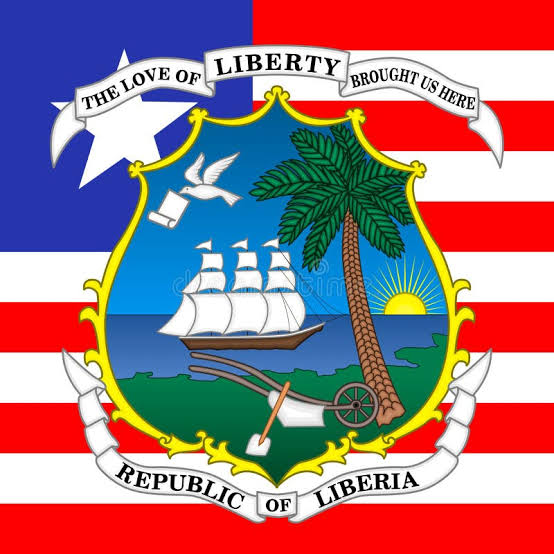
“The Love of Liberty Brought Us Here.”
The motto summarizes one of the central ideas behind the establishment of Liberia: the search for freedom.
The First General Elections
After independence, Liberia held its first general elections.
Political parties had already begun developing during the Constitutional Convention. Two major political groups emerged:
The True Liberian Party, also known as the Pro-Administration Party
The Whig Party, also known as the Anti-Administration Party
The True Liberian Party generally supported the Constitution as it had been drafted, while the Whigs argued for changes to certain provisions.
Joseph Jenkins Roberts became the presidential candidate of the True Liberian Party.
The Whig Party nominated Samuel Benedict, who was then chief justice.
The True Liberian Party won the election.
Joseph Jenkins Roberts became the first president of the Republic of Liberia, with Nathaniel Brander as vice president.
They were inaugurated on January 3, 1848.
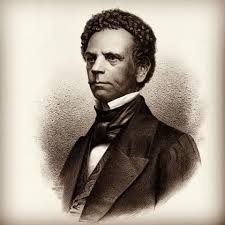
The first cabinet included:
Hilary Teage — Secretary of State
Stephen Allen Benson — Secretary of the Treasury
Dixon Brown — Attorney-General
Samuel Benedict was appointed Chief Justice of the Supreme Court.
Economic Development
The economy of Liberia expanded significantly during the Commonwealth period.
As Liberia's territory and relationships with surrounding communities expanded, trade between coastal settlements and the interior increased.
Liberian merchants became increasingly involved in international commerce.
One of the leading traders of the period was Joseph Jenkins Roberts. He formed a business partnership with William Nelson Colson of Petersburg, Virginia.
Their company, Roberts, Colson and Company, owned a vessel called the Caroline, which regularly traveled between Liberia and the United States.
Government revenue also increased.
By 1845, government revenue had reached approximately $8,853, while the treasury had a balance of about $989.
These developments demonstrated that Liberia's economy was becoming increasingly connected to international trade.
Education in the Commonwealth Period
Education remained closely connected with religion during the Commonwealth period.
Many schools were established or supported by churches, the American Colonization Society, and private individuals.
Education focused heavily on preparing students for careers in areas such as teaching, preaching, law, and government.
Technical and vocational education received much less attention.
Another challenge was the limited supply of appropriate textbooks.
Many educational books available in Liberia had been written for students in Europe and America. Their content did not always reflect African or Liberian experiences, making some subjects difficult for Liberian students to understand.
Liberia had no college during the period from 1839 to 1847. Students seeking education beyond high school generally depended on private teachers.
One important institution was the Monrovia Seminary, established by the Methodist Church in 1839.
The school provided religious teacher training and elementary education. It later developed into the College of West Africa.
American support for Liberian education came mainly through the American Colonization Society, churches, and private individuals.
Relations Between Settlers and Indigenous Africans
The relationship between settlers and Indigenous African communities between 1822 and 1847 was complicated.
Although both groups lived within the same territory and sometimes came under the authority of the same government, their relations were often characterized by mistrust, competition, and conflict.
Several factors contributed to these tensions.
Different Cultural Backgrounds
Many settlers had spent years in the United States and had been influenced by American ideas about race, religion, education, and civilization.
Some settlers therefore looked down upon Indigenous African traditions and described traditional African religions and customs as uncivilized.
This created resentment among Indigenous communities.
Liberian citizenship during this period was also closely connected with ideas of “civilization.” Indigenous people who adopted Western education and Christianity were more likely to be accepted into settler society than those who maintained traditional ways of life.
The Legacy of the Slave Trade
Slavery had also affected African societies.
Some African rulers and communities had become involved in systems of slavery and resisted attempts by Liberia to suppress the practice.
As Liberia attempted to enforce anti-slavery policies, it sometimes came into conflict with local rulers who considered themselves independent authorities.
Political Authority
Another major source of conflict was the question of political authority.
Liberian leaders believed that the government of Liberia had authority over the territories within its borders.
Many Indigenous rulers, however, continued to regard themselves as the legitimate authorities over their own peoples.
As Liberia expanded, its government increasingly attempted to establish authority over local rulers.
This produced disputes over land, taxation, trade, law, and political power.
Cooperation Between Settlers and Indigenous Communities
Despite these tensions, relations were not always hostile.
There were many occasions when settlers and Indigenous Africans lived together peacefully, traded with one another, formed relationships, and cooperated politically and militarily.
Liberian governors and agents sometimes acted as mediators between Indigenous groups involved in disputes.
One example was the Dei-Gola conflict of 1838. Liberia attempted to mediate between the two groups but eventually supported the Dei after concluding that they had been wronged.
Trade also created opportunities for cooperation.
Indigenous communities obtained European and American manufactured goods through coastal settlements, while Liberian merchants obtained products from the interior.
Agricultural products such as sugar cane, pineapple, and coffee became part of this developing trade.
Indigenous Contributions to Liberia's Expansion
Indigenous Africans also played an important role in the expansion and defense of Liberia.
Many joined Liberian military forces and helped the government establish control over territories farther inland.
Their participation became particularly important in maintaining peace and extending Liberian authority.
This contribution continued beyond the independence period and, in later decades, Indigenous Liberians became an important part of Liberia's military and political development.
THE BIRTH OF THE FIRST REPUBLIC
By 1847, the Commonwealth of Liberia had reached a decisive moment.
The colonies had been united under a central government. Liberia had expanded its territory, developed international trade, created political institutions, and established increasingly complex relationships with neighboring Indigenous communities.
However, Liberia's dependence on the American Colonization Society and its difficulties with foreign powers demonstrated the limitations of Commonwealth status.
The desire for self-government, the need to protect Liberian territorial and economic rights, and conflicts involving foreign ships and customs regulations all contributed to the movement for independence.
On July 26, 1847, the Commonwealth of Liberia officially became the Republic of Liberia.
Joseph Jenkins Roberts would later become the country's first president.
The declaration marked the beginning of a new chapter in Liberian history: Liberia was no longer simply a collection of settlements under the supervision of the American Colonization Society. It had declared itself a sovereign republic and entered the international community as an independent African state.
The events of 1839–1847 therefore laid the political, economic, and constitutional foundations upon which the modern Liberian state would develop.
Reference
Declaration of Independence of Liberia (1847) — Primary historical document containing the declaration, date, convention details, and signatures.
The Liberian Declaration of Independence — Historical overview of the 1847 declaration, its author, signatories, and significance.
Liberian historical texts and educational materials — Useful for the Commonwealth period, Joseph Jenkins Roberts, territorial expansion, education, economic development, and relations between settlers and Indigenous communities.